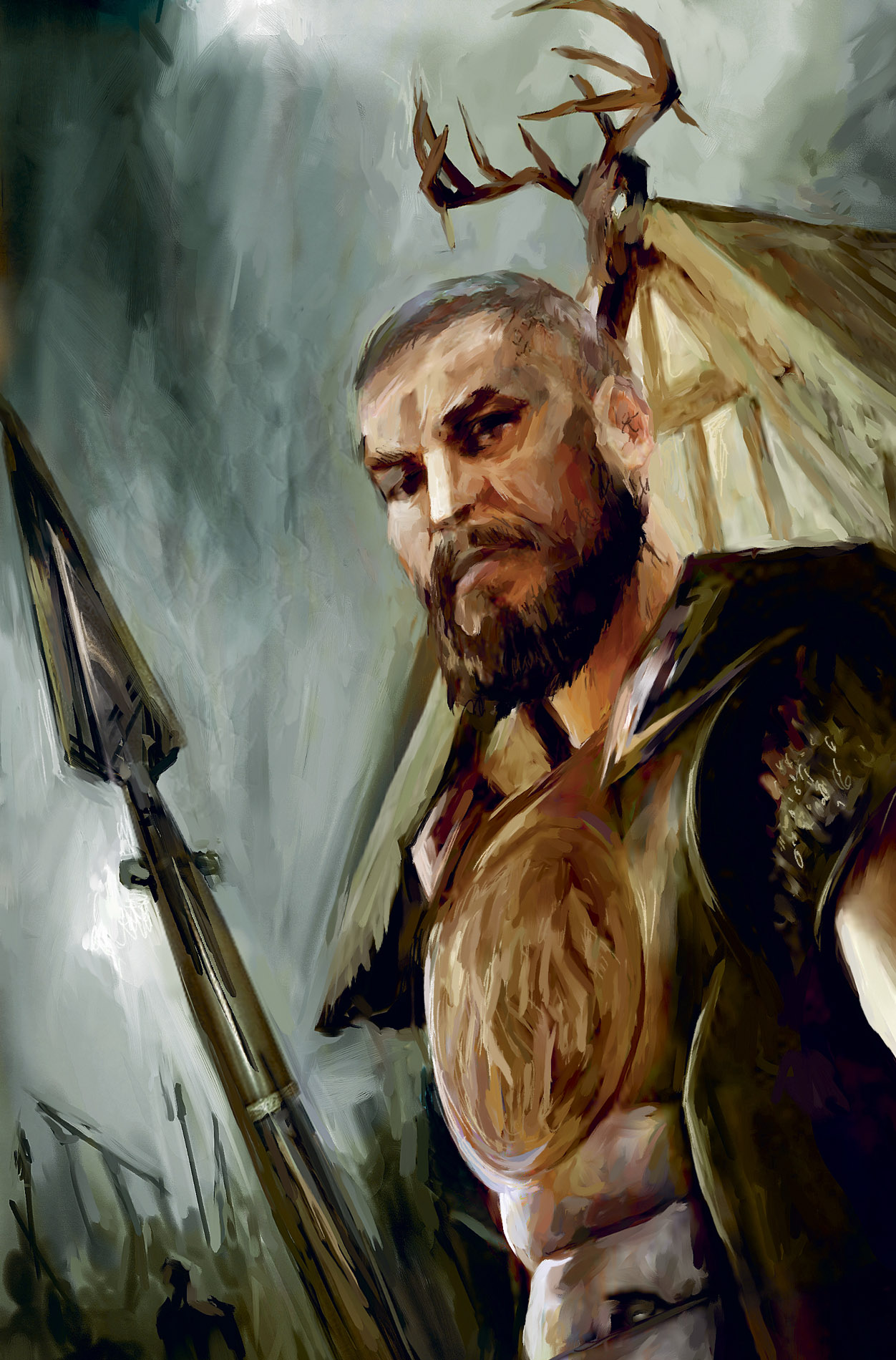
Beowulf is England’s first epic poem, a rousing story of warriors, monsters, dragons and gold. But is it a rare survival of so-called ‘Dark Age’ literature or the creation of an eleventh-century monastic mind? Is it the start of English literature or an alien text written in a language few can read today? Why does it matter?
It’s possible for a student of English literature to go through their degree without ever hearing of Beowulf. It has never really made its way into mainstream culture, despite Seamus Heaney’s well-regarded translation (1999) and a big-budget film starring Angelina Jolie (2007). Yet it’s an iconic survivor, a rare view into the Anglo-Saxon period and the oldest known epic poem composed in the English language.
That it is written in Old English can put readers off. That it survives in a single burnt manuscript can also make it seem distant. Indeed, the very world it conjures up, of warriors, treasure hoards and life within a medieval hall, feels very far from our own.
Yet it has inspired some of the greatest writers in the English language and remains a solitary window onto a part of Britain’s history that can only be glimpsed through a glass darkly. It’s essential to understanding where we have come from and how we got to where we are.
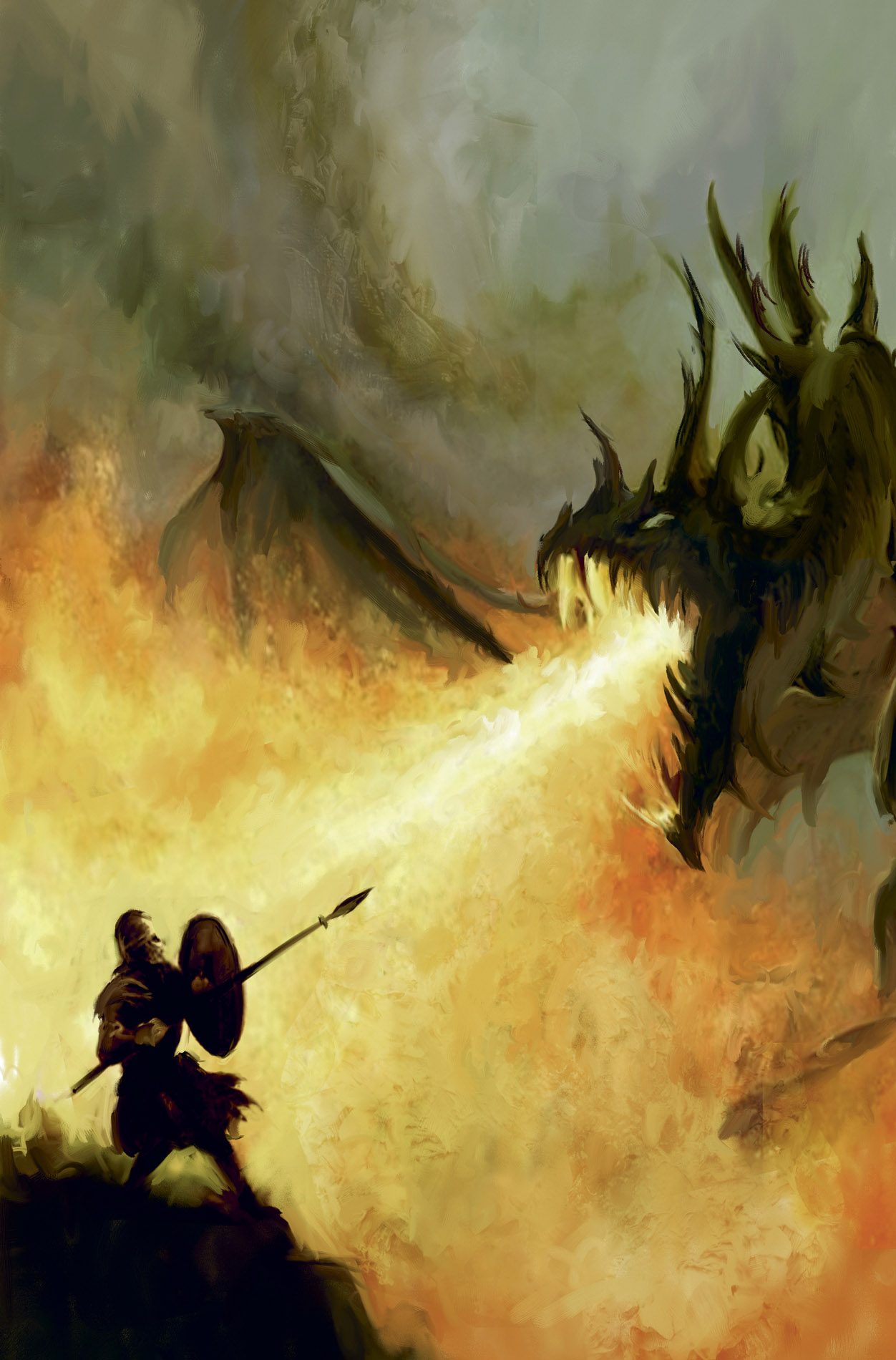
Beowulf is a heroic warrior from the land of the Geats (Götaland in modern-day Sweden). Hungry for fame, fortune and reputation, he travels to the court of the King of the Danes, hearing that a terrible monster is launching nightly attacks on the hall. Eager to prove his strength and earn gifts of gold from the king, he battles the monster Grendel, and then his mother, before returning to the Geats, rich and powerful.
To understand what motivated Beowulf we must be aware of the characteristics that were most prized within early medieval Germanic warrior culture: great physical strength, a reputation for fearlessness and the acquisition of wealth.
Their pagan religion supported these attributes, with the best places in Valhalla (the highest of the Germanic pagan afterlives) reserved for those who had fought most bravely, hand-plucked by the Valkyrie (choosers of the slain) to feast and fight in luxury for all eternity. It is this world view that permeates all Beowulf’s speech and actions. He’s an active hero, facing threats in a way many warriors would fear to.
But both Beowulf and the poem are complex. To study it is to enter a world where fact blends with fantasy, poetry enchants and dragons protect golden hoards. It’s a link to the past, but a mythical, fantastical, imagined one.

But first, the historical context. The setting of Beowulf can be confusing for readers in that it doesn’t appear to deal with England at all. Instead it is set in sixth-century Denmark and Sweden, during a time commonly referred to as the ‘Dark Ages’. The decline of the Roman Empire in the West certainly led to a reduction in written records. But this was a period when equally fascinating, diverse cultures re-emerged.
The regions of Germania and Scandinavia had remained largely untouched by Roman influence. Here society was organized around a military elite, houses were built of timber, artistic production was less monumental and more portable and personal. Though a proto-alphabet (runes) was in use, they didn’t commit literature to the page but transmitted it orally.
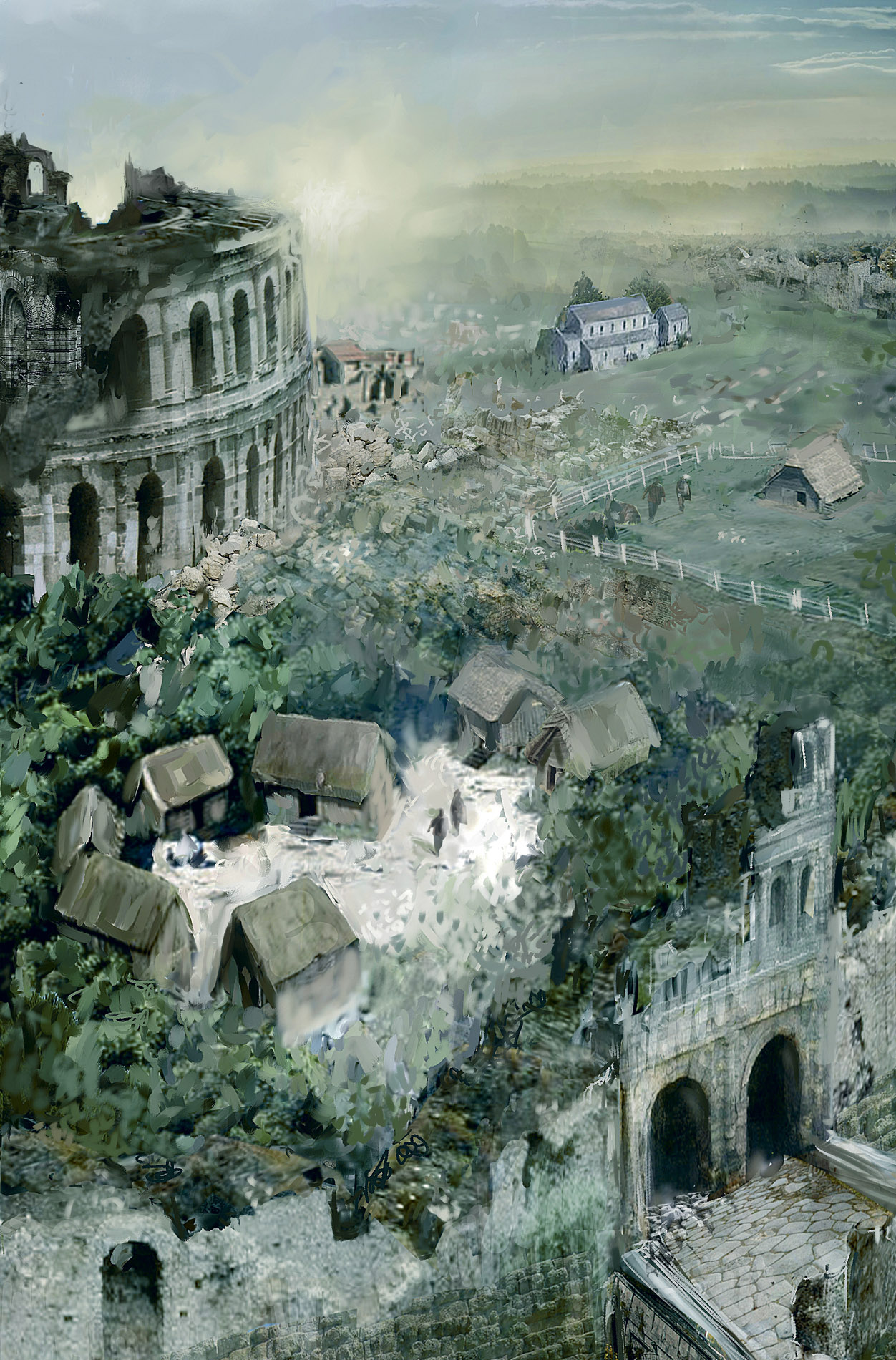
What about Britain? The Roman conquest of Britain began under Emperor Claudius in 43AD, but it was gradual and incomplete. Their many incursions never reached parts of Scotland, Wales and Cornwall, with Hadrian’s Wall in Northern England the most northerly border of the Empire.
Within ‘Britannia’, as the province was known, Roman governance was superimposed upon a largely Celtic population. The Roman army held power, their towns were cultural hubs and the spoken word was written down.

The situation changed radically at the start of the fifth century. Roman rule of Britain ended in 410AD, leading to a period of unrest which gave rise to legends like that of King Arthur. Military and political administration collapsed.
Within the area that is now known as England, a permanent transformation occurred. Whether the first Saxons were invited over to help with defence or whether they raided aggressively is the subject of much debate. But the ‘Adventus Saxonum’ (settlement of Angles, Saxons and Jutes) was to have long-term effects.
By the sixth century the vernacular spoken among the people of England was what we now call Old English ‒ a Germanic language. In place of Romano-British towns, new Anglo-Saxon settlements appear on the archaeological record. Perhaps even more tangible was the religious transformation that took place. The predominant religion of the Anglo-Saxons was Germanic paganism, and their primary deities are still remembered in the names for the days of the week: Tiws-day, Wodens-day, Thors-day, Frigs-day.
In this early Anglo-Saxon period the various kingdoms that made up England were governed by settlers from Germanic and Scandinavian regions, forming strong bonds between the military elites on either side of the North Sea. This is the world of Beowulf.
Despite the fact that the poem is set in sixth-century Scandinavia, the only surviving copy dates from some four centuries later. Perhaps more confusingly, while largely focused on the military exploits of pagan warriors, the poem also includes Christian terms that could only have developed after the pagan Anglo-Saxons had converted to Christianity.
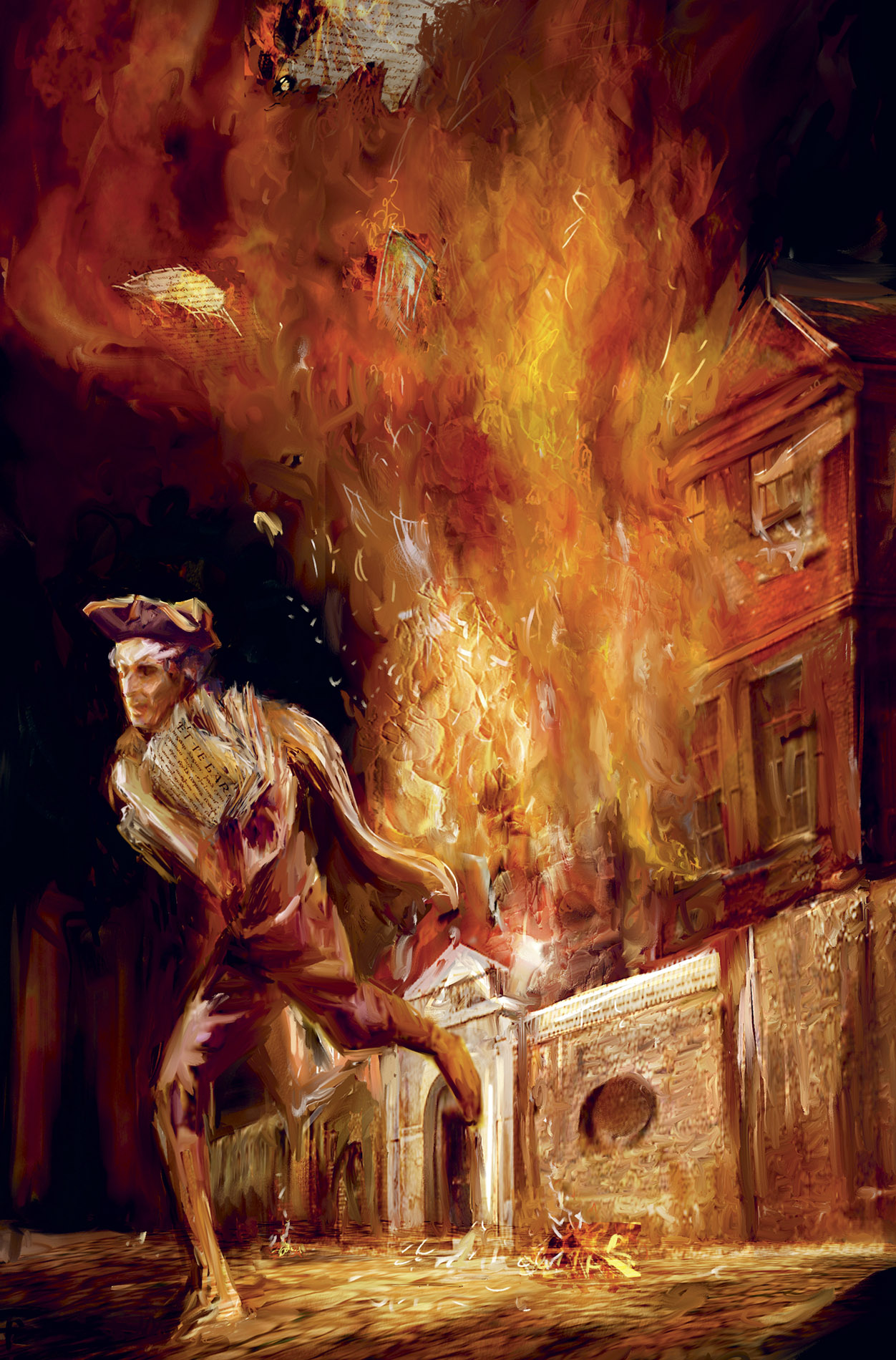
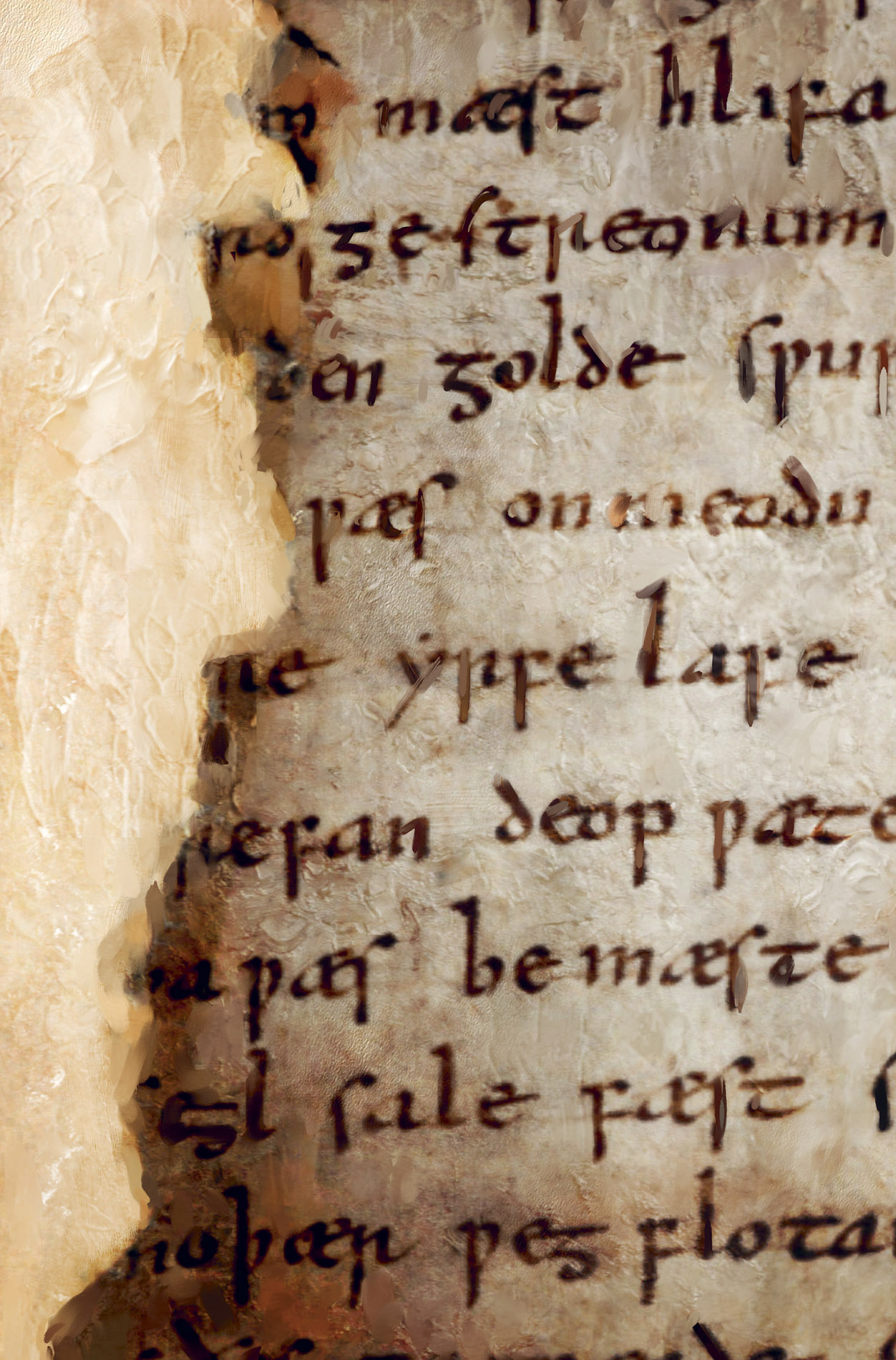
The manuscript it was recorded in, the Nowell Codex, was penned around the year 1000AD. It’s badly damaged, having been scorched around the edges in a fire at the Cotton Library in 1731, so some parts of the poem are difficult to decipher. Reading it requires not only being able to understand Old English but also decoding the handwriting (palaeography).
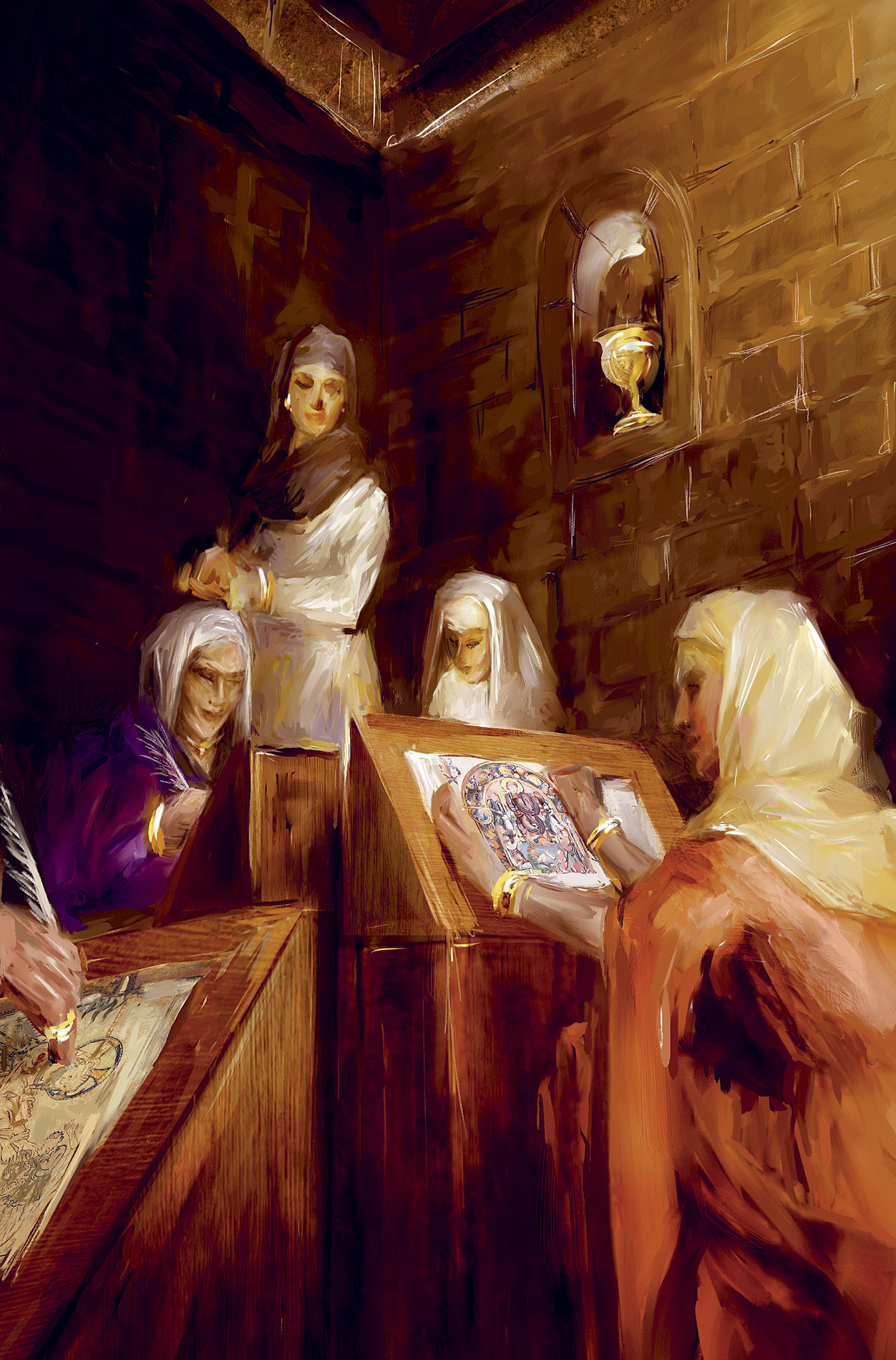
It must have been written down by a monk in a scriptorium since manuscript production was largely restricted to monastic communities at this point. What’s interesting about the Nowell Codex, however, is that it’s one of five surviving manuscripts, all created around the turn of the millennium as a repository for seemingly older, orally transmitted poems.
Why would monks record the exploits of pagans? That it was a famous poem much-repeated down the generations seems likely. The antiquarian reverence of Christian scholars for ancient texts explains why Beowulf survives at all.
Scholars offer wide-ranging opinions on where and when Beowulf was composed. The most convincing arguments suggest that it was composed around 700AD in East Anglia, near the powerful royal centre of Rendlesham. The original story may have been passed down orally, between warriors, perhaps recited within noble halls. But it was set down in writing by monks some time later, as all of England was Christian by the late seventh century.
When monasteries were first established in England during the early seventh century it was noble men and women who became monks or nuns. The monastery of Ely (one of the most powerful in East Anglia) was founded by a princess. They were wealthy, powerful and influential places.
It’s likely that noble-born monks and nuns would enjoy hearing epic tales of their warrior ancestors. East Anglia is the most probable place for composition given, firstly, that certain words within the text are written in the dialect of that area, like the verb ‘sceððan’ (‘harm’). Secondly, the Anglo-Saxon kings of East Anglia were known as the Wuffingas dynasty, suggesting a connection with the powerful Wulfings clan mentioned in Beowulf. Thirdly, there’s an archaeological discovery that ties this kingdom in England to the world of Beowulf: the Sutton Hoo ship burial.
The Anglo-Saxon period has always been difficult to find within the archaeological record. While the Romans built grand structures in stone, the timber halls favoured by the Germanic people were hard to uncover in layers of earth. The only buildings that left a lasting record were small sunken huts known as ‘grubenhauser’, about 10 feet in length.
These simple, dark huts sat well with the idea that life in the early medieval period was ‘nasty, brutish and short’. It was thought to be an ignoble time when the classical tradition was lost to barbarians. But as archaeological techniques developed in the nineteenth and twentieth centuries, the post-holes of huge halls, like that at Yeavering in Northumberland, began to emerge.
Beowulf had been copied, read and transmitted for as long as the Nowell Codex was known about. Yet scholars had treated it as fantasy, believing that the golden halls and cultural vibrancy the poem describes must be the invention of medieval scribal imaginations. But one discovery from East Anglia gave an archaeological glimpse into a rich, outward-facing, complex court in England, replete with all the trappings of pagan Germanic warrior culture yet looking towards the Christian world. It was encased in the ground, a treasure trove interred in a ship and covered by an imposing mound that would have been visible from the river. The world of Beowulf was real, and it was in seventh-century East Anglia.
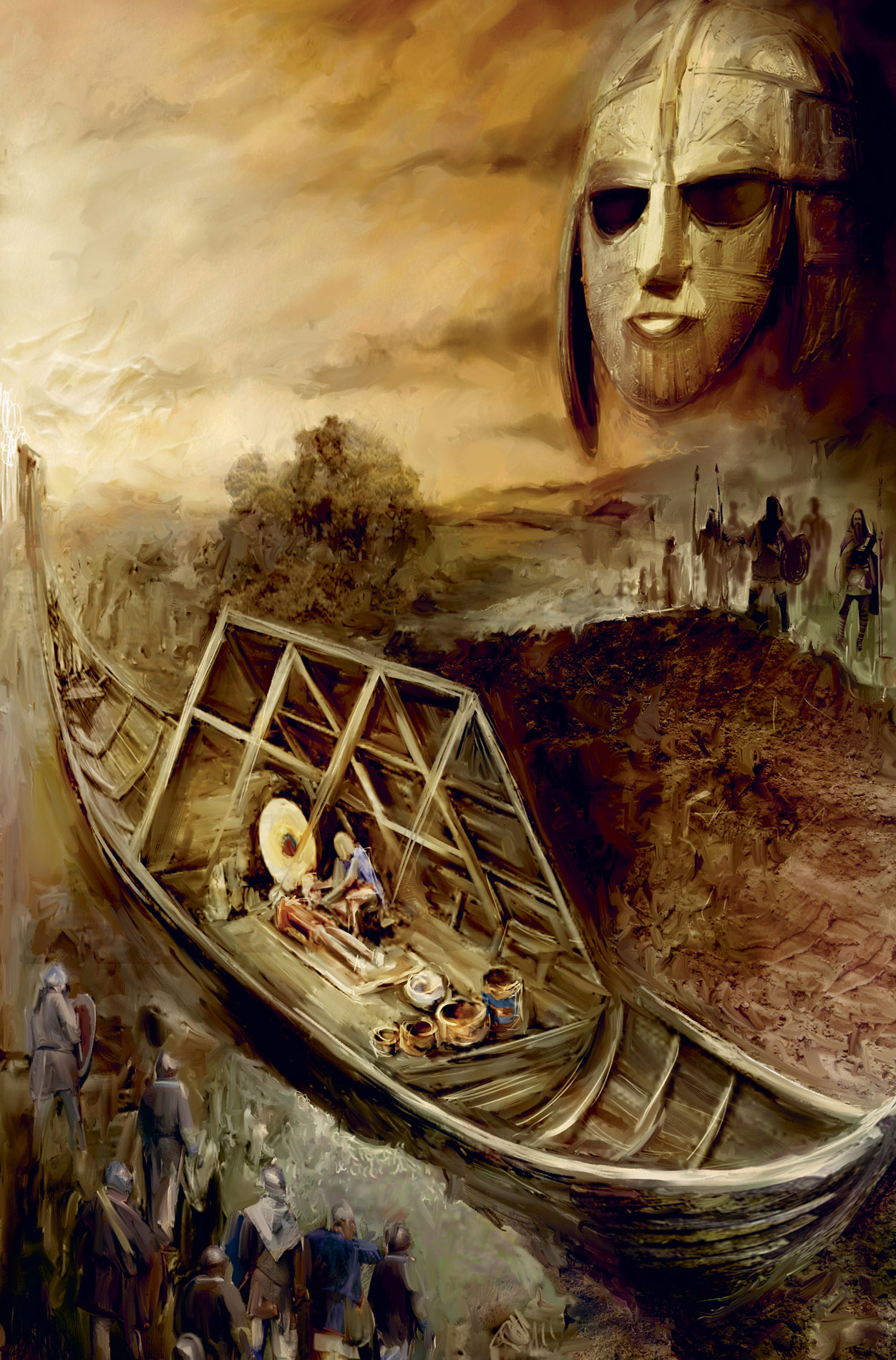
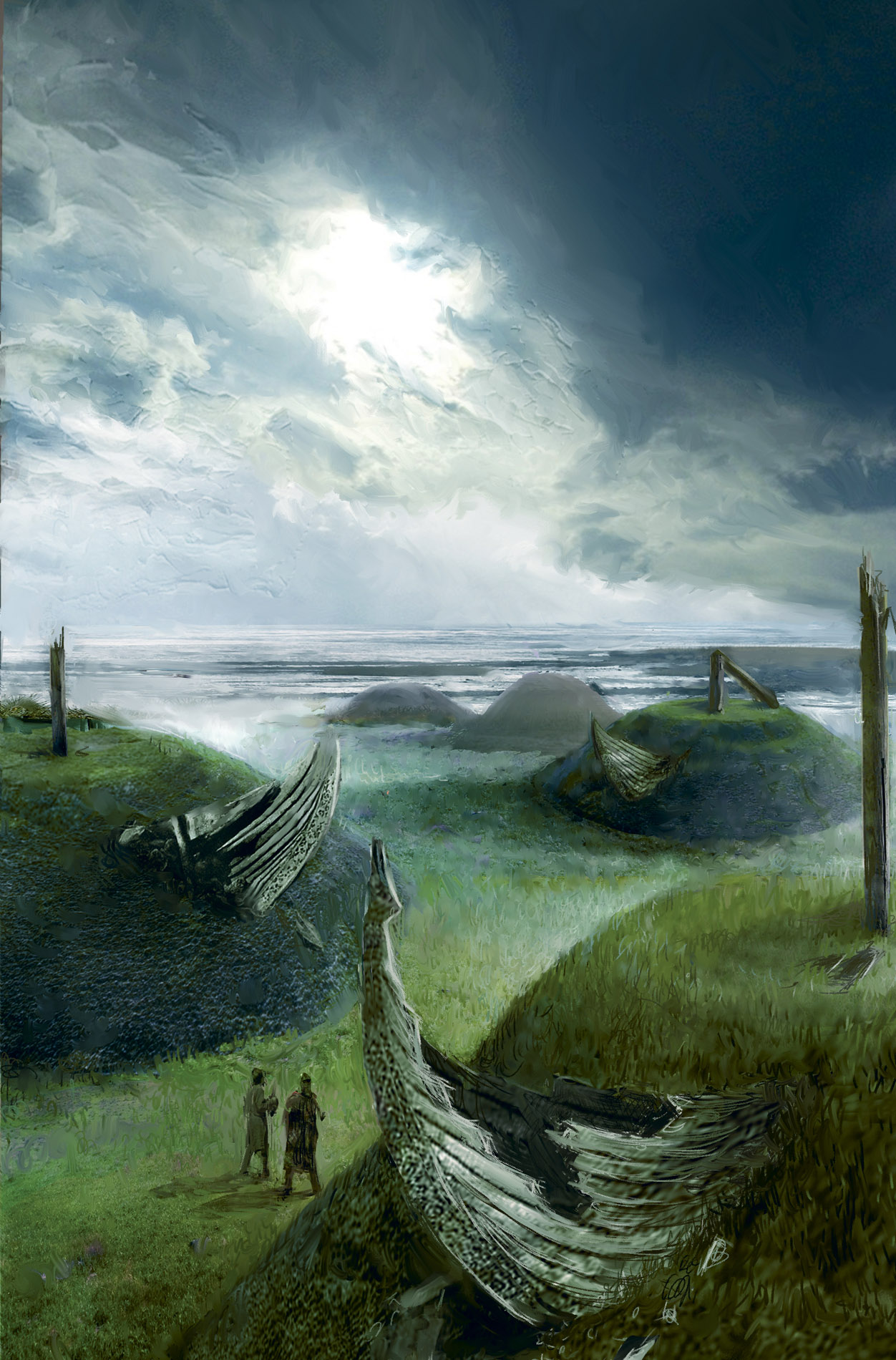
This accidental discovery was made on the eve of the Second World War by local archaeologist Basil Brown at the invitation of the landowner, Edith Pretty. The Sutton Hoo ship burial is our Tutankhamun’s tomb: an intact 27-metre-long ship with a chamber full of all a pagan Germanic ruler would need for the afterlife in Valhalla.
While similar mounds pepper the English landscape, most were robbed in the seventeenth and eighteenth centuries. A robber’s trench had been sunk at Sutton Hoo but was abandoned, so the treasures remained as they were when they were placed into the chamber at the start of the seventh century.
The most iconic find from Sutton Hoo is the helmet, its hollowed-out eyes and metallic moustache designed to instil fear and respect in those who saw it. And it can tell us a great deal about the relationship between the setting of Beowulf and the East Anglian origins of the poem. The designs on the decorative plates of the helmet are like those found at the royal burial site in Vendel, Sweden, where smaller ships were also buried in the ground. The magnificent shield buried at Sutton Hoo also began life in Sweden.
These were the crown jewels of Anglo-Saxon East Anglia. That they are so like finds from the Swedish areas mentioned in Beowulf could highlight the genealogical and cultural links binding these worlds together.
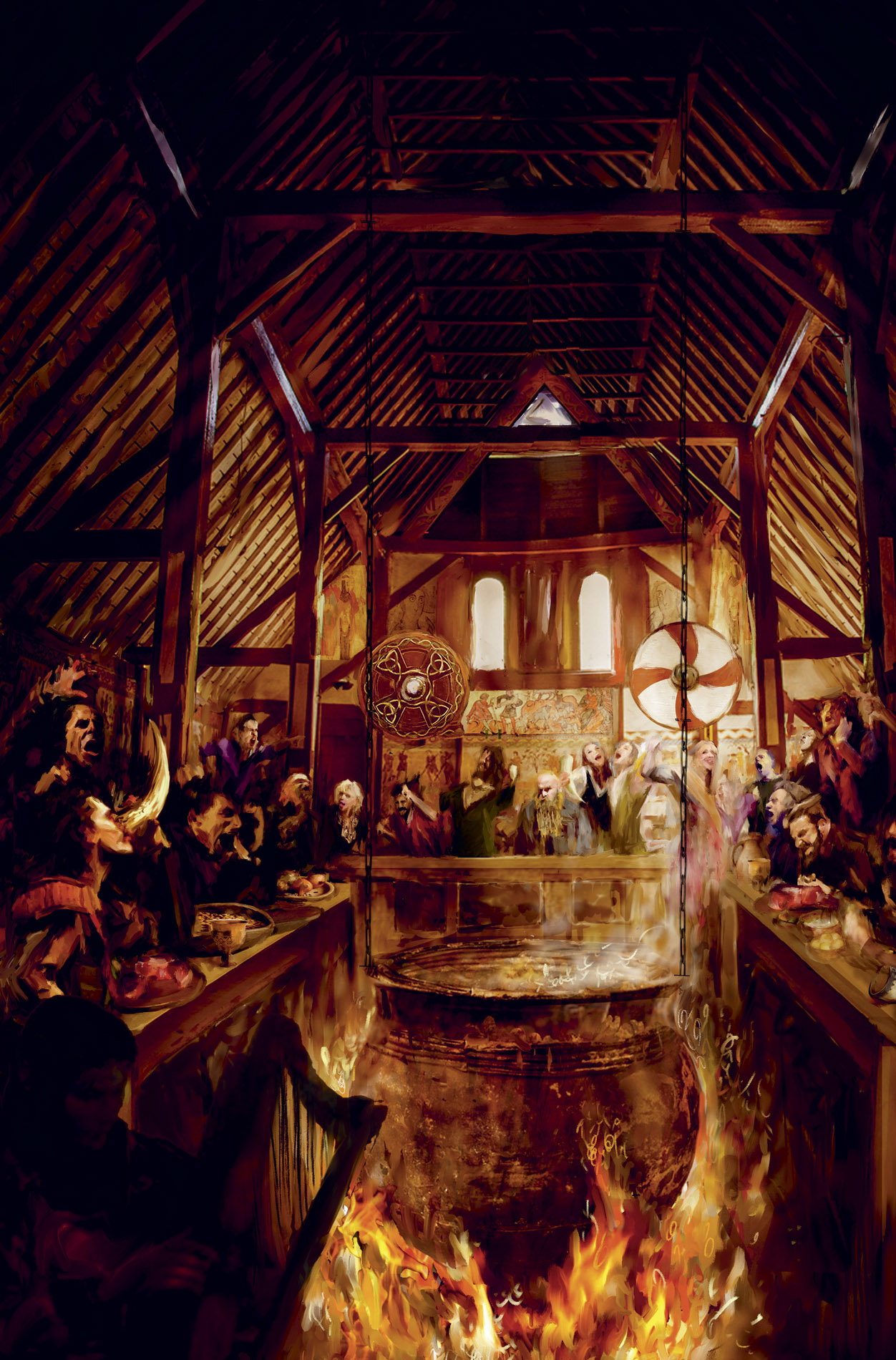
With the discovery of Sutton Hoo the sounds, sights and sensations described in Beowulf became visible in the archaeological record. The finds included cauldrons of food, a lyre to accompany the poetry of the minstrel reciting out loud, and aurochs horns (an extinct species of large cattle) to pass around the mead-benches in a hall just like Heorot in the poem: ‘the foremost of halls under heaven’ (ll. 309–10).
The ship itself recalls the burial of Scyld, the first Danish king: ‘On the wave, caked with ice, stood a hero’s ship. There they placed Scyld’s body, and bestowed him with treasures in the bosom of the ship, most renowned of men’ (ll. 32‒4).
The drinking horns and the set of smaller companion cups that were buried around them represent a physical manifestation of the relationship between Hrothgar (the Danish king), his wife, Wealhtheow, and the warriors in the hall. The queen honours Beowulf by passing the ceremonial cup first to him: ‘Then Wealhtheow went forward, Hrothgar’s queen, mindful of courtesy, greeting the gold-adorned warriors in the hall, and that noble lady gave the mead-cup first to the Danish guardian of the people’ (ll. 612‒16).
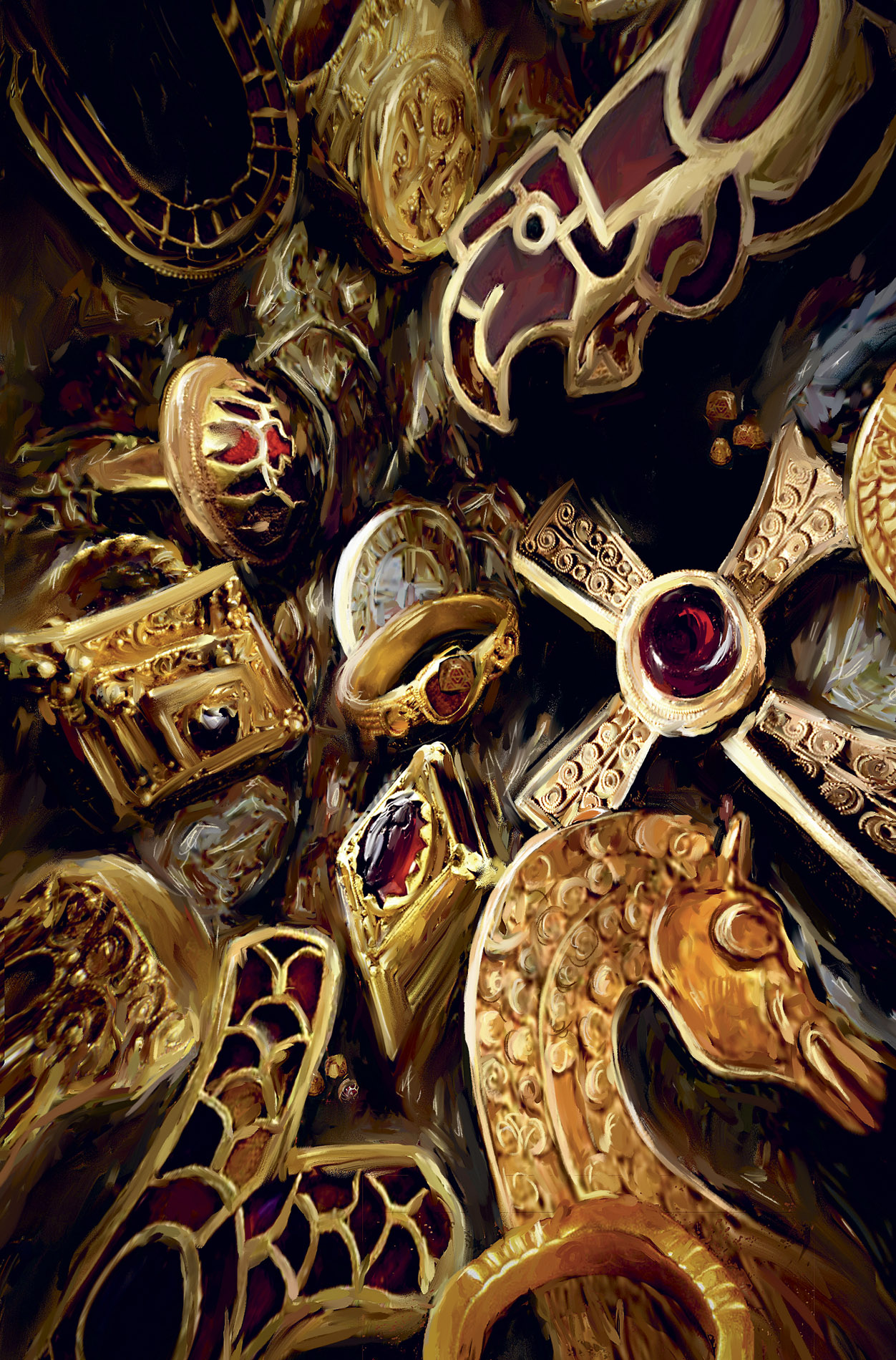
The fascination with gold, evident throughout Beowulf, is also brought to life through finds like the great gold buckle, a visual riddle with thirteen birds and beasts writhing over its surface. Sutton Hoo gave flesh to the poem, and vice versa.

References to Scandinavian rulers in the Anglo-Saxon poem have corroborated both textual and archaeological assumptions. For example, in the Ynglinga Saga, Icelandic writer Snorri Sturluson described how the Swedish prince Ohthere went to war following conflict with the Danes in the sixth century. Beowulf is the only non-Scandinavian source for this: ‘There was strife and struggle between the Swedes and Geats. Over the width of waters war arose, hard terrors of battle horror after Hrethel died’ (ll. 2473–6).
Another semi-legendary king, Eadgils, Ohthere’s son, is mentioned in Beowulf. Snorri recorded that the kings were buried in Gamla Uppsala, territory of the Ynglings. A sixth-century royal burial was discovered there, thought to be Eadgils, laid out in a bearskin with Middle Eastern cameos, a gold- and garnet-encrusted Frankish sword and ivory pawns from a Roman board game.
Other archaeological excavations have also brought greater understanding of the poem. In Lejre, Denmark, in the territory of the Scyldings, three 50-metre-long halls were discovered. This supported legendary accounts that this was the realm of the medieval kings of Denmark, and the location of Heorot, Hrothgar’s hall.
A problem many readers encounter with Beowulf is that few study the poem in its original form. It’s been filtered through the styles and idioms of countless translators, from J. R. R. Tolkien to Seamus Heaney. Their translations are beautiful works in their own right, but Beowulf was written in Old English.
To really connect with it you have to read it in its original language. This is no mean feat, but any translation, no matter how good, inevitably strips the poem of its rhythm and alliterative potency. Old English poetry has a very specific set of rules that makes it perfect for reading out loud.
The alliterative repetition of particular letters, the rhythm of the half-line and the ability to construct ‘kennings’ (two concepts in one word) allowed the poet to create as they went along. This meant poems were constantly mutating and you’d never hear the same poem twice, even if the elements of the story remained consistent.
Some of the terms found in the manuscript support the idea that Beowulf may have begun life as an orally performed poem. The opening is a pronouncement – ‘Hwaet!’ [‘Listen!’]

Alliteration gives Beowulf a dynamism when read out loud. Specific letter patterns set the tone for what is taking place in the narrative. For example, at points of great drama the poet could use harsher dental alliteration (on the letter d or t). Sibilance, the hissing alliteration on ‘s’, is used extensively to describe the monsters, as it creates atmosphere. A pair of accented syllables alliterate when they both begin with the same consonant, or when they both begin with a vowel. Any vowel can alliterate with any other vowel.
One line of Old English poetry is made up of two half-lines of mirrored rhythms separated by a brief pause.
Hroðgar maþelode, helm Scyldinga
Hroðgar replied, protector of the Scyldinga
The underlining indicates where the stress falls when reading out loud. Each half-line consists of two rhythm units (feet), so the rhythm is A, B, A, B. The two halves are joined by the repetition of the initial sound of certain accented syllables.
One such syllable in each half-line must alliterate.
This may sound complicated, but if we compare the oral recitation of Old English poetry with rap, the dominating factor is the rhythm. Rappers will fit a certain amount of words within a single rhythmical unit. The same applies to the Anglo-Saxon scop (minstrel). They had fixed rules but this still allowed for great creativity.
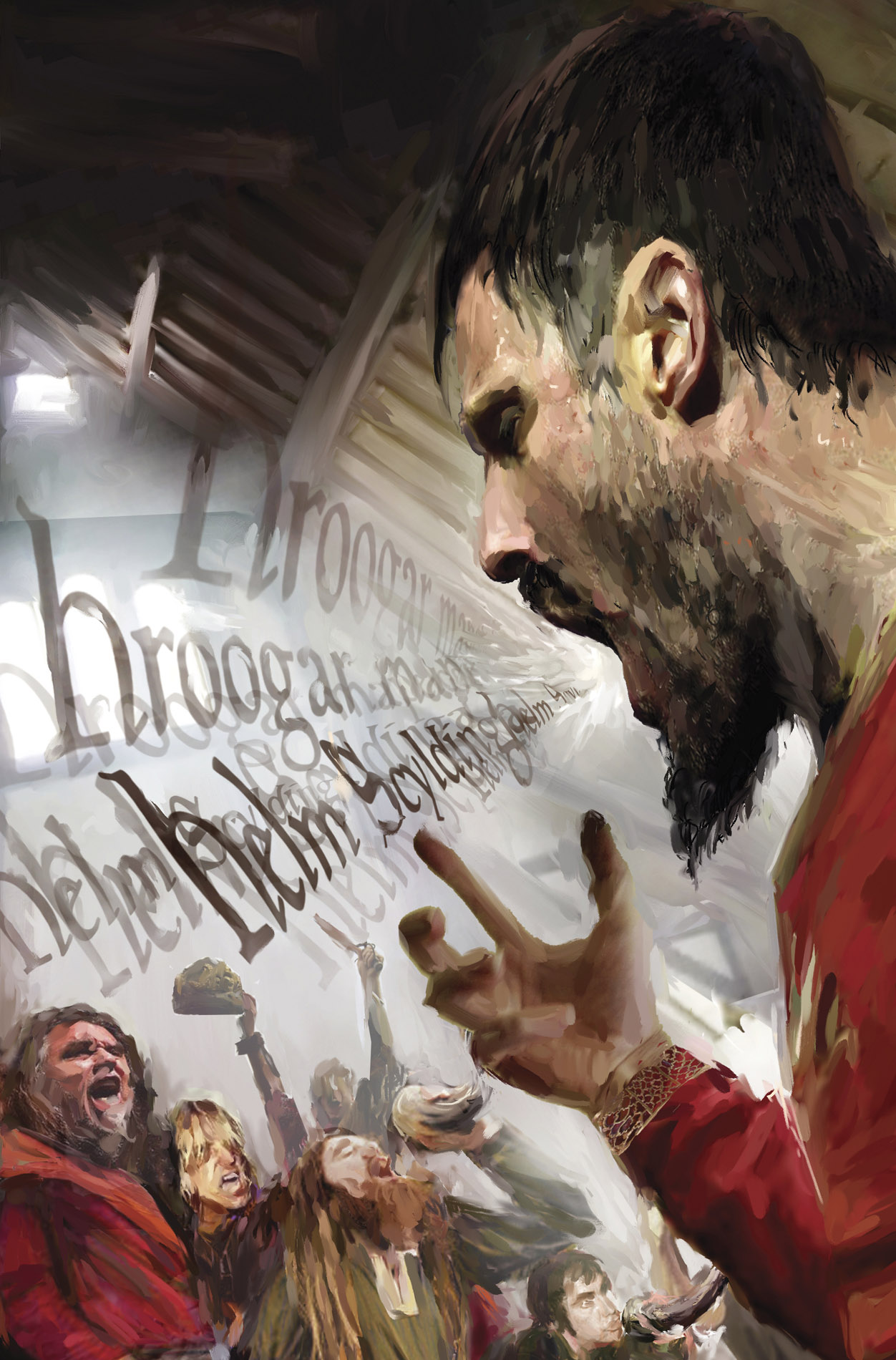
Kennings are essentially miniature riddles, in which two distinct words are combined to create a new concept. Poets could ensure individual words carried metaphorical or descriptive power in themselves. Greater lexical variation also helped to create expressive and varied poetry, since a poet needed multiple versions of a word, each beginning with different letters, to allow his alliterative patterns to work.
They were also useful as mnemonics, helping scops to remember sections of a story by recalling which sound they alliterated on and which rare words were included. The most common words centre on battle, seafaring or on the life of a warrior. For example, the sea could be referred to simply as ‘sae’. But in Beowulf the poet also uses ‘swan-way’ and ‘sail-road’, while a ship could be ‘scip’ or ‘foamy-necked floater’. There’s a miniature poem within a poem, as each kenning conjures ideas in isolation from the main narrative.
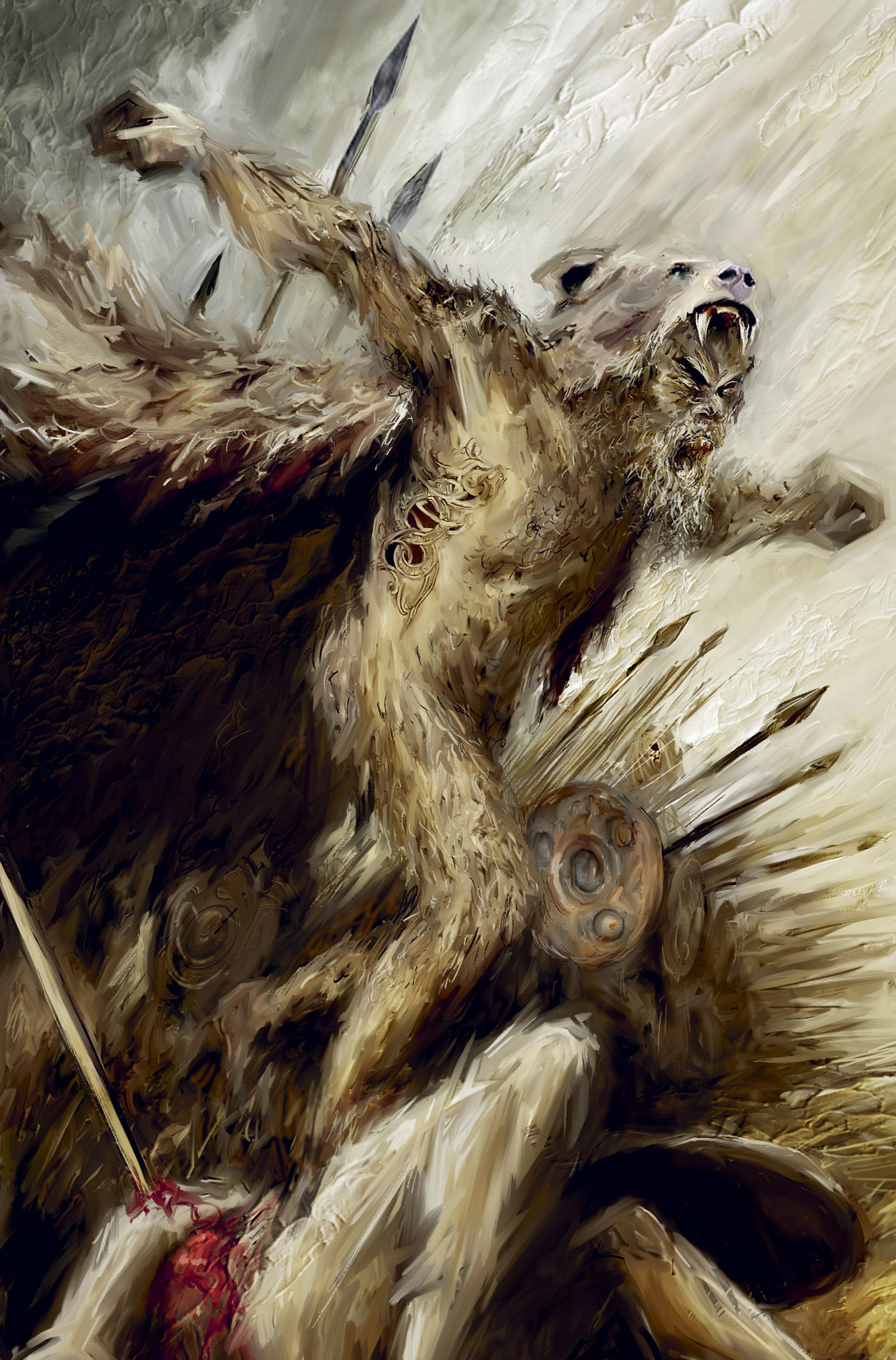
There may even be a kenning at the very heart of the narrative. The hero’s name, Beowulf, can be translated as ‘bee-wolf’, or a wolf who likes honey – a bear. Given that Tacitus refers to an elite group of Germanic warriors called berserkers who (like bears) ran into battle with just their physical strength as a weapon, this could be a reference to Beowulf as a ‘bear-serker’ who ‘scorns the use of weapons’ (l. 434).
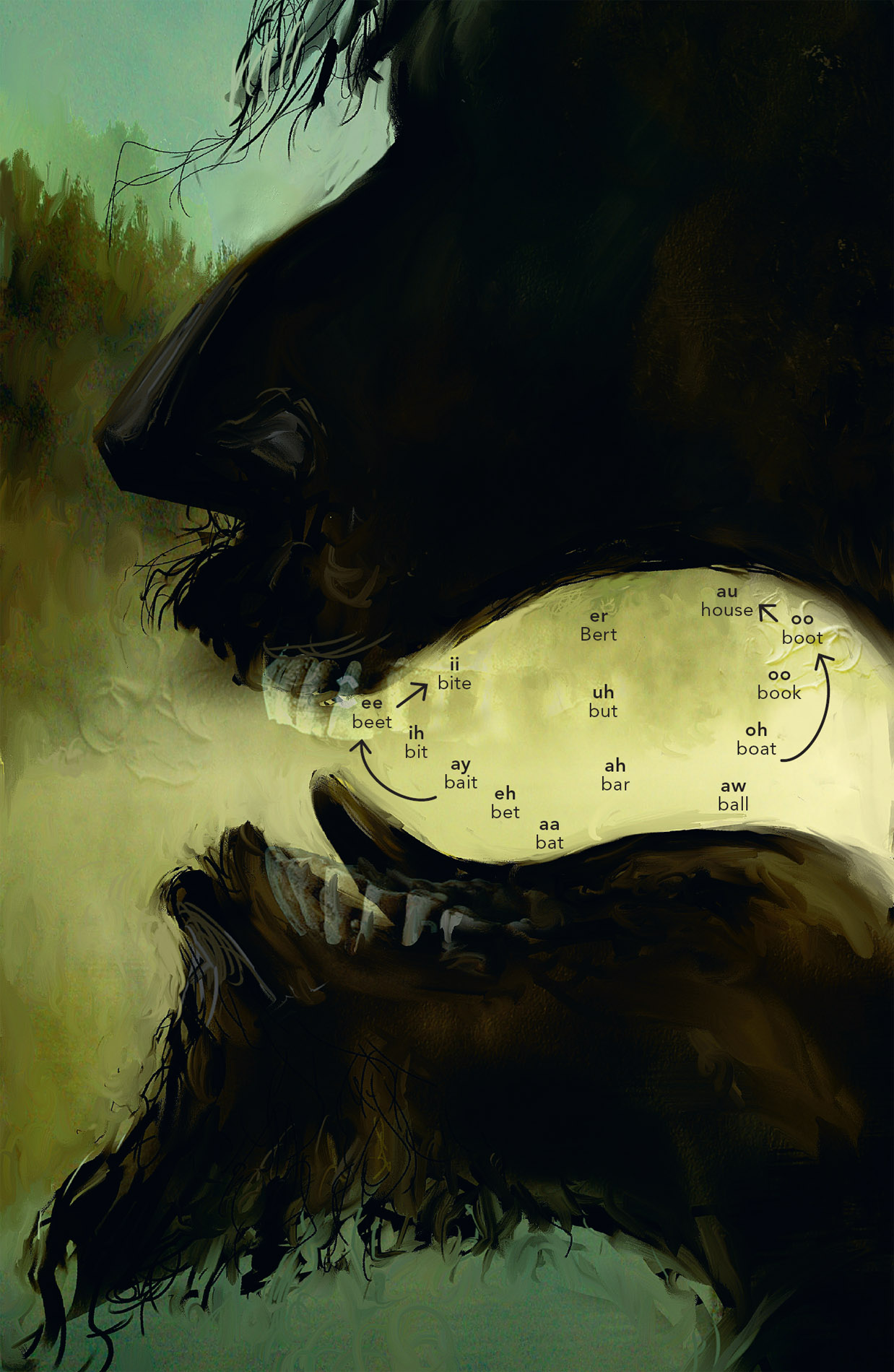
Old English is essentially spelled as it was pronounced. This meant that words were written differently in regions where words were pronounced distinctly. Although it is a long-dead language, we can learn how to read and recite it, since we can follow the rhythmical and alliterative patterns, examining spelling variations to see how sounds changed over centuries.
The first thing to note is that the Old English alphabet has a few unusual letters: ‘Þ’ (thorn) and ‘ð’ (eth) are both pronounced ‘th’, and ‘æ’ (ash) is a long ‘a’. Once you know how these letters should sound, they are less intimidating. However, it is a fully inflected language with five grammatical cases. Like French, all nouns are gendered (e.g., ‘sēo sunne’, the Sun, is feminine; ‘se mōna’, the Moon, is masculine).
When it comes to pronunciation, most Old English consonants are the same as their Modern English equivalents. The exceptions are ‘c’, which can be pronounced hard like ‘k’ or sibilant as ‘ch’. And ‘g’ can be pronounced as ‘y’ before ‘i’ or ‘e’ and as a hard ‘g’ otherwise. The long vowels sit further downwards in the mouth. Long ‘e’, for example, should rhyme with ‘way’ rather than ‘meet’. This is because Old English literature dates from before the Great Vowel Shift, when the influence of French loanwords shifted the pronunciation of long vowels upwards.
There is a strange self-consciousness in Beowulf – the poet regularly displays the artifice with which he crafts this fantasy world. When the characters speak, the poet describes how they ‘unlock their word-hoard’ (l. 259), releasing the treasures of their imagination through oral recitation.
When the men are delighted at Beowulf’s victory over Grendel, one begins to recite another saga: ‘Wise speechmaker who was mindful of verses, full of the sagas of old, remembered rhymes and bound word to word’ (ll. 867‒70).
This exemplifies memorializing through poetry and the celebrated skills of the poet. Another inserted saga is the story of Finn (ll. 1063‒159). This tale acts as a tragic echo of what will happen to Beowulf in his decline. A poem within a poem.
The Old English elegy also plays out behind the battle-hardened epic. In the ‘Lament of the Last Survivor’ passage (ll. 2200‒267), there is a sombre quality which recalls other Old English poems like ‘The Wanderer’. The central concept is that life is hard and full of trials, and the lone warrior will feel great loss at being torn from the safety of the hall. This is yet another style of poetry tucked within the 3182 lines of Beowulf.
From the very beginning, Beowulf is concerned with honour, reputation and ‘commitatus’. In his book Germania (98AD), the Roman writer Tacitus described the bond between Germanic leaders and their warriors: ‘To survive the leader and retreat from the battlefield is a lifelong disgrace.’
The bond between lord and warrior was sacrosanct, sealed by the giving of gifts. Anglo-Saxon society was bound together by similar relationships, and numerous laws refer to the paying of ‘blood-money’ as a means of cancelling feuds, which could otherwise take many lives over many generations.
But to secure the absolute loyalty of a band of brothers a lord would have to reward his followers. The kings in Beowulf are called ‘ring Danes’, and throughout there are elaborate descriptions of the gifts given to the warriors who have earned them through their dedication, including weapons:
For one warrior stripped the other, looted Ongentheow’s iron mail-coat, his hard sword-hilt, his helmet too, and carried gifts to King Hygelac; he accepted the prize, promised fairly that reward would come, and kept his word.
(ll. 2985‒95)
These bonds kept Anglo-Saxon, Germanic and Scandinavian society functioning.
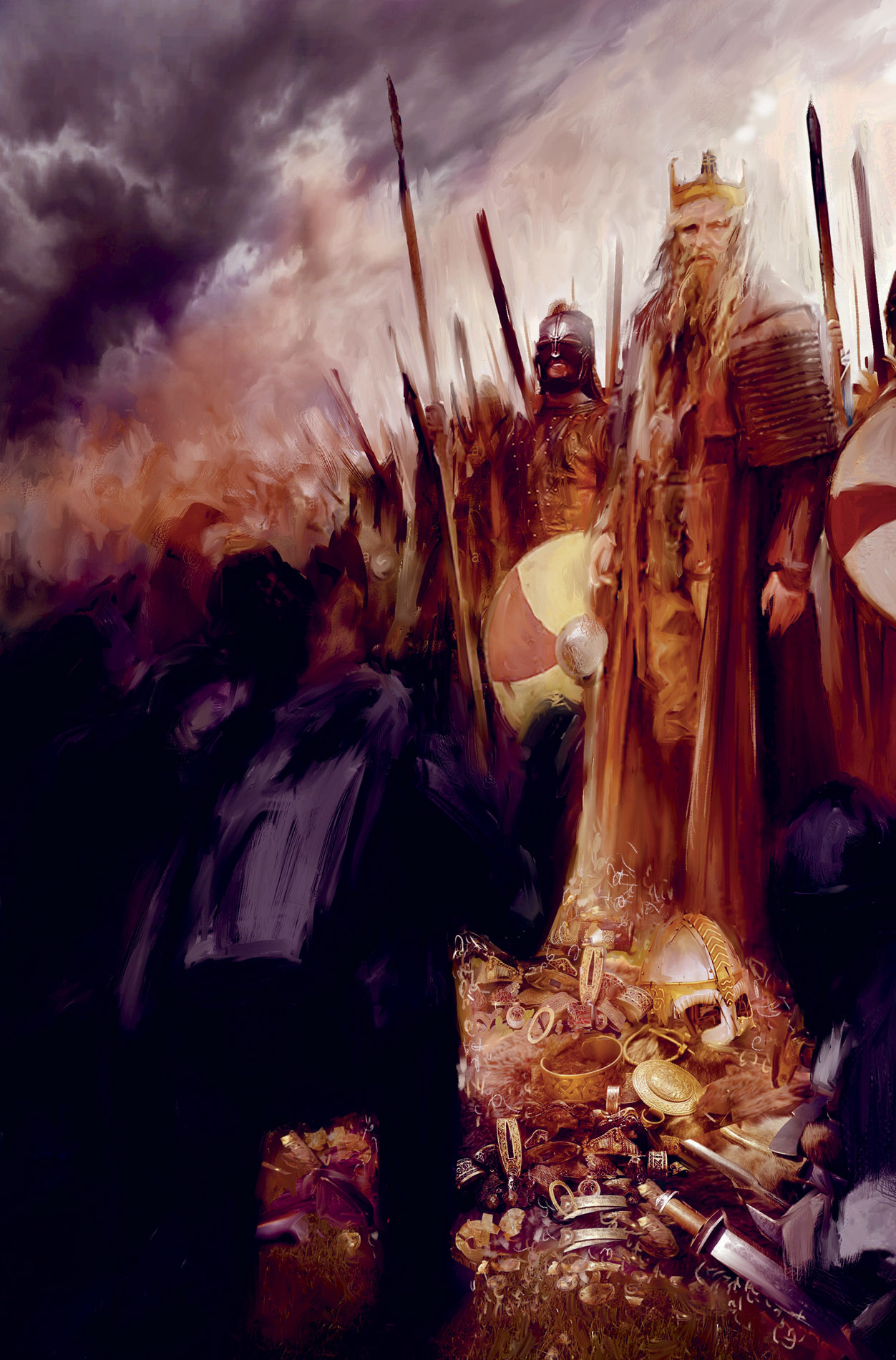
Much Old English poetry is fascinated by the tension between inside and outside, the safety of the hall versus the unknown wilderness. Monsters disrupt this. There are three main non-human characters in the poem (Grendel, Grendel’s Mother and the Dragon). The appearance of each charts both a turn in the narrative and the deterioration of Beowulf’s strength.
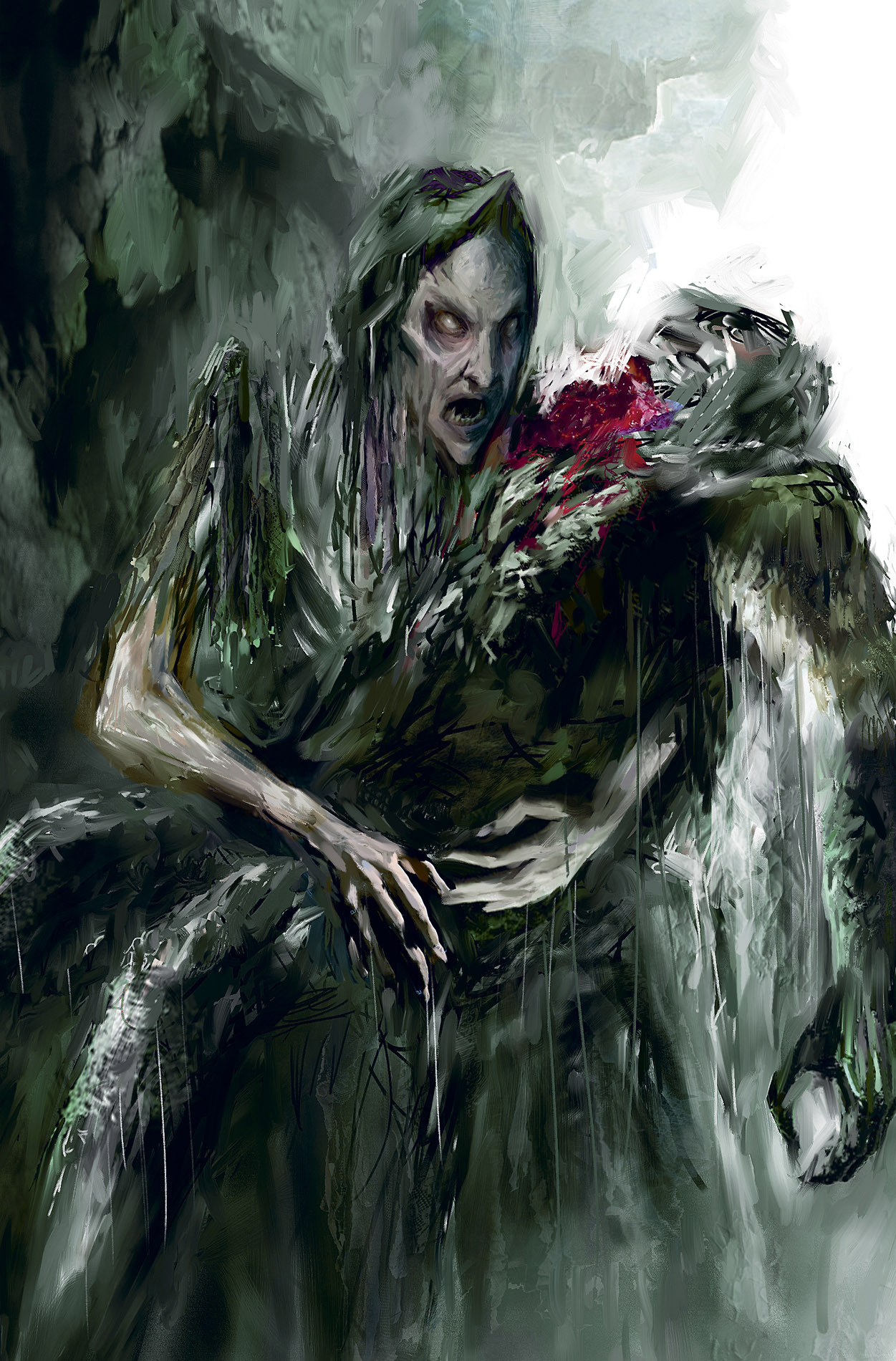
The first, Grendel, is described as a descendent of ‘Cain’, a ‘walker in the shadows’ (ll.159–60), placing him in a Christian context as a great sinner. His lair is an unnatural inversion of the hall above. The landscape he and his mother inhabit upsets the natural order. ‘The water burns’, ‘the sky weeps’, ‘hot gore’ oozes from the earth. What’s more, through their night raids the chaos of the outside world enters the safety of the hall.
The Dragon is a sadder character. He is described as ‘last of his kin’, and he sits all alone with his mound of gold until one man steals a golden goblet and arouses the wrath of the beast. He too is an inversion of nature, able to spew forth fire. There is a tragedy to Beowulf and the dragon’s encounter, since both are old and aware that death awaits them. There’s almost a sense of the death of a world here, and the end of a strange yet marvellous era.
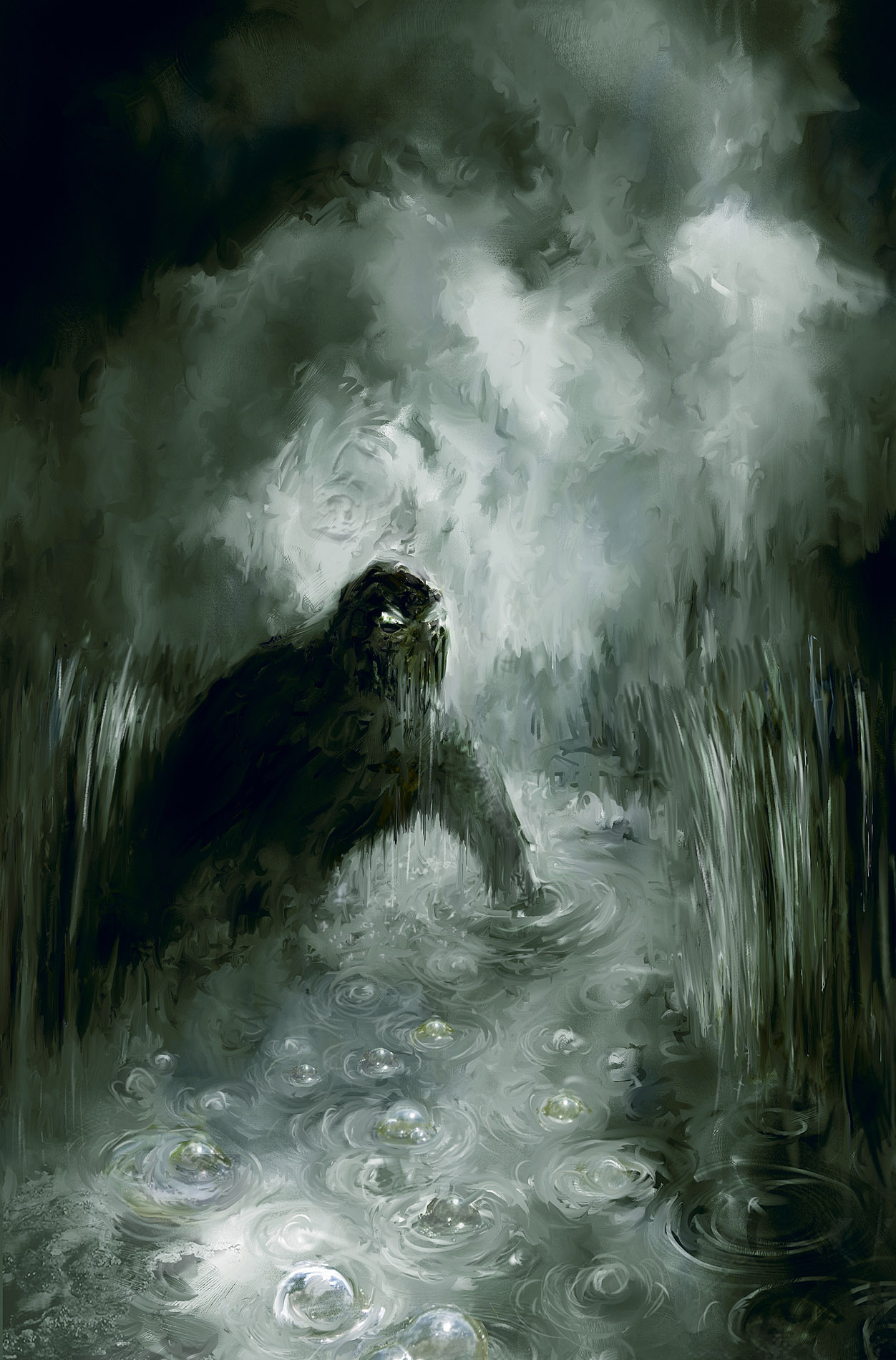
The poem is filtered through the hand of later Christian scribes, so the women in it appear in ceremonial roles, supporting their husbands. They are referred to as ‘a balm in bed’, with Hrothgar’s queen, Wealhtheow, described as ‘bed mate’. Rulers’ wives are required to support the realm by securing the royal line. Indeed, the women have an important role to play as mothers of warriors:
We can speak well of the woman who bore this warrior among sons of men, if still she lives, that the God of the ages was good to her in the birth of her boy.
(ll. 942‒6)
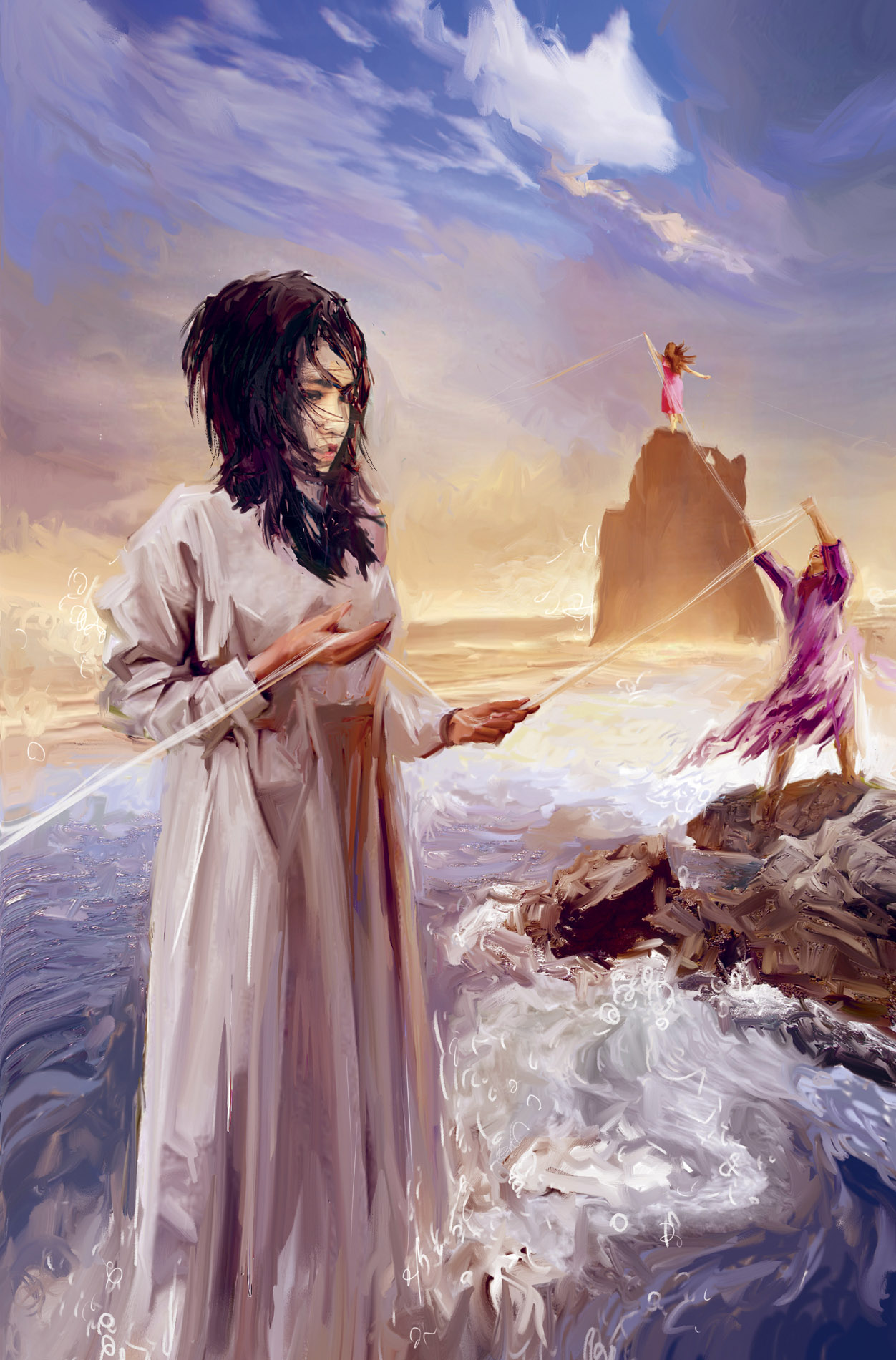
But they are also diplomats. After Beowulf’s victory, Wealhtheow must spin a careful web around her sons, ensuring their own legitimacy as heirs to Hrothgar while welcoming Beowulf as her adoptive son. She too delivers important speeches and, like her husband, she bestows treasures on Beowulf, as a seal to their relationship.
The bonds between mother and child are stressed not only by Wealhtheow’s calls for Beowulf’s ‘kindness’ to her sons but also by the rage of Grendel’s Mother at his death. She wants revenge for her son. Beowulf’s battle with Grendel is brutal. That with his mother is tinged with empathy for the loss of her son.
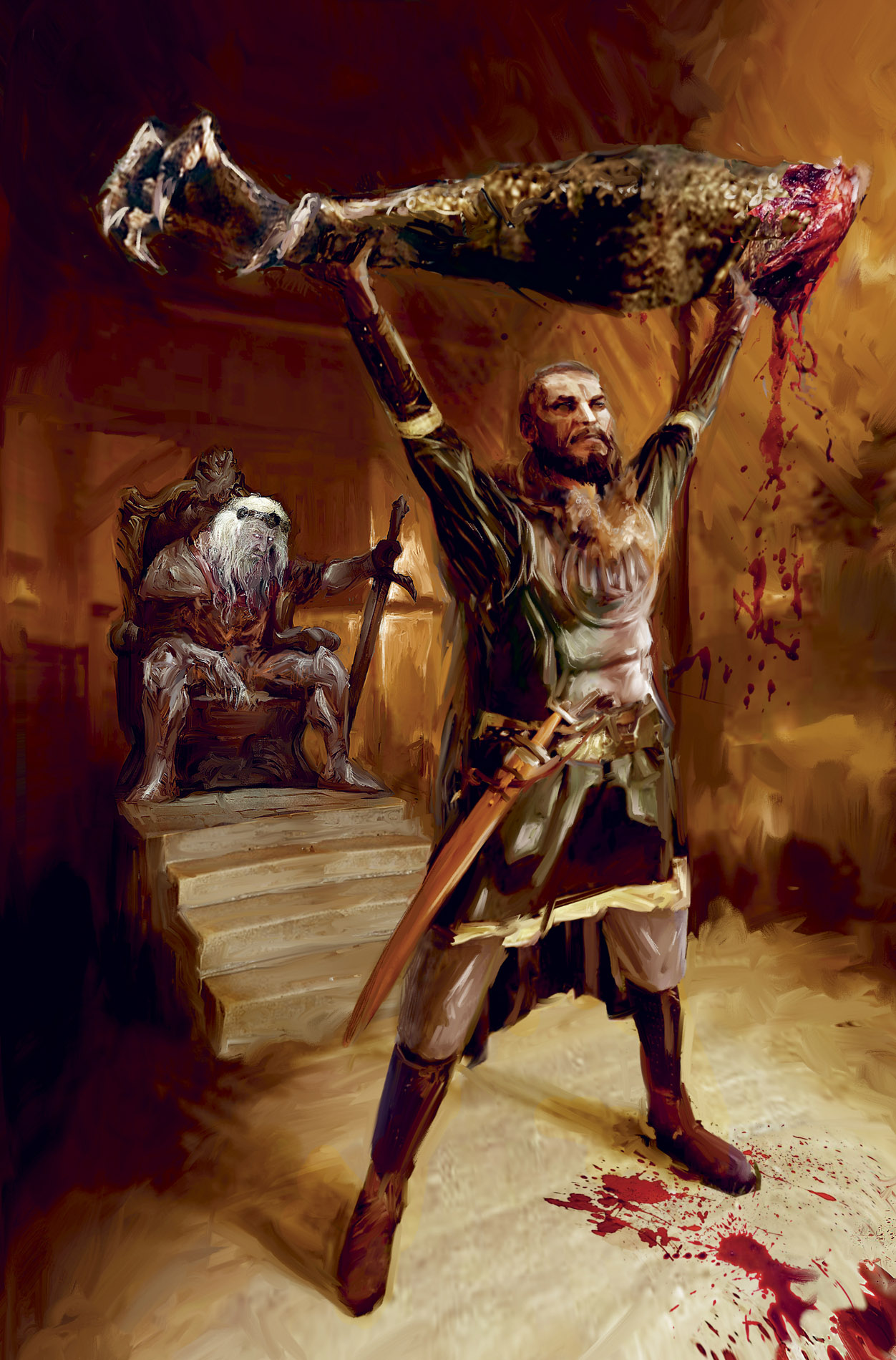
Beowulf begins the narrative as an almost foolhardy warrior, seeking out combat without the protection of weapons. As the narrative progresses he becomes more cautious, bringing a band of men with him for his clash with Grendel’s Mother. Yet, after fifty years of ruling as a king, his final battle is more tragic. He has been worn down by responsibility.
Indeed, the relationship between Beowulf and Hrothgar stresses this difference. The old ruler of the Danes is described as ‘white-haired, old, his earls about him’ (ll. 1594–6). He is unable to physically defend his people, so he welcomes the arrival of one strong enough to do so. Yet he respects his role as king, giving gifts and providing the luxury of his hall.
While a hero should be loyal, fearless and courageous, a good king must be courteous, thoughtful of the needs of his followers and considerate of more than personal gain. Some rulers balance the two characteristics, but they rarely coexist.
When Beowulf eventually becomes king of his own people, he is still hungry for fame, and is abandoned by all but Wiglaf (his successor). In many ways Wiglaf holds up a mirror to the heroic Beowulf of the start of the poem, and perfectly exemplifies the commitatus bonding lord to warrior. He represents the future of heroism and is the lasting optimistic element of the poem while all else seems lost.
Given that Beowulf was written down by monks, there’s a remarkable absence of Christian terms throughout the text. There are ambiguous references to ‘the Lord of Life’ and certain gnomic statements slip in, suggesting that ensuring continuing salvation after death should be the aim of all. But in its essence, the poem is a romping epic full of the concerns of the warrior elite.
In the pagan warrior culture of Beowulf it’s not good deeds or prayer that will ensure safe passage to the afterlife. It’s reputation, fame and enduring in the memory of those who come after you. But here is the complex realm of the noble pagan. If the Christian God was unknown to them, then they err through ignorance. Certain notions, like Fate, are blurred to appear universally resonant: ‘Fate goes ever as fate must’ (l. 455).
But there is some element of Christian ideology in Beowulf’s demise. There’s a sense in which his life is futile and that he is on a downwards spiral in pursuit of fame and treasure. He increasingly loses control in each of his battles and leaves no legacy or protection for his people.
The primary message of Beowulf is that life moves towards death and the wheel of fortune is perpetually turning. These are ideas that would have resonated within both Germanic pagan and Christian world views.
Many passages in Beowulf are lavish descriptions of the beautiful treasures the warriors receive for their bravery. Everything in the poem gleams, from Wealhtheow’s dress to the battle standards they fight under. The importance of gold to the Anglo-Saxons is clear from many stunning archaeological finds.
But there is a deeper symbolism to the medium. It is a sign of wealth and success, yes, but it is also a way of securing reputation and challenging the passage of time. Gold survives in the dragon’s hoard when the bones of warriors are long gone.
This significance is not lost to the Christian poet, and he takes pains to drive home the moral message that a thirst for wealth will not ensure happiness: ‘Treasure, gold in the earth, may easily overcome any man, hide it who will!’ (ll. 2764‒6).
Another fascinating aspect of the importance of gold in Beowulf is the suggestion that the narrative itself is woven together like the strands of Anglo-Saxon interlace. The notable aspect of decoration like that found on the Sutton Hoo buckle is that it is largely non-figurative and zoomorphic, based on birds, beasts and serpents overlapping like the story itself.
A certain magic surrounds gold. As with other seemingly supernatural acts of the smith (the Germanic pagans worshipped Weyland the Smith as a god), the process of working gold was seen as almost alchemical – turning solid to liquid and back again. When Beowulf finally wins the treasure hoard from the dragon, he finds it carries a spell which means no man can possess it and it has to be left to the earth, ‘useless to men’.
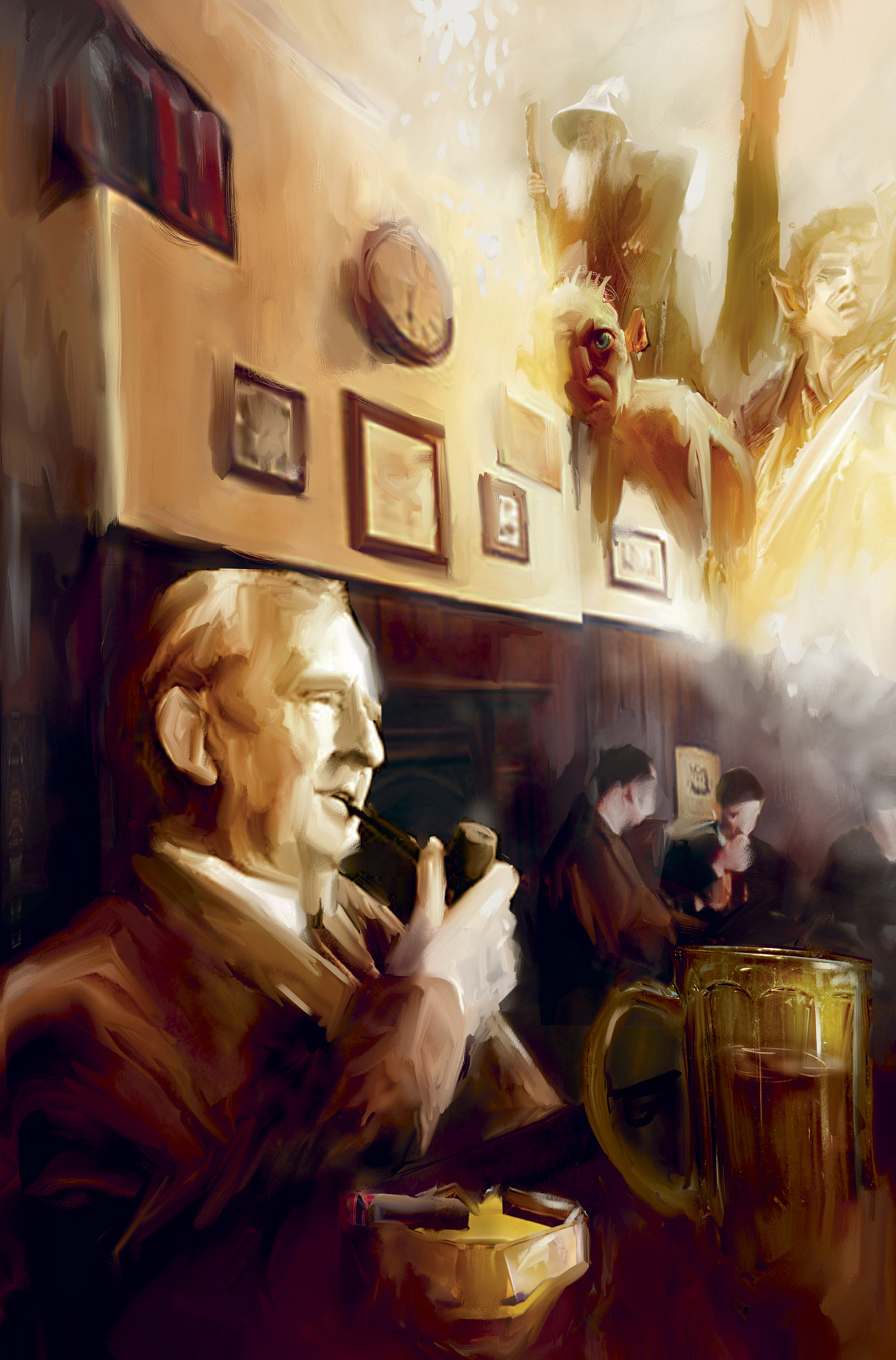
There are few individual texts that have had such an important influence on later poets and writers than Beowulf. Famously, J. R. R. Tolkien was heavily influenced by it when forming the fantasy-scapes of both The Hobbit and The Lord of the Rings. As Professor of Old English at Oxford University, he found constant inspiration in the style and subjects of the poetry he taught. The Old English term for the world, ‘middan-geard’, translates as ‘middle earth’, the name of the setting for most of his fiction.
J. K. Rowling’s Harry Potter books also recall Beowulf at times. The underwater grindylows that Harry must do battle with in the Triwizard Tournament of Harry Potter and the Goblet of Fire are named after the poem’s water-bound monster Grendel, while the ‘death-day’ that her ghosts celebrate (instead of their birthday) is taken from the Old English ‘deothdeage’.
Seamus Heaney has produced probably the best known and most celebrated translation of Beowulf, and has been open about the influence the epic Old English poem had on his own writing style. But other authors have also been influenced by the style and stories of this great epic. C. S. Lewis and W. H. Auden both created alliterative poems, mimicking the techniques of the Beowulf poet.
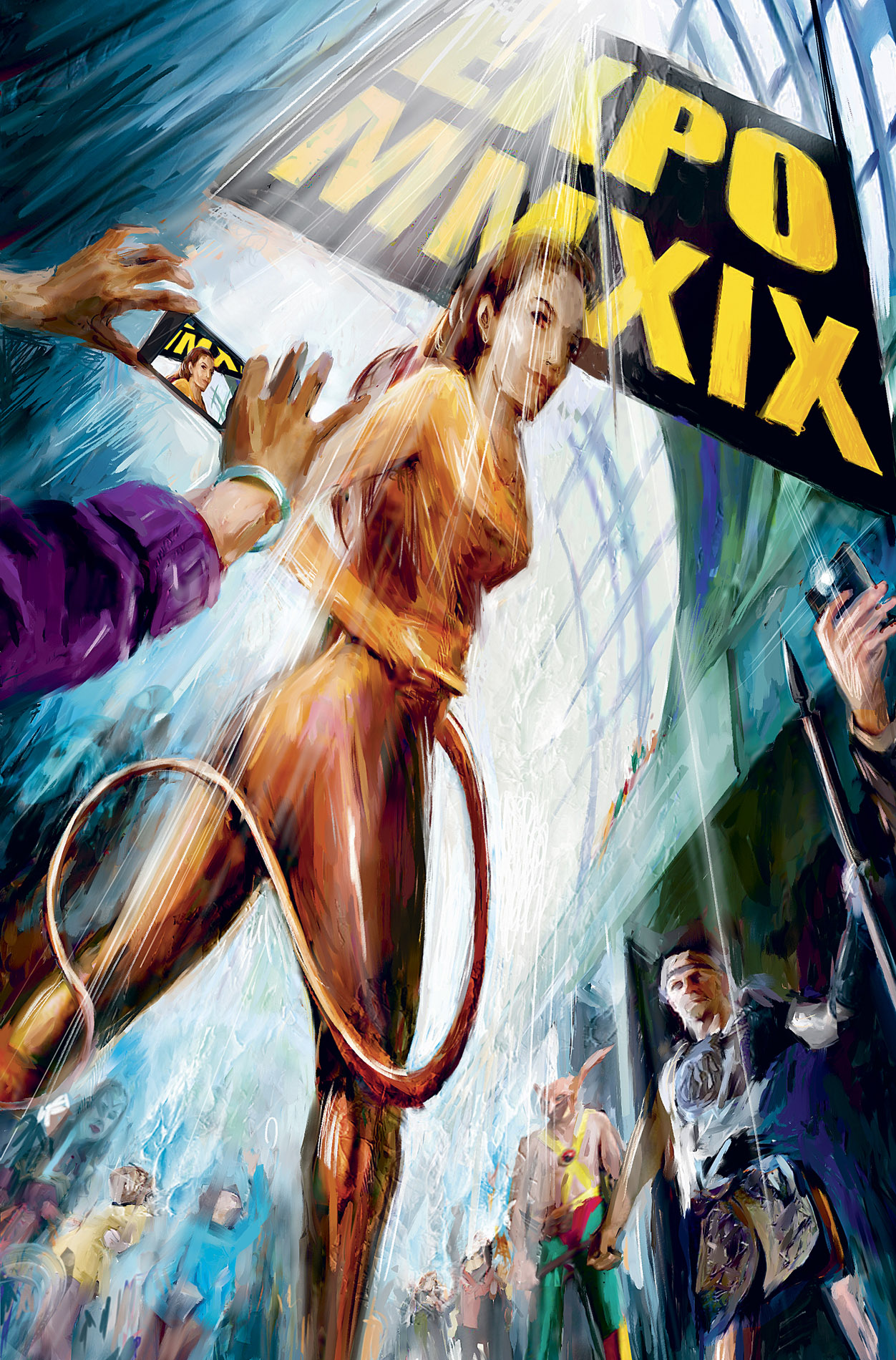
There have been well over 300 adaptations and translations of the poem on stage, page and screen. One of the earliest film adaptations in 1981 was taken from John Gardner’s novel Grendel, with Peter Ustinov voicing the narrative from the point of view of the monster. Beowulf has also appeared in Star Trek, Mighty Max and Xena: Warrior Princess.
In 2007 a star-studded movie was made illustrating elements from the poem, with Ray Winstone voicing Beowulf, Anthony Hopkins Hrothgar and Angelina Jolie Grendel’s Mother. The screenplay was written by Neil Gaiman and Roger Avary, taking only the main elements of the plot and using the poem as an imaginative springboard for an all-action version of its world of monsters, myths and warriors.
Indeed, the character of Beowulf has inspired several comic books, including DC’s Beowulf: Dragon Slayer (1975‒6). On stage, his story has been adapted into a high-school comedy, a full chamber opera performance, a children’s musical and a rock show. There’s a Beowulf board game and computer games based on the poem. Its legacy is largely due to the warrior status its main protagonist has secured. He is the epitome of reckless physical power, personal drive and determination against the odds.
It’s exciting to be an early medievalist. The skills you need take a long time to master. You cross disciplinary boundaries, embracing archaeology, theology, literature, art history, history, palaeography and learning the dead languages of Latin and Old English. But it reaps many rewards. You become an historical detective, setting your skills to work uncovering a world that has been dismissed as a ‘Dark Age’.
Today the world of Beowulf can still entrance us, sitting somewhere between fantasy and history. It’s full of powerful heroes and complex emotions, the stuff of computer games, comic books and superhero films. Beowulf is like The Godfather: it’s about revenge and reputation. Bloodlust underlines everything, and the descriptions are gory and exhilarating: ‘He seized a sleeping warrior for the first, and tore him fiercely asunder, the bone-frame cracked, he drank blood in streams, swallowed him piecemeal’ (ll. 740‒44).
But we must remember that the poem is over a thousand years old. To read Beowulf is to touch the world of our ancient ancestors, to try to understand where England came from, and to discover a period in history that formed our nation, our identity and the next centuries of our history. It is the starting point for understanding ourselves. It’s our epic.