2
WORK AND THE GIG ECONOMY
|
KEY CONCEPTS • aesthetic labour • division of labour • emotional labour • Fordism • gig economy • job design • just-in-time • knowledge work • McJobs • Taylorism • work-life balance |
CHAPTER LEARNING OUTCOMES
After completing this chapter, you should be able to:
1. Explain the meaning of work
2. Summarize the historical dimensions of work, pre-industry, the factory system and knowledge work
3. Identify the emerging trends in job design in the gig economy
4. Evaluate the strategic importance of job design as part of a process of managing and leading people
5. Discuss the debates around issues of emotional labour and work-life balance
INTRODUCTION
It is a paradox of life that its recognizable features are often the most difficult to understand, and this observation is highly relevant to the topic of work. Whether defined in conventional economic terms as ‘paid work’ or defined more inclusively as a broad range of activities beyond the boundaries of paid employment, work is, in many ways, at the centre of human activity. It affects the nature of day-to-day interaction in the workplace and the most personal aspects of our experience in the family and the community. Arguably, the essence of being human is to engage in waged labour. The emergence of the gig economy is one of the most important new transformations in waged labour. The gig economy accounts for 4.7 million workers in Britain. For these workers, the employment relationship – the formal relations between workers and their employer – is being re-forged. Deliveroo does not pay sick pay to riders who are injured at work. Uber drivers are pressured to work long hours and neither does the company pay drivers benefits that are paid to permanent employees (Partington, 2019). Amazon’s fulfillment centre employees are made to work through sickness and injury, and poultry-processing workers wear diapers because they’re denied bathroom breaks (Harrington, 2019). From questionable self-employed status to zero-hours contracts, the gig economy is changing the employment relationship and increases the power between those who benefit from low-wage, insecure work and those who have no option but to accept it. Work can also have catastrophic outcomes, as shown by the death of 43 miners in the Congo, in June 2019 when the open-pit mine owned by Swiss mining giant Glencore, collapsed or when two rail workers near Port Talport, Britain were killed in July 2019 after being struck by a passenger train or when, 32-year-old Geoffrey Keaton, and three other firefighters, in December 2019 were killed tackling the bush fires in New South Wales, Australia. Organizations and their agents are the architects of waged work, and it is within organizations that work is structured, jobs are designed and the employment relationship is formed. Gig economy jobs are a reminder that the vast majority of workers have little influence over how their labour is bought and designed. The principal architects are upper-echelon managers and it is their decisions that create many different and contrasting types of work and patterns of social relations.
deindustrialization
a term to describe the decline of the manufacturing sector of the economy
occupation
a category of jobs that involve similar activities at different work sites
gig economy
a labour market characterized by the prevalence of short-term or zero-hours contracts or freelance work as opposed to permanent jobs.
Since the Industrial Revolution, work under capitalist conditions has retained the potential to be a life-enhancing activity. But capitalist conditions also create a divide between skilled and unskilled and relatively secure and insecure work. The nature of waged work has been subject to constant change. Most traditional ‘craft’ jobs have either disappeared or have been ‘deskilled’, and factory work has been increasingly influenced by the ‘scientific management’ principle of organizing particular work tasks. Other trends throughout the twentieth century have been the decline of trade union membership, the rise of neoliberal ideology, the shift from manufacturing to the service sector – a process called deindustrialization – the growing presence of women in virtually all occupations and, especially since the 2000s, the growth of on-demand flexible labour – the gig economy. Flexible labour is a plethora of employment contracts that are part-time, fixed term, short term or seasonal and create what has become known as ‘on-demand’ or ‘precarious’ employment.

STOP AND REFLECT
What is your own experience of the gig economy? What relevance, if any, does gig work have for OB? Hint: See Ken Loach’s 2019 film, Sorry We Missed You, for further insight into gig work.
Although waged work can be arduous, tedious, dirty, unhealthy and at times dangerous, it can also bring connections and friendship, be a principal source of individuals’ self-fulfilment and form part of their social identity (Bolton and Houlihan, 2009). At the society level, how and where work is performed has consequences not only for the individuals who do it, but also for their families and for the communities they live in. Writers have offered both optimistic and pessimistic accounts of work. The optimistic scenario focuses on the potential liberating effect of information technology. Andre Gorz, for example, predicted, under certain social conditions, ‘the liberation of time and the abolition of work’ (1982: 1). Critical scholarship argues that class matters as ‘decent work’ or ‘elite jobs’ are the preserve of the privileged ‘social elite’ (Malik, 2019; Weale, 2016). The Cambridge economist Ha-Joon Chang (2013) observes that issues of the quality of work and the connection between work and well-being have been marginalized in public discourse: ‘the crisis for British wage-earners is much more than the cost of living. It is a work crisis too’, he states.
This chapter has a very bold objective: to explain the nature of work in globalized capitalist societies, why work is connected to human well-being and why the design of work is important to understanding OB. This requires you to critically assess the evolution of work from early capitalism to late modernity. We look at the historical dimension of work in the belief that the current problems associated with work in the gig economy are an outcome of the past, and that the problems of the future are embedded in the social relations of work designed in the present. The broader context of work provides an essential background for understanding the connection between work, identity, dignity and private life, behavioural decisions in organizations, and the implications for managing the employment relationship.
THE MEANING AND SOCIAL NATURE OF WORK
social structure
the stable pattern of social relationships that exist within a particular group or society
‘What kind of work do you do?’ is such a common question that it is repeatedly asked in social conversation. This question is significant because it underscores the fact that paid work – employment – is generally considered to be a central defining feature of our identity. It is also one important means by which we judge others. Adults with paid jobs usually name their occupation by way of an answer, but you can see this question in a wider sense too. It invites you to explore the nature of work in relation to time, space and social structure.
Consider this everyday scene in any Western town or city. It is 2 o’clock in the afternoon, and a neighbourhood park is busy with adults and children enjoying themselves. Some are walking quickly through the park, perhaps going back to their office or store after their lunch break. A city employee is pruning roses in one of the flower-beds. Near the bandstand, three musicians are playing a saxophone, a clarinet and a violin. Two people are playing tennis. Others are watching young children play. A man sitting on a bench is reading a book, a woman is using a mobile phone, and a teenager is completing a printed form. This scene draws attention to the blurred boundary between work and non-work activity. It gives us an entry point for answering the question ‘What is work?’
If we try to define some of these individual activities as work, the confusion and ambiguity about the meaning of work will become apparent. For example, the people walking back to their offices or to the shops might prune the roses in their gardens at the weekend, but they are unlikely to see the task in the same way as the gardener who is employed to do tasks such as pruning. The three musicians might be playing for amusement, or they might be rehearsing for an evening performance for which they will be paid. An amateur who plays tennis for fun and fitness does not experience or think of the game in the same way as a professional tennis player. Similarly, a parent keeping an eye on a child playing does not experience child care in the same way as a professional nanny. The person using the mobile phone might be talking to a friend, but she could be, say, a financial adviser phoning a client. The person filling in the form might be applying for a student grant, or might be a clerical worker catching up with an overdue job during his lunch hour. We can see from these examples that work cannot be defined simply by the activities that are carried out.
STOP AND REFLECT
Write down your own definition of ‘work’. To help you, consider a chef preparing a meal at a five-star hotel, and the same chef going home and preparing the family meal. Are both activities ‘work’?
So what exactly is work? ‘Work’ can be contrasted with labour’. According to Williams, labour has a ‘strong medieval sense of pain and toil’ (Williams, 1983: 335), and ‘work’ can be distinguished from ‘occupation’, which is derived from a Latin word meaning ‘to occupy or to seize’ (Christiansen and Townsend, 2004: 2). The terms ‘work’, ‘occupation’ and ‘job’ have become interchangeable: work is not just an activity, something one does, but something a person has (Gorz, 1982). Conventionally, to ‘have worked’ or to ‘have a job’ is to use a place (or space) and sell time.
A substantial number of people have an instrumental orientation to work. They work for economic rewards in order to do non-work or leisure activity that they ‘really enjoy’. For these people, life begins when work ends. Different occupations provide different levels of pay, so those doing them have different life chances and opportunities in terms of health, education, leisure pursuits and quality of life. Among people who ‘have work’, it is not simply the case that people need to work in order to have enough money to live on. People do paid work to earn money to acquire ‘consumer power’. Thus, paid work is for many a means to an end – the consumption of commodities (buying designer clothes, fast cars, mobile phones and so on) or social consumption (such as drinking, dining out and holidaying). The central differentiating feature between people ‘out of work’ and those ‘in work’ is that the latter have much higher levels of consumer power and more choice about their lifestyle.

Plate 5 Work in the service sector often requires workers to provide more than physical labour. Jobs such as flight attendants and waiting at tables require workers to manage their feelings in order to create a publicly observable facial display: what Hochschild calls emotional labour’. Do service workers have an ability to control their interactions with customers?
Source: Getty Images/visualspace
However, as we know from theories of work motivation, pay is only part of the equation (see Chapter 7). Research suggests that many people do paid work not primarily for extrinsic rewards (such as pay), but for the intrinsic rewards that work can bring, such as self-esteem, friendship, social prestige, enjoyment and the social purpose of work (Noon and Blyton, 2013). For example, people entering nursing and care work get satisfaction from participating in activities that demonstrably contribute to human well-being.
We can begin to understand the complexity of work and its social ramifications by exploring the following definition:
Work refers to physical and mental activity that is carried out to produce or achieve something of value at a particular place and time; it involves a degree of obligation and explicit or implicit instructions, in return for pay or reward.
This definition draws attention to some central features of work (Thomas, 1999). First, the most obvious purpose of work is an economic one. The notions of ‘physical and mental’ and ‘value’ suggest that the activities of both a construction worker and a computer systems analyst can be considered as work. The ‘mental activity’ also includes the commercialization of human feeling, or what is called ‘emotional labour’. Second, work is structured spatially – how social life is organized and where it is conducted geographically shape work and management practices (Herod et al., 2007). Throughout most of the twentieth century, work was typically carried out away from home and at set periods of the day or night. Thus ‘place and time’ locates work within a social context. However, in advanced capitalist economies, there are new expectations of spatial mobility and temporal flexibility (Noon and Blyton, 2013; Stravrou et al., 2015). The mass timetable of the ‘8 to 5’ factory world, of the ‘9 to 5’ office world, and of recreational Sundays has given way to a flexi-place, flexi-time world. The Internet means that working times in a number of time zones may shape the timing of the working day.
extrinsic rewards
a wide range of external outcomes or rewards to motivate employees
intrinsic rewards
inner satisfaction following some action (such as recognition by an employer or co-workers) or intrinsic pleasures derived from an activity (such as playing a musical instrument for pleasure)
Third, work always involves social relations between people: between employer and employee, between co-workers, between management and trade unions, and between suppliers and customers. Social relations in the workplace can be cooperative or conflictual; hierarchical or egalitarian. When a parent cooks dinner for the family, he or she does tasks similar to those performed by a cook employed by a hospital to prepare meals for patients. However, the social relations involved are quite different. Hospital cooks have more in common (in this sense) with office workers than with parents, because their activities are governed by rules and regulations. They accept ‘instructions’ from the employer or a manager. Obviously, then, it is not the nature of the activity that determines whether it is considered ‘work’, but rather the nature of the social relations in which the activity is entrenched. Thus, to be ‘in work’ is to have a definite relationship with some other who has control of the time, place and activity.
Finally, work is remunerated (that is, there is a reward for it). There are two types of reward: extrinsic rewards and intrinsic rewards. The worker provides physical effort and/or mental application, and accepts fatigue and the loss of control over his or her time. In return, the extrinsic work rewards that he or she usually receives consist (primarily) of wages and bonuses. The intrinsic rewards workers might get from the job include status and recognition from their peers.
|
Visit the Online Resource Centre at www.macmillanihe.com/bratton-wob-4e for information on employment trends. |

Although our definition helps us to identify the key features of work, it is too narrow and restrictive. First, not all work, either physical or mental, is remunerated. We cannot assume that there is a simple relationship in which ‘work’ means paid employment, ‘real’ work that is remunerated. Our definition obscures as much as it reveals. Most people would agree that some activities that are unpaid count as work. This work can be exhilarating or exhausting. Some of it is household-based work – cooking, child rearing, cleaning and so on – and some of it is done voluntarily, for the good of society – for instance, working for the Citizen’s Advice Bureau. The activities that are done in the course of this unpaid work are identical to those in some paid jobs, such as working in a nursery or advising people on their legal rights. Is it fair to exclude it simply because it is not paid?
Furthermore, whether an activity is experienced as work or non-work or leisure is dependent on social relations, cultural conditions, social attitudes and how others perceive various activities. So, for example, ‘an active woman, running a house and bringing up children, is distinguished from a woman who works: that is to say, takes paid employment’ (Williams, 1983: 335). Historically, unpaid work is undertaken disproportionately by one-half of the population: women. This book concentrates on paid work, and as a consequence we largely omit the critically important area of women’s unpaid work in the household, although that is not to suggest that we see it as inconsequential.
Second, organizations assign each employee into a specialized niche, which narrowly delimits the area that the employee is expected to be occupied with at work. At the same time, human beings have multiple interests and development needs. As a young man, I was employed as a welder; the employer’s only interest was that I kept on welding. It was of no importance that I liked to go rock climbing and pot holing and that I would have liked to learn German. The limiting and one-sidedness of paid work regimes clash with the limitedness and many-sidedness of human capability and people’s development needs (Karlsson, 2012). This dilemma is examined in Chapter 7, when we discuss motivation at work.
Third, our definition of paid work says little about how employment opportunities are shaped by gender, ethnicity, age and abilities or disabilities. For example, when women do have access to paid work, they tend to receive less pay than men doing similar work. Women are disproportionately represented in paid work that involves tasks similar to those they carry out in their domestic life – catering, nursing, teaching, clerical and retail employment. Ethnic and racially defined minorities experience chronic disadvantage in paid work because of racism in organizations and in terms of recruitment. The likelihood of participating in paid work varies with age and certain types of work. For example, young people are disproportionately represented in more physically demanding paid work. Disabled adults, especially disabled young adults, experience higher levels of unemployment and underemployment than those who are able bodied (Barnes, 1996).
values
stable, long-lasting beliefs about what is important in a variety of situations
Fourth, paid work can be dangerous and unhealthy, but the hazards are not distributed evenly. Manual workers face more work-related hazards, and have more accidents at work, than do (for example) office workers. It has been argued that this unequal distribution of work-related accidents is not only related to the risks the individuals face, but also influenced by values and economic pressures.
To understand inequality at work involves an analysis of the differential treatment of people based on class, gender, race, sexuality and disability. We need to look at who does what job, analysing the social and sexual division of labour. We need to consider what sort of occupations there are, and who exercises power or control over the social institutions.
Fifth, our definition obscures an important element of the employment relationship: the psychological contract (Guest and Conway, 2002; Rousseau, 1995). The ‘psychological contract’, as discussed in Chapter 1, is a metaphor that captures a wide variety of largely unwritten expectations and understandings of the two parties (employer and employee) about their mutual obligations: a two-way exchange of perceived promises and obligations. In Chapter 5, we examine this contemporary concept in more depth. As we discuss more fully below and throughout the book, work shapes the employment relationship, the behaviour of all employees and the relations between men and women inside and outside the workplace, and it has a significant bearing on individuals’ personal identity, fulfilment, health and social life.
STOP AND REFLECT
Do you think that managers need to manage the employment relationship differently for knowledge workers and for manual industrial workers? If so, why and how?
THE DEVELOPMENT OF WORK
Industrial Revolution
the relatively rapid economic transformation that began in Britain in the 1780s. It involved a factory-and technology-driven shift from agriculture to manufacturing industries.
The structure of the labour market and work reflects patterns of substantial change in the ways in which work is organized in specific industrial sectors. In this section, we trace the emergence of new work forms, starting with what the British historian Arnold Toynbee called the Industrial Revolution (around 1780–1830), and finishing with a look at employment in what has been called ‘post-industrial’ work.
We provide this brief historical overview of work because, in our view, it provides a perspective on contemporary work issues and problems, which often result from decisions made in the past. In addition, when we look at how work forms have developed, it becomes apparent that most ‘new’ work forms have deep historical roots. Contemporary management gurus might claim to have ‘discovered’ the importance of informal work-related learning, but such a mode of learning was important in the apprenticeship system of pre-industrial Europe. Similarly, the fact that ‘virtual’ home-based work reduces the need for office space and costs was well understood by employers in the eighteenth century who operated the ‘putting-out’ system of home working discussed below. In effect, these claims of ‘new’ or ‘innovative’, when viewed through a historical lens, might be a rediscovery of past practices that had been forgotten or abandoned.
Before we retrace the organization of work in the economy, we need to take a moment to make some general observations and highlight some challenges that this task presents. The history of work emphasizes that work is a social activity. Even those who work alone do so within a socially constructed network of relations among people associated with the pursuit of economic activity. History tends to contradict the suggestion that divisions on the basis of class, gender and race are systematic features created by, and found solely in, industrial capitalism. The social inequality of work long predates the rise of capitalism. The history of industrial capitalism fosters the image of work as a predominantly male activity, separate from, and unrelated to, the home. Again, this is historically atypical: ‘home and the place of work have always been, and still are, intimately connected by a seamless web of social interdependence’ (Grint, 1998: 46).
STOP AND REFLECT
To what extent does a ‘good’ or ‘bad’ work design depend on which approach we use and which theorist we believe?
Studying work and organizational forms from a historical perspective is a challenge for a number of reasons. By its very nature, such an exercise involves a compression of time periods and of different ways of organizing work. Looking back from the vantage point of the early twenty-first century, it might seem reasonable to talk of the emergence of the factory system. But, the development of new work forms and social relations took place piecemeal, sporadically and slowly – and they were frequently resisted. Many features of work in the pre-industrial economy (the period before 1780) survived until late into the nineteenth and twentieth centuries, and similarly many twentieth-century work forms survive in the early twenty-first century. When we outline general trends, this not only compresses wide variations and collapses time periods, but also attaches a coherent pattern to these changes, which they did not in reality show (Littler, 1982).
With this caveat, the rest of this section examines pre-industrial work, the transition to factory forms of work, the significance of concentrated production, the rise of the trade unions and interventions by the state.
Pre-industrial work
putting-out system
a pre-industrial, home-based form of production in which the dispersed productive functions were coordinated by an entrepreneur
In the middle of the eighteenth century, manufacturing operated on a small scale, employed labour-intensive methods and used little fixed capital. In the towns, skilled work was characterized by regulation. Craft guilds regulated all activities related to their trade, including the training of apprentices, wages and prices, and standards of work. In rural areas, the putting-out system was a feature of pre-Industrial Revolution manufacturing. The putting-out system was a decentralized method of producing goods that, in the case of producing woollen cloth for example, involved the various processes of combing, spinning and weaving the wool usually being performed by different workers in their cottages (hence the term ‘cottage industry’). Thus, the putting-out system, a pre-modern variant of home working, contained considerable rigidities and inefficiencies, which were apparent when markets expanded and there was a need for large-scale manufacturing.
Gender-based patterns of work predate industrial capitalism. In the pre-industrial European family, both men and women produced goods for the household and were also engaged in paid work as part of the putting-out system; however, depending on local norms and customs, there were ‘rather strict ideas about women’s work and men’s work within the specific community’ (Alvesson and Billing, 1997: 55). Work was ‘a social activity circumscribed by custom and traditions that went deeper than the cash nexus’ (Grint, 1998: 52), and work and family life were not regarded as separate spheres.
Factory-based work
factory system
a relatively large work unit that concentrated people and machines in one building, enabling the specialization of productive functions and, at the same time, a closer supervision of employees than did the pre-industrial putting-out system.
division of labour
the allocation of work tasks to various groups or categories of employee
The traditional work rhythms and practices of pre-industrial society gave way to the factory system, a combination of power technology and specialized machines with specialized occupations. The significance of the concentration of workers in a factory lay in the potential for extending the division of labour, installing machines, regulating the flow of raw materials, and controlling and moulding workers’ behaviour to meet the specific needs of large-scale production.
The factory offered the opportunity to improve each specialized task through the use of innovative technology, more than was possible with the decentralized putting-out system: ‘The very division of labour … prepared the ground from which mechanical invention could eventually spring,’ wrote one historian (Dobb, 1963: 145). With the putting-out system, it was difficult to control the behaviour of cottage-based workers because the domestic weaver or craftsman was master of his time, starting and stopping when he desired (Landes, 1969: 59). The factory system enabled the employer to control both the pace and quality of work by the ‘discipline of mechanization’ – the actual speed of the machine – and by a hierarchy of control over the work in process.
Over the decades, historians have debated the role of technology in factory work organization. The architecture of the new factories had much in common with prisons. Jeremy Bentham coined the term ‘panopticon’ in 1816 to describe a circular building that could provide ‘hierarchical observation’ and ‘normalizing judgement’ (Figure 2.1). Observing Victorian architecture and Bentham’s idea of a panopticon, the twentieth-century philosopher Michel Foucault asked, ‘Is it surprising that prison resembles factories, schools, barracks, hospitals, which all resemble prisons?’ (Foucault, 1977: 30). The suggestion is that the factory provided capitalists with a formal role as managers.
work ethic
a set of values that stresses the importance of work to the identity and sense of worth of the individual, and encourages an attitude of diligence in the mind of the people
The new factory system transformed the social organization of work. Factories needed a disciplined workforce. In this lay another key development associated with factory-based work – the shaping of workers’ behaviour based on new concepts of commitment and time. The employers had to develop a work ethic that met the needs of the new factory regime. This involved the management instilling in workers attitudes of obedience to factory regulations and punctuality. What the employers required was a ‘new breed of worker’ whose behaviour reacted favourably to factory rationality and the ‘tyranny of the clock’ (Thompson, E. P., 1967: 90).
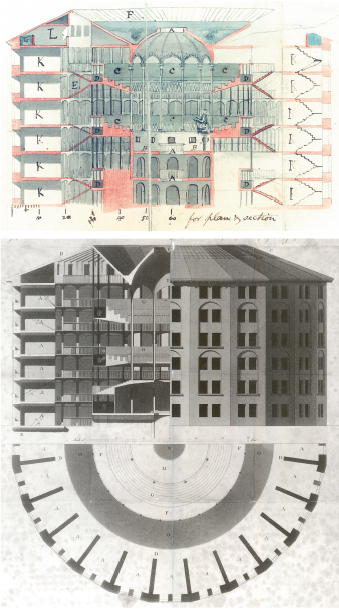
Figure 2.1 The panopticon building
Observing Bentham’s idea of a panopticon, philosopher Michel Foucault asked, ‘Is it surprising that prison resembles factories, schools, barracks, hospitals, which all resemble prisons?’
Source: Mansell/The LIFE Picture Collection/Gettylmages
|
Visit the Online Resource Centre at www.macmillanihe.com/bratton-wob-4e to access the OB in Focus box on ‘the working week - a matter for the law?’ |
EARLY JOB DESIGN PRINCIPLES
Job design
the process of establishing employees’ roles and responsibilities and the systems and procedures that they should use or follow. The purpose of job design, or redesign, is to coordinate and optimise work processes to create value and improve productivity (CIPD, 2019).
Taylorism
a process of determining the division of work into its smallest possible skill elements, and how the process of completing each task can be standardized to achieve maximum efficiency. Also referred to as scientific management
In this section, we turn to early or what others call ‘classical’ job design principles – Taylorism and Fordism. These are considered classical partly because they represent the earliest contributions to job design theories, but also because they identify ideas and issues that keep occurring in contemporary OB (Grey, 2013).
Taylorism
The American Frederick W Taylor (1856–1915) pioneered the scientific management approach to job design, hence the term Taylorism. This approach to job design represents both a set of management practices and a system of ideological assumptions (Sveiby, 1997). The autonomy (freedom from control) of craft workers was potentially a threat to managerial control. For craft workers, the exercise of control over work practices was closely linked to their personality and feeling of ‘self-reliance’ (Hinton, 1973: 97).
As a first-line manager, Taylor was appalled by what he regarded as inefficient working practices and the tendency of his subordinates not to put in a full day’s work, what he called ‘natural soldiering’. He believed that workers who did manual work were motivated solely by money and were incapable of developing the most efficient way of performing a task – the ‘one best way’. Management’s role was to analyse ‘scientifically’ all the tasks to be undertaken, and then to design jobs to eliminate time and motion waste.
Taylor’s approach to work organization and employment relations was based on the following five principles:
• maximum job fragmentation
• separate planning and doing
• separate ‘direct’ and ‘indirect’ labour
• a minimization of skill requirements
• a minimization of handling component parts and material.
The centrepiece of scientific management is the separation of tasks into their simplest constituent elements – the ‘routinization of work’ (the first principle). Most manual workers were viewed as stupid, and therefore all decision-making functions had to be removed from their hands (the second principle). All preparation and servicing tasks were to be taken away from the skilled worker (direct labour) and performed by unskilled and cheaper labour (indirect labour, in the third principle). Minimizing the skill requirements to perform a task would reduce the worker’s control over work activities (the fourth principle). Finally, management should ensure that the layout of the machines on the factory floor would minimize the movement of people and materials to shorten the time taken (the fifth principle).
The job design principles embodied in Taylorism reflect the class antagonism that is found in the employment relationship. When Taylor’s principles were applied, they led to the intensification of work: to ‘speeding up’, ‘deskilling’ and new techniques to control wagelabour. While some writers argue that Taylorism was a relatively short-lived phenomenon (Rose, 1988), others contend that its influence has been so ‘extensive, so that … job design and technology design have become imbued with neo-Taylorism’ (Littler and Salaman, 1984: 73).
STOP AND REFLECT
Can you think of jobs in the retail and service sector that would support the charge that work systems in the modern workplace continue to be affected by neo-Taylorism?
Fordism
Fordism
a term used to describe mass production using assembly line technology that allowed for a greater division of labour and time and motion management, techniques pioneered by Henry Ford in the early twentieth century
Henry Ford (1863–1947) applied the major principles of scientific management in his car plant, as well as adding a crucial innovation: the flow-line principle of assembly work. This kind of work organization and job design became known as Fordism. The moving assembly line had a major impact on the employment relationship. It exerted greater control over how workers performed their tasks, and it involved the intensification of work and labour productivity through ever-greater job fragmentation and short task-cycle times. In 1922, Henry Ford stated his approach to managing shop-floor workers: ‘The idea is that man … must have every second necessary but not a single unnecessary second’ (Beynon, 1984: 33).
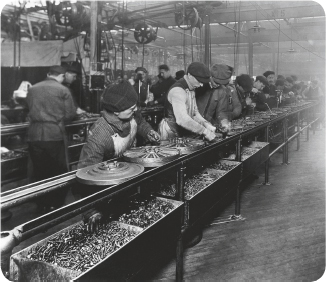
Plate 6 The flow-line principle of assembly work, known as Fordism, increased management control over how workers performed their tasks. Fordism led to the intensification of work and productivity through ever-greater job fragmentation.
Source: Bettman
The speed of work on the assembly line is determined by the technology itself. Management’s control was also enhanced by time and motion studies. The role of work study engineers was to discover the shortest possible task-cycle time. Measuring how long it took to perform a task meant that managers could monitor more closely their subordinates’ performance. Task measurement therefore acted as the basis of a new structure of control. Taylorism and Fordism became the predominant approaches to job design in vehicle and electrical engineering – the large-batch production industries – in the USA and Britain (Littler and Salaman, 1984).
KNOWLEDGE WORK
knowledge work
paid work that is of an intellectual nature, is non-repetitive and results oriented, engages scientific and/or artistic knowledge, and demands continuous learning and creativity
In the late twentieth century, the application of micro-technology to new products and services were the drive behind the growth of knowledge work, its key characteristic being intellectual capital. The value of knowledge workers depends less on what they do but more on what they know. Knowledge workers therefore carry knowledge as a powerful resource that they, rather than the organization, own. Defining knowledge work and knowledge worker has proven problematic. However, we can say that knowledge work is characterized as ‘ambiguity intensive’, and a knowledge worker is an individual with the ability to communicate and apply professional knowledge, as well as manage other employees (see Horwitz et al., 2003: 31).
The nature of knowledge work is said to be fundamentally different from what we have traditionally associated with the ‘machine age’ and mass production, and hence it requires a different order of employment relations. It should not be confused with routine clerical work. Knowledge work requires knowledge workers to learn a broad range of skills and knowledge, often with a focus around problems or customers, and to work in project teams to co-create new insights. It is also said to require a different employment relationship, with a psychological contract that has implications for employee commitment and career trajectories. These differences in the nature of traditional work and knowledge work are spelled out in Table 2.1.
Table 2.1 The nature of traditional work and knowledge work
|
Traditional work |
Knowledge work |
Skill/knowledge sets |
Narrow and often functional |
Specialized and deep, but often with diffuse peripheral focuses |
Locus of work |
Around individuals |
In groups and projects |
Focus of work |
Tasks, objectives, performance |
Customers, problems, issues |
Skill obsolescence |
Gradual |
Rapid |
Activity/feedback cycles |
Primary and of an immediate nature |
Lengthy from a business perspective |
Performance measures |
Task deliverables |
Process effectiveness Potentially great, but often erratic |
Career formation |
Internal to the organization through training, development, rules and prescriptive career schemes |
External to the organization, through years of education and socialization |
Employee’s loyalty |
To the organization and his or her career systems |
To professions, networks and peers |
Impact on company success |
Many small contributions that support the master plan |
A few major contributions of strategic and long-term importance |
Source: Inspired by Despres and Hiltrop (1995) and Boud and Garrick (1999)
The development of a knowledge work and technology inspired changes in organizational design that gave workers more autonomy, changed the way workers think and behave, and created what has become known as ‘high performance work systems’ (HPWS). Internet-based information technologies have also changed the ‘spatiality’ of work enabling some kinds of ‘back office’ knowledge work to be outsourced (see below and Chapter 11).

THE REALITY OF WORK
The New Spirit of Capitalism: Flexibility and the Neoliberal self
In Weber’s The Protestant Ethic and the ‘Spirit’ of Capitalism (1905), the spirit of capitalism refers to new thinking which inspired entrepreneurs into activity conducive to capital accumulation. The secular thinking of European Enlightenment justified profit-making activities as wealth became a criterion of the common good. Whatever served the individual served society. This new thinking lifted the traditional moral condemnation of profit and legitimized the tendency for rationalization which for Weber lies at the root of modernity (see Chapter 3). Importantly, Weber construed these new ideas justifying and supporting profit making as an ‘ideology’ – a set of shared beliefs and values, inscribed in organizations, and bound up with actions. The development and persistence of capitalism cannot be understood without considering the new ideological platform that accompanied the transformation of work.
Throughout the twentieth century, rationalization and bureaucratization featured in pre-digital production and spread to the service sector, such as fast food. The terms ‘McDonaldization’ and ‘McJobs’ refer to the increasing rationalization of work organization pioneered by the McDonald’s restaurant chain (Ritzer, 2018). Critique of rationalization and ‘Taylorism’ from the 1930s exposed its irrationality – the work is dehumanizing because it is routinized and deskilled, which leads to low morale and high labour turnover.
The crisis of capitalism in the late 1960s and 1970s – fall in profitability, a slowdown in productivity gains, which was associated with stronger trade unions and an increase in real wages – ushered in the model of neoliberalism. From 1980 firms’ new strategy centred on significant changes in the organization of work. Sociologists Luc Boltanski and Eve Chiapello (2018) document the extreme changes, which centred on a significant increase in flexibility. They observe:
[Flexibility] make[s] it possible to transfer the burden of market uncertainty onto wage-earners, but also subcontractors and other service providers. It breaks down into internal flexibility, based upon a profound transformation in the organization of work and the techniques employed (e.g., multitasking, teams, self-control), and external flexibility. The latter presupposes a so-called network organization of work, wherein ‘lean’ firms seek the resources they lack from among a profusion of subcontractors, as well as a labour force that is malleable in terms of employment (casual jobs, self-employed, autonomy), working hours, or the duration of work (part-time, variable hours). (2018: 218)
That wage-labour is ‘malleable’ was conditional on emasculating organized labour because unions were regarded as an obstacle to increasing flexibility and the individualization of wages. Further, neoliberalism fostered a new ‘spirit’, changing the way people think and behave and thereby creating a new image of the self. Fundamental to the new spirit or ideology of neoliberalism is market fetishism, and market relationships, as the best means to achieve efficiency. A new logic emerged: market principles must penetrate all aspects of society and individual life helped by a coercive state (Mason, 2019). The doctrine of shareholder value, that CEOs’ remuneration should be linked to increase in share price (Salaman, 2016), also permeated the whole new set of mental scaffolding. As the dominant ideology since 1980, the new spirit allowed neoliberal capitalism to achieve contemporary legitimacy. Western neoliberalism created a new archetype: a self-reliant autonomous individual, whose economic survival depends on flexibility, continuous upgrading of their own skills, and connectivity. Sociologists have labelled this new kind of person the ‘neoliberal self’ or ‘entrepreneurial self’ – a shift characterized as moving away from a ‘culture of dependence’ to one of self-reliance. The individualization of skills and pay had a deleterious effect by tending to make wage-labour exclusively responsible for their own success and failures.
|
1. Do you think that neoliberalism created a new social archetype: self-centred, flexible and networked individual? 2. If we live by market values alone, do we lose part of our humanity? 3. To what extent does the OB/HRM discourse help incorporate and receive the spirit of neoliberalism? |
Sources and further information
Boltanski, L and Chiapello, E. (2018) The New Spirit of Capitalism, trans. Gregory Elliott, London: Verso.
Mason, P. (2019) Clear Bright Future: A Radical Defence of the Human Being, London: Allen Lane.
Ritzer, G. (2018) The McDonaldization of Society: Into the Digital Age, London: Sage.
Salaman, G. (2016) ‘The new corporate leadership’, in J. Storey (ed.) Leadership in Organizations (pp. 54–69), Abingdon: Routledge.
Note: John Bratton wrote this feature.
|
Visit the Online Resource Centre at www.macmillanihe.com/bratton-wob-4e for more information on trends in work organizational design. |
CRISIS: FROM TAYLORISM TO HIGH-PERFORMANCE WORK SYSTEMS
The crisis of Western capitalism in the late 1960s and 1970s – fall in profitability and a slowdown in productivity gains – was interpreted as a crisis of Taylorism and Fordism (Boltanski and Chiapello, 2018; Grey, 2013). Early critique of Taylorism and Fordism was undertaken in the US by Elton Mayo (1880–1949) and in Britain by Mary Parker Follett (1868–1933). Mayo’s research found that economic incentives alone did not motivate workers: recognition and social cohesion were important too. The message was clear: to improve employee performance cultivate a culture that meets employees’ social needs (see Chapter 13). Mary Parker Follett’s pioneering ideas infused a humanistic element into the management of people, and several modern management concepts are based on her ideas, including employee participation (Verstegen and Rutherford, 2000).
Of course, many of the job design theorists profoundly disagreed with each other, but there was a consensus that Taylorism and Fordism had at least three major limitations. Work simplification led to boredom and dissatisfaction and tended to encourage adversarial relations and conflict. These job designs had high control and coordination costs because as specialization increases, so do indirect supervisory and quality control costs as more supervisors and quality control inspectors are employed. Further, as management’s control over workers increases, workers experience reduced job satisfaction, which leads to a withdrawal of their commitment to the organization. Therefore, Taylorism exposed a basic paradox, ‘that the tighter the control of labour power, the more control is needed’ (Littler and Salaman, 1984: 36–7).
The emerging influence of work psychology on job design stressed the principles of closure, whereby the scope of the job is such that it includes all the tasks to complete a product or process, and task variety, whereby the worker acquires a range of different skills so that job flexibility is possible. The reorganization of work around work teams also saw the rise of a new ideology or ‘spirit of capitalism’ supportive of flexible working (see The Reality of Work, p. 39), which celebrated the cult of individualism and extolment of self-control and autonomy.
In the 1970s, the crisis in US manufacturing, measured by the growing productivity gap between American and Japanese companies, was highlighted by Stanford University academics Johnson and Ouchi (1974). Japan’s competitive edge was attributed to Japanese management not superior technology. Although not all aspects of Japanese management could be transplanted into US organizations, Johnson and Ouchi put forward key areas of the Japanese approach to management including: initative from the bottom up; making senior management the facilitator of decision making rather than the issuer of edicts; stressing consensus; and paying close attention to employee well-being (1974: 62). The extent to which these management practices was uniquely Japanese was debatable. However, Ouchi’s (1978; 1981) later work developed beyond a narrow focus on the US–Japan productivity gap to a consideration of the ‘organization as the focus of identity and community’ (Sheldrake, 1996: 187).
In the 1980s, Japanese management practices were held up as a model for the struggling US and UK manufacturing sectors and the favoured work configuration was team working (Bratton 1992; Elger and Smith, 1994; Womack et al., 1990). Pioneering interpretations of the Japanese job design model identify three notable elements: flexibility, quality control and minimum waste.
just-in-time
a manufacturing process or service system (e.g., supermarket) in which materials or components or food items are delivered immediately before they are required in order to minimize storage costs
Flexibility is achieved by arranging machinery in a group – what is known as ‘cellular technology’ – and by employing a multi-skilled workforce. Thus, the work organization is the opposite of that of ‘Taylorism’: a generalized, skilled machinist with flexible job boundaries is a substitute for the specialized machinist operating one machine in one particular workstation. Higher quality control, the second element, is achieved by making quality every worker’s responsibility. Minimum waste, the third element of the Japanese model, is achieved by just-in-time techniques, which aims to produce no more than the necessary components, in the necessary quantities, of the necessary quality and at the necessary time. Since the 1990s, complex just-in-time supply chains have developed across the European Union (see Chapter 11). Team working has an ideological and social dimension: to generate social cohesion and a ‘moral commitment’ to the organization’s competitive goals.
Critical research has drawn attention to ‘new’ forms of ‘electronic Taylorism’, and peer group scrutiny, ‘computer-controlled autonomy’ and ‘electronic sweatshops’ (Bratton, 1992; Callaghan and Thompson, 2001; Sewell, 1998). We examine work teams in more detail in Chapter 9. In the late 1990s, the debate shifted to whether ‘high-performance workplaces’, which combined new job design principles and ‘bundles’ of ‘best’ human resource management (HRM) practices, which individualized work and pay, can deliver a comparative advantage. As Boltanski and Chiapello, 2018: 217) observe: ‘The move towards an individualization of work … has made it possible to have a much firmer grip on wage-earners, and thus put them under pressure much more effectively.’
|
Visit the Online Resource Centre at wwww.macmillanihe.com/bratton-wob-4e to access the Critical Insight on ‘gender and work design’. |
THE GIG ECONOMY AND ON-DEMAND LABOUR
Work has historically been place-bounded. But the Internet has changed much of that: employers, workers, and users of the end-products of work can all be located around the planet (Graham et al., 2017). The spatial unfixing of work and the rise of digital labour has given rise to the gig or platform economy. It is associated with a ‘free’ labour market system in which organizations contract ‘freelance’ or ‘independent’ ‘just-in-time workers’ (Morgan and Nelligan, 2018) for temporary short-term or freelance work as opposed to permanent jobs. Torpey and Hogan (2016) describe a gig as a single task or project for which a worker is hired, usually through the digital marketplace, to work on demand. The McKinsey report identified three key features of working in the gig economy: a high degree of autonomy; payment by task, assignment or sales; and short-term relationship between the worker and the customer (Manyika et al., 2016). Generally speaking, individualized digital labour makes it possible to increase the intensity of work by using the pressure of the market (Boltanski and Chiapello, 2018, Edgell and Granter, 2020).
The term ‘gig economy’ was coined at the height of the 2008 GFC, when the unemployed made a living by ‘gigging’, or working several part-time jobs, wherever they could. In its earliest usage, gig work referred to musicians in the 1920s performing one-night performances, and these workers did not receive health coverage or paid holiday. The gig economy contrasts sharply with the traditional economy, which consists of full-time workers who focus on a lifetime career and rarely change positions. A labour market characterized by the prevalence of short-term ‘on-demand’ contracts was widespread in Victorian Britain and in the 1920s when unemployment was high, and as such is an example of a mode of work and employment that has continued across time.
The gig economy is a very old new idea (Kessler, 2018). To function, it needs three features of the labour market to be present: an absence of employment legislation guaranteeing minimum working time for workers; an emasculated trade union movement; and a large pool of people who are willing to work in temporary positions or part-time. All three features were prominent in eighteenth- and nineteenth-century Britain. That the gig economy is associated with a large pool of people willing to engage in temporary work is synonymous with the nineteenth-century concept of the ‘industrial reserve army’, which Karl Marx theorized as a necessary part of the capitalist organization of work. Since the 1990s, all three features are noticeable in the United States and Britain. The connectivity of gig work to on-demand labour has been made possible by digital labour platforms; Internet-based apps or websites, which help connect workers with individual gigs or clients, such as Uber linking customers to taxi drivers. Thus, Internet-based labour platforms have driven the growth of the gig economy. Short-term ‘gig’ contracts have penetrated the service sector, as hotels and fast-food chains have moved away from employing full-time, permanent staff, and embraced the part-time or temporary gig worker. However, gig contracts exist in healthcare and the education sectors. Hospitals hire agency nurses and universities are employing more part-time lecturers instead of offering permanent teaching positions.
For individuals, there are pros and cons of working in a gig economy. First, working without having set hours provides flexibility. For example, a songwriter who sells customized jingles online to clients worldwide: ‘It’s really a dream come true . It gives me the freedom to set my own hours. And I can do what I do anywhere there’s an Internet connection’ (Torpey and Hogan, 2016). Second, gig contracts may also provide workers with a chance to try a variety of jobs. As a result, they present career exploration to both new and experienced workers. Sundarajan (2015) explains working in the gig economy like this: ‘Today, more and more of us choose, instead, to make our living working gigs rather than full time. To the optimists, it promises a future of empowered entrepreneurs and boundless innovation. To naysayers, it portends a dystopian future of disenfranchised workers hunting for their next wedge of piecework’.
Sundarajan’s observation highlights one disadvantage of working gigs: an insecure income stream. Consequently, many gig workers find gigs inadequate for a full-time career, and, without a steady income stream, may experience difficulty renting accommodation. Second, an absence of set hours means gig workers have to work unsocial hours and might not be able to spend time with friends who have traditional permanent employment contracts. Third, gig workers do not enjoy the same rights and protections as employed workers, such as health benefits, overtime pay and sick leave pay. In Britain, private and public sector employers’ practice of classifying gig workers as self-employed ‘freelancers’, and therefore ineligible for benefits such as sick pay and maternity, has been challenged in employment tribunals (Brooks, 2019). For example, Deliveroo received criticism from workers over their employment practices in relation to the minimum wage, and Uber drivers recently argued they should be entitled to a range of benefits such as pension contributions as well as holiday and sick pay.
For organizations, gig working allows for a highly flexible labour market that can offer cheaper services – such as Uber – for consumers willing to use them, but also has several disadvantages. The three key features of gig working identified by the McKinsey report may result in unintended consequences for managing the employment relationship. Rousseau and Ho (2000) distinguish between transactional and relational psychological contract breaches (PCB). Transactional psychological contract breaches focus on short-term, narrow and measurable performance criteria. Commitment to the organization is low, and turnover of workers can be high. In contrast, relational PCB tend to focus on open-ended, broader performance criteria, which may include the quality of leader–follower relations. Commitment to the organization is high, and turnover of workers is low. Examined through a psychological contracts lens, a high degree of autonomy for gig workers may result in gig workers having little or no commitment to the goals of the organization. Further, income by task or assignment may discourage gig workers from investing in work-based learning or engaging in problem-solving activities. The short-term relationship between the gig worker and the employer/customer may therefore impact negatively on the ‘psychological contract’ and that has implications for employee commitment and career trajectories.
In the Internet Age, knowledge and on-demand work have changed the ‘spatiality’ of work: some people do paid work at home, and others undertake more short-term, more precarious work assignments as organizations reduce the number of their ‘core’ employees and contract work out (Hardill and Green, 2003). Critical accounts of contemporary work in advanced capitalist economies offer a counterweight to the bullish business perspectives on the gig economy, and provide data showing that the International Labour Organization’s definition of ‘decent work’ remains elusive only for the privileged minority (Karlsson, 2012). As European studies attest, there are too many businesses taking the ‘low road’ and striving for competitive advantage on the basis of a low-skill and low-pay workplace (Bolton and Houlihan, 2009).

Plate 7 The Covid-19 pandemic poses many questions for future organizational behaviour and governments. During the crisis people discovered the importance of ‘unskilled work! Many workers marginalized in the labour market became ‘key workers’ for the functioning of society
Source: Bloomberg
The post-Covid-19 era poses many questions for future organizational behaviour and governments. During the pandemic citizens and leaders discovered that many of those normally consigned to work on-demand or on zero-hour contracts and paid derisory sums were ‘key workers’. Care workers, cleaners, supermarket employees and delivery drivers were crucially important to public health and the functioning of society. While it is early to make predictions, the pandemic might cause organizations to retreat from hyper-flexibility, notably the hollow organizational structure and global just-in-time supply chains (see Chapter 11), and the restoration of employment rights, as public opinion impels national governments to protect ‘unskilled workers’.
STOP AND REFLECT
You may have experience as a worker or customer of the new ‘on-demand’ work. Does the gig economy offer you boundless opportunity to be an entrepreneur or does it foreshadow a future of insecurity? In the post-Covid-19 era, do you think the pandemic has changed perceptions of ‘unskilled workers’?

Iain Nelson
Iain Nelson has spent 27 years as a Principal Consultant and Manager with the International Training Service, and 4 years as an internal Learning and Development Advisor with Petroleum Development Oman. As a freelance consultant, his clients include Unilever, Roche Products, Alcan, BP, Chevron, Lothian and Borders Police, the British Council, ITF Nigeria and Total.
Iain’s core expertise is developing managers as learning specialists competent to design and deliver a company’s corporate objectives and associated strategic business initiatives.
|
Visit the Online Resource Centre at www.macmillanihe.com/bratton-wob-4e to watch Iain talking about managing people in organizations and then answer the following question: |
• What potential dangers does Iain identify when managers treat employees differently?
EMOTIONAL AND AESTHETIC LABOUR
emotional labour
the process by which workers are expected to manage their feelings and expressions of emotion in accordance with the requirements of a job
aesthetic labour
the practice of screening, managing and controlling workers on the basis of their physical appearance
With the growth of routinized service work – such as fast food, tourism, hotels and call centres – there has, not surprisingly, been a growing interest in embodied attributes and dispositions that are stereotypically feminine, such as patience, deference to the customer, and a pleasant demeanour, associated with what sociologists call ‘emotional labour’. Much has been written in recent years on how emotion is an important part of the effort–wage exchange, that workplaces in general have ‘emotions’ (Bolton, 2005; Fineman, 2003) and that ‘strong’ organizational cultures strive to engender emotional energy, affection and even love for the organization (see Chapter 13). Modern critical scholarship emphasizes the servility of routine work performed by service workers within the customer–employee interface with a focus on emotion and aesthetic labour (Warhurst and Nickson, 2007b).
|
Visit the Online Resource Centre at www.macmillanihe.com/bratton-wob-4e for more definitions of emotional labour. |
In customer-facing occupations found in tourism, hospitality and retail, organizations may try to manage the way their employees feel and look as well as the way they behave, so that as well as productive work there is emotional and aesthetic labour (Hochschild, 1983; 2003; Warhurst and Nickson, 2007b). It was the pioneering work of Arlie Hochschild (1983) that drew attention to the significance of social interaction as a crucial element of the employment contract. Emotional labour exists when workers are required, as part of the wage–effort bargain, to show emotions with the specific aim of causing customers or clients to feel and respond in a particular way. They might do this by verbal means – ‘Good morning, sir/madam’ – or non-verbal means, for example by smiling. The interest in emotional labour is focused on how to harness emotion into the ‘service’ of the organization (Noon and Blyton, 2013).
Aesthetic labour is the practice of screening, managing and controlling workers on the basis of their physical appearance. The concept advances research on the nature of work in the service sector of the economy by moving beyond a focus on emotions to emphasize employees’ physical appearance. Managers may seek to control employees’ body posture, their weight, their hairstyles, the colour of their hair, the way that they shave, the makeup that they wear, the length of their skirts, their jewellery, and shoes (Warhurst and Nickson, 2007b; Nickson et al., 2001). Studies show that aesthetics is both gendered and context-bound (Ren, 2017). Managers tend to demand aesthetic labour from women but not men. Gendered aesthetic labour is continuously shaped by influential contextual factors – national culture, legislation, labour market practices, as well as management practices. In terms of management practices, this is particularly true in the key areas of recruitment and training that focus on the emotions and aesthetics of workers deployed to deliver the service (Thompson et al., 2001). Front-line workers have to look good and sound right, and recruitment and selection processes try to inculcate that they do (Nickson et al., 2001).
In interrogating the concepts of emotional and aesthetic labour it is important to understand that the employer buys emotional and aesthetic labour for a wage. Emotional labour requires a specific set of attributes and behaviours, which, it is argued, are antithetical to masculine identity. The development and possession of aesthetic characteristics, Grugulis et al. argue, constitute what it can mean to be ‘skilled’ (2004: 7). Nixon’s (2009) study suggested that unemployed male workers were psychologically mismatched to the demands of customer sovereignty: ‘I’ve got no patience with people basically. I can’t put a smiley face on, that’s not my sort of thing,’ said one 24-year-old unskilled manual worker. Others said they found work at call centres involved ‘Too much talking’ (Nixon, 2009: 314–15). The seismic shifts associated with the gig economy appear to have eliminated not only particular types of jobs, but also a type of masculine identity.
STOP AND REFLECT
A major theme of this section has been the continuities as well as the discontinuities across time in paid work. Can you see any similarities between gig work in home-based locations and the putting-out system? Look at Plate 5 (p. 30), showing a scene of customers and a server. What does the picture reveal about emotional and aesthetic labour? Have you ever been in a situation at work where you had to manage your feelings before customers? Have you ever been in a work situation where you had to change your physical appearance? If so, what did it do to your sense of self?

GLOBALIZATION AND ORGANIZATIONAL BEHAVIOUR
‘Girl power’: labouring in a Bangladesh garment factory
There can be difficulties in ensuring good communication across supply chains, and these can be compounded when companies source products from suppliers in different and geographically distant countries. Bangladesh has become a favourite source of ready-to-wear clothing for companies in developed countries. Labour is cheap and this is reflected in the price of the products supplied. However, poor management practices may go unnoticed by purchasers, until they are brought to light in adverse circumstances.
In January 2019 it was revealed that t-shirts sold to raise money for Comic Relief’s ‘gender justice’ campaign in the UK were made at a Bangladeshi factory where women were paid 35p an hour, and were required to work up to 16 hours a day. They said they were verbally abused by managers if they failed to meet production targets.
In March 2019 a UK newspaper revealed that t-shirts sold by a ‘girl power’ charity in the UK were manufactured at a Bangladeshi factory where some workers were paid as little as 42p an hour. Workers also claimed they had been harassed and one female employee said she had been beaten on the orders of the management, and her life had been threatened. More than 100 machinists claimed they had been sacked in recent weeks as they went on strike in protest against low wages.
According to the Asia Floor Wage Alliance, a global coalition of trade unions, workers’ groups and human rights organizations, the monthly living wage for Bangladesh in 2017 was 37,661 Taka (approximately £354). One machinist employed by the company for over five years was paid 9080 Taka a month (approximately £85). In 2014, Comic Relief pledged to pay all its employees a living wage.
Rioting by employees in the ready-made garments industry in early 2019 over rates of pay led to the government announcing a revised pay structure, with slight increases in basic and gross wages. However, an estimated 7500 employees at 27 factories in Bangladesh were sacked for taking part in the dispute, and a report by the Worker Rights Consortium alleged protestors were subjected to violence, criminal charges and blacklisting.
Workplace safety has also been an issue in manufacturing in Bangladesh. In April 2013 a major incident occurred when an estimated 1134 workers were killed in the collapse of the Rana Plaza complex on the outskirts of Dhaka. Two international organizations were set up to monitor working conditions as a result, the Alliance for Bangladesh Worker Safety and the Accord for Fire and Building Safety in Bangladesh. The two organizations oversaw safety improvements in more than 2300 of Bangladesh’s factories between 2013 and 2018, and identified and helped to address over 100,000 safety issues. However, the Accord was forced to close in November 2018 by the Bangladesh government.
Commenting on the issue of the charity t-shirts, Dominique Muller, the policy director of the UK campaign group ‘Labour Behind the Label’ said: ‘It is absolutely essential that celebrities, charities and brands ensure that their goods are made in factories which pay a decent wage and provide decent work.’
|
What responsibilities do organizations such as the charities in this case have, to keep themselves informed of management practices, staff wages and working conditions in supplier organizations? Are the responsibilities of charities in this respect any different from those of other purchasing organizations (such as private sector clothing retailers)? |

Sources and further information
Murphy, S. (2019) ‘“Girl power” charity t-shirts made at exploitative Bangladeshi factory’, The Guardian, 1 March, www.theguardian.com/business/2019/mar/01/charity-t-shirts-made-at-exploitative-bangladeshi-factory
Worker Rights Consortium (2019) Banning Hope: Bangladesh Garment Workers Seeking a Dollar an Hour Face Mass Firings, Violence, and False Arrests. Available at: www.workersrights.org/wp-content/uploads/2019/04/Crackdown-on-Bangladesh.pdf
Note: George Boak wrote this feature.
Much of the literature on ‘new’ forms of work simplifies the analysis to a polar comparison between ‘traditional’ Fordism and new ‘post-Fordism’ work characteristics. But although it looks elegant to draw up lists of opposite characteristics, this is not a good reflection of reality (Vallas, 1999). We can today still witness old ‘boring’ work forms existing alongside new ‘decent’ work configurations. Dignified work requires ‘that workers can feel self-worth and self-respect, as well as respect from others’ (Karlsson, 2012: 6). Too much work in post-industrial capitalism, however, is still routinized, undignified and insecure. In this brave new world of work, task variety is low, skill requirements are low, security is precarious, and managerial control is bolstered by the pressure of the market reminiscent of the labour market of a century-and-a-half ago. All this suggests that the nature of work remains largely unchanged for millions of workers, that the work and job design is not a smooth transition from one model to another, and that contemporary work regimes are most likely to resemble a ‘mosaic of workforces’ (Boltanski and Chiapello, 2018: 230) with permanent, relatively secure labour coexisting alongside part-time or contract, insecure workers, with elements from the old work design and parts of the new.
|
Visit the Online Resource Centre at wwww.macmillanihe.com/bratton-wob-4e for more information and statistics on labour market trends and gender relations in organizations. |
WORK: AN INTEGRATION OF IDEAS
Many factors contribute to the way work is designed, how organizations engage their workers in broader questions of policy and purpose, and how workers are remunerated. The separation of ownership and control means that at the heart of the employment relationship there is tension and antagonism, as workers are largely disconnected from decision making. This tension configures the way organizations design their systems of work and employment. However, institutional and cultural factors, such as trade union membership and influence in workplaces, and ideas of how society should function (see Chapter 13), shape this relation and tensions, and their outcomes (Martinez Lucio, 2016).
McDonaldization (also known as ‘McWork’ or ‘McJobs’)
a term used to symbolize the new realities of corporate-driven globalization that engulf young people in the twenty-first century, including simple work patterns, electronic controls, low pay and parttime and temporary employment
In discussing post-Fordism and the gig economy, we emphasized the changing terrain of employment relations, the tension influencing relations, and competing claims over whether new forms of work lead to an enrichment of work or the degradation of work. Optimists argue that new work structures empower employees, and celebrate the claim that managerial behaviour has shifted its focus from ‘control’ to ‘commitment’ (Walton, 1985). Critical analysts contend that some new work regimes are ‘digital sweatshops’ and are basically a euphemism for work intensification. To capture the new realities of the modern workplace, critics often use the term ‘McWorld’ or ‘McDonaldization’ (Ritzer, 2018), meaning that a vast amount of work experience, especially for young people, women and workers of colour, involves menial tasks, part-time contracts, close monitoring of performance and entrenched job insecurity (Sewell, 1998).
In Figure 2.2, we draw together the developments in work over the last 200 years by highlighting four paradigms or distinctive approaches: craft/artisan, Taylorism/Fordism, neo-Fordism and post-Fordism. Work is shown to vary along two dimensions: the variety of work – the extent to which employees have the opportunity to do a range of tasks using their various skills and knowledge – and the autonomy in work – the degree of initiative that employees can exercise over how their immediate work is performed.
Here, craft/artisan refers to the types of work organization that are based on craft-based skills and are often associated with a narrow range of specialized tasks, a high level of skill and a high degree of autonomy. Taylorism/Fordism means the adoption of basic scientific management principles and the assembly line methods pioneered by Henry Ford, and neo-Fordism refers to a work configuration that has modified the core principles of Fordism through flexible working practices so that it will fit contemporary operations. In contrast to the craft/ artisan paradigm, the Taylorism/Fordism and neo-Fordism paradigms are often associated with a narrow variety of tasks, a low level of skill and a low degree of autonomy in work. Post-Fordism refers to organizations that do not rely on the principles of Taylorism or Fordism, and is often associated with ‘high-performance work systems’, with self-management and with a high degree of autonomy in work.
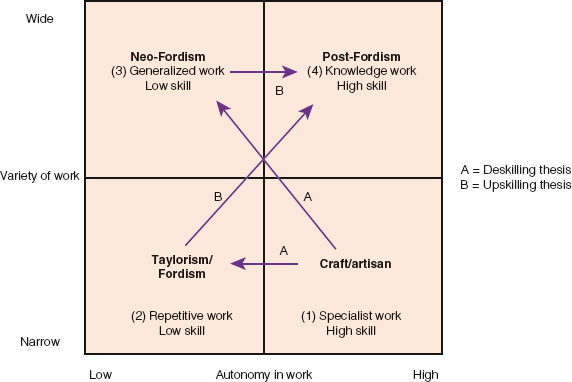
Figure 2.2 Development of work organization and employment relationships
The deskilling or upskilling of work?
In addition to the four broad classifications of work organization, the model shows two trends proposed by the proponents of the ‘deskilling’ and ‘upskilling’ theses. The deskilling thesis maintains that, in Western capitalist economies, there is a general trend in paid work towards a narrow variety of tasks and low autonomy; the arrows marked ‘A’ in Figure 2.2 represent this trend in the diagram. The upskilling thesis suggests an opposite trend towards a wide variety of tasks and high autonomy in work; the arrows marked ‘B’ represent this trend. It is important to understand that different regimes of work organization affect the nature of the employment relationship, whether or not this is explicitly acknowledged in the writings of organizational theorists. For example, if work is reorganized to deskill or upskill employees, this will change the degree of interdependence, and typically the power dynamics, between the employer and employee. Chapter 12 explores the deskilling/upskilling debate in detail.
To sum up, the identification of potential benefits and costs for workers from new work configurations provides a more complex picture, one that strongly supports the hypothesis that changes in the nature of work can strengthen or threaten the ‘psychological contract’.
GENDER AND THE SEXUAL DIVISION OF WORK
Figure 2.2 does not show how gender ideologies shape work or the sexual division of work. To understand contemporary issues of gender – by which we mean the processes of gender roles, inequalities in society and women’s subordination and exploitation – we need to look at the historical developments of gender–work patterns.
Gender-based patterns of work and gender inequality were universal in early industrial capitalism. In the mid-nineteenth century, industrial capitalism tended to create a clear distinction between the paid work opportunities of women (particularly married women) and of men. With the spread of the factory system, the need for cheap labour power provided opportunities for working-class women to do waged work in areas unrelated to their former work in the home. Women dominated large-scale food-processing factories – for example, bakeries – in the late nineteenth century. In working-class families, women often remained in the labour market to support the family income. When middle-class women married, they were primarily expected to withdraw from paid employment to supervise the house and childcare. Reinforcement of the belief that work and family life were two separate spheres – the stereotypes of men as strong and competitive and women as frail and nurturing – began to emerge: ‘images that depicted women as too delicate for the world of commerce’ (Reskin and Padavic, 1994: 21).
Gender-based patterns of work changed when war broke out in Europe in 1914. The First World War was the first ‘mass war that required mass production’ (Hobsbawm, 1994: 45). The war also made it necessary to rethink the social organization of work. As Britain mobilized 12.5 per cent of its able-bodied men for the armed forces, the government encouraged women to enter the munitions and engineering factories, and this led to a revolution in waged work for women outside the household.
Gender-based patterns of work and family-located sites of work are forms that predate capitalism: they are not the results of social changes induced by capitalism. Women’s work tended to be concentrated around six human activities that predate capitalism: bearing children, feeding them and other members of the family, clothing the family, caring for the young and old when they were sick, educating children and taking care of the home (Berg, 1988). Explanations for why some work was men’s and some was women’s are almost as various as the patterns of wages that have existed. In the pre-Industrial Revolution period, there is some evidence that women did a much greater variety of jobs, but even then gender influenced the allocation and reward of work. A disproportionate number of women undertook the most menial, poorly paid and domestically related jobs.
trade union
an organization whose purpose is to represent the collective interest of workers
Evidence about work-related gender relations before the nineteenth century is sparse. Contemporary accounts emphasize that the work tended to be labelled female or male on the basis of socially changeable expectations about how to view, judge and treat the two sexes. Part of the long historical process of gender inequality at work can be explained by the activities of the pre-industrial craft guilds and the trade unions. The town-based craft guilds tended to be exclusively male oriented, with severe restrictions on women’s membership, and the male-dominated trade unions worked hard to maintain wage levels and traditional male employment privileges (Bradley, 1986).
|
Visit the Online Resource Centre at www.macmillanihe.com/bratton-wob-4e for further/> information on the history of trade unions and current statistics on trade union organization. |
Trade union bargaining strategies developed gender-based occupational segregation. According to one trade union leader, the purpose of a union is ‘to bring about a condition … where wives and daughters would be in their proper sphere at home, instead of being dragged into competition for livelihood against the great and strong men of the world’ (Turner, 1962: 185, emphasis added). Feminist critiques of the sociology of work have demonstrated in important ways the manner in which both the theory and practice of work and work behaviour have excluded women as subjects, as well as their experiences and voices (Sydie, 1994). Throughout the nineteenth century and well into the twentieth century, men managed to effectively exclude working-class and middle-class women from participating in many occupations, by retaining old ’skills’ or monopolizing new ones, using their power, using strategies of exclusion and demarcation, and encouraging the concepts of ’skill’ and ‘profession’ to be seen as male property (Knights and Willmott, 1986a). In the twenty-first century, although the realities of workplaces have undergone seismic changes, old-fashioned ideas about the sexes are still embedded in many Western cultures (Kimmel, 2004).
|
Visit the Online Resource Centre at www.macmillanihe.com/bratton-wob-4e for further information on women employed in advanced capitalist societies. |
work-life balance
the interplay between working life, the family and the community, in terms of both time and space
discourse
a way of talking about and conceptualizing an issue, presented through concepts, ideas and vocabulary that recur in texts
WORK LESS, LIVE BETTER?
The interplay between working life, the family and the community, often expressed as the ‘work–life balance’, is a topic of debate and research. The main message of the debate is that a balance between work and life is desirable, and that too much work has negative effects on private life – in effect, a more sophisticated version of the popular proverb: ‘All work and no play makes Jack a dull boy.’ Empirical research does indeed reveal a significant degree of interest in work–life balance in many organizations, but data show a mismatch between the work–life balance discourse and the reality in most workplaces. The European Union Social Charter of 1961 obliged Member States to ensure ‘reasonable and weekly working hours’, yet the UK labour market has been characterized as the ‘long hours culture’ (Bonney, 2005).
|
Visit the Online Resource Centre at www.macmillanihe.com/bratton-wob-4e for further information on the European Union Working Time Developments. |
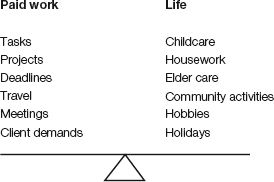
Figure 2.3 The notion of the work-life balance
The concept at the centre of the work–life balance debate is problematic (Noon and Blyton, 2013). The notion of work–life balance has been defined as ‘the relationship between the institutional and cultural times and spaces of work and non-work in societies where income is predominantly generated and distributed through labour markets’ (Felstead et al., 2002: 56). Warhurst et al. (2008) argue that the concept of work–life balance is based on a traditional, large-scale workplace model which presumes that paid work and life constitute two distinct spheres, separated by time and space (Figure 2.3). This orthodox binary interpretation adopts a particular interpretation of paid work under capitalism, viewing it as an encroachment on people’s ‘real’ private life, particularly family life, and seeing it as something that therefore has to be contained. As you will see, through the examples and case studies included in this book, work can be boring and alienating – a ‘blank patch’ between morning and evening. Yet work can also offer self-fulfilment and friendship, and people can potentially derive joy from it. Work brings structure to people’s lives, dignity and satisfaction, and is an important source of identity (Karlsson, 2012).

Plate 8 The interpenetration between work and Life is most obvious in contemporary home-working, which allows professionals to engage in paid work and domestic activities in the same physical space, and perhaps even on occasion at the same time.
Source: Getty Images/DaniloAndjus
Warhurst et al. (2008) argue that the work–life interface is not best articulated as one of ‘balance’ because ‘interpenetration’ occurs between the two spheres. This interpenetration between work and life is most obvious in contemporary home-working, which allows professionals to engage in paid work and domestic activities in the same physical space and maybe at the same time. Thus, the notion of a work–life balance, does not indicate how the interplay of personal choice and constraints, competing interests, and power relations, shapes the relationship between work and life.
People are what Giddens (1984) has called ‘knowledgeable agents’ – that is, they construct perceptions of work and life – and through their agency they produce social practices. These social practices can be translated into what Warhurst et al. (2008) call ‘work–life patterns’. These social patterns and practices that human beings construct relate to work, family activities, maintaining friendships and the pursuit of leisure activities. Naturally, the way in which work–life patterns are experienced can vary markedly between individuals. But the important point is that work–life patterns are continually constructed and reconstructed as employees’ work and life cycles change. Examples of such changes might include:
• the shift from independent single person to mid-life with family dependants and so on
• a change in perceived economic insecurity
• government incentives and regulations to help individuals achieve their work–life goals (Kvande, 2009).
The concept of the work–life pattern is more complex than the notion of a ‘balance’ between two separable spheres, and it is a perspective that has important implications for how work and people are managed in the workplace. In the next chapter, we move on to examine how developments in work have been conceptualized and researched.

CHAPTER SUMMARY
• We have explained that a major theme running through the study of work has been continuities as well as discontinuities across time. Trying to summarize the experience of work over several hundred years is a difficult task. There is so much material to cover that no text of conventional size would be able to deal adequately with the complexities. This chapter has been written on the assumption that some knowledge is preferable to complete ignorance, especially if we have to situate the present against the past in order to understand it. We have tended to highlight gender issues in the workplace to balance out the conventional preference for a male history.
• The complexity of the experience of work defies any simple assumptions about the significance of work. However, we have explained how, with the growth of routinized service work, new kinds of social relations and aspects of the self have developed and come under scrutiny. We have highlighted that new work regimes herald in not only new ways of doing, but also new values and ways of thinking – what Weber called the ‘spirit’ of capitalism. As the service workforce has grown in importance, we noted the growing interest in ‘emotional’ and ‘aesthetic’ labour.
• The persistence of gender ideologies on work, discrimination and the sexual division of paid work have also been discussed, as has the persistent belief in the ‘traditional’ male breadwinner/female home-keeper model, particularly in periods of economic recession. Finally, we explored the concept of work–life balance and why this orthodox binary view is based on traditional work and life patterns separated by time and space. A more complex approach is represented by the notion of work–life patterns, which see the activity of labour itself as an important source of identity and satisfaction.
|
Visit the Online Resource Centre at www.macmillanihe.com/bratton-wob-4e to access Web-based Assignments to apply your learning. |

CHAPTER REVIEW QUESTIONS
1. What is work? How has gig work changed the employment relationship. Look again at Ken Loach’s 2019 film, Sorry We Missed You, for further analysis of precarious work. Has gig work created a new social self?
2. Explain the importance of ‘control’ in an organization? What is meant by ‘technical, bureaucratic and social controls exist at work’? Give examples.
3. How does emotional and aesthetic labour differ from traditional paid work?
4. What is the difference between work–life balance and work–life patterns? Why is it considered important for managers to understand these concepts?

FURTHER READING
Carter, B., Danford, A., Howcroft, D., Richardson, H., Smith, A. and Taylor, P. (2011) ‘All they lack is a chain: lean and the new performance management in the British civil service’, New Technology, Work and Employment, 26(2), pp. 83–97.
Edgell, S. and Granter, E. (2020) The Sociology of Work: Continuity and Change in Paid and Unpaid Work (Third Edition). London: Sage.
Graham, M., Hjorth, I. and Lehdonvirta, V (2017) ‘Digital labour and development: impacts of global digital labour platforms and the gig economy on worker livelihoods’, Transfer: European Review of Labour and Research, 23(2), pp. 135–62. https://doi.org/10.1177/1024258916687250
McCormick, K (2007) ‘Sociologists and “the Japanese model”: a passing enthusiasm?’, Work, Employment and Sodety, 21(4), pp. 751–71.
Manyika, J., Lund, S., Bughin, J., Robinson, K., Mischke, J. and Mahajan, D. (2016) Independent work: Choice, necessity, and the gig economy, London: McKinsey & Company. Available at: www.mckinsey.com/featured-insights/employment-and-growth/independent-work-choice-necessity-and-the-gig-economy
Morgan, G. and Nelligan, P. (2018) The Creativity Hoax: Precarious Work and the Gig Economy, London: Anthem Press
Standing, G. (2016) The Precariat: The New Dangerous Class, London: Bloomsbury.
Torpey, E. and Hogan, A. (2016) Working in a gig economy, Massachusetts, DCL US Bureau of Labor Statistics. Available at: www.bls.gov/careeroutlook/2016/article/mobile/what-is-the-gig-economy.htm
Sundarajan, A. (2015) ‘The “gig economy” is coming. What will it mean for work?’, The Guardian, 26 July, Available at: www.theguardian.com/commentisfree/2015/jul/26/will-we-get-by-gig-economy

CHAPTER CASE STUDY
‘Have-a-nice-day’: McJobs in China
The setting
Although McDonald’s is well known for its Fordist-style food production, its performative work culture including the ‘have-a-nice-day’ greeting required by corporate etiquette, China has had experience using an assembly line approach to feeding many people for over two centuries. As early as the nineteenth century, Chinese public dining halls had perfected breaking down the cooking process into basic procedures performed by a separate team of workers.

McDonald’s brought its own brand of food production and management to China in 1990 when it opened its first restaurant in the city of Shenzhen. In 1992, the world’s largest McDonald’s was opened in Beijing, serving 40,000 customers on that first day. McDonald’s now operates over 2000 restaurants in more than 190 Chinese cities, and opened 300 new outlets in China in 2014.
More than 70 per cent of McDonald’s restaurants worldwide are owned and operated independently by local men and women. In recent years, McDonald’s future growth strategy has focused on China’s smaller urban areas, known as second- and third-tier cities. McDonald’s is not alone as many multinational and domestic companies are now looking to expand outside the traditional economic bases in the larger Chinese centres. McDonald’s faces particularly stiff competition from KFC, a fellow American fast-food restaurant chain, which dominates the Chinese market.
While Chinese fast food operators do not deal with the high turnover rates seen in American cities (sometimes as high as 300 per cent for non-managerial employees), the rapid expansion by multiple companies has resulted in competition for quality workers and rising wage costs in the new tighter labour markets.
The problem
Hai Yan is one of the new owners of a McDonald’s franchise in an area several hours outside Beijing. As with other franchisees, Hai had relied on the McDonald’s corporation to assist him with recruiting and training his new employees to bring them in line with the company’s expectations.
Peter Bepple, a new Human Resources Manager assigned to the region, flew in from New York to help. Peter had never worked in China before and was looking forward to getting the new franchises up and running. He had been briefed on the recruiting issues and had been told that although the Chinese were hard workers who respected management authority and leadership, they also expected their managers to build supportive relationships with them.
Upon his arrival in Hai’s area, Peter immediately set up recruitment advertising on the company website, interviewed applicants on the phone and made arrangements for selected candidates to come into Hai’s restaurant for three days of work. Accompanied by a McDonald’s employee, each candidate tried various roles from waiter to assistant manager in the restaurant. To Hai’s dismay, 80 per cent of the candidates were not offered permanent employment. He became concerned that he would not find enough suitable workers to serve customers on his restaurant’s opening day. Hai decided to approach Peter to find out why so many of the candidates had not been successful during the recruitment process.
Peter was sympathetic but explained to Hai that he had observed each failed candidate’s reactions to the customers and was not impressed. ‘The main challenge is to maintain a positive attitude and provide good service,’ Peter told Hai. ‘The most important characteristic is the willingness to communicate with others and that is best reflected with a smile. Those candidates simply did not smile enough’
Hai was taken aback by the comment. ‘Here in China customers are suspicious of workers who smile on the job,’ he said to Peter.
Peter was surprised by this, but decided to check with his counterparts in other McDonald’s locations in China to see if this was actually the case. They confirmed what Hai had said. ‘Customers in China expect employees to be serious about their work,’ he was told. ‘The customers are more concerned about the efficiency, reliability and cleanliness of the restaurant than if the worker smiles at them.’
Before returning to New York, Peter’s head office called and asked him to prepare a report on what he had learned on his first overseas assignment.
The task
Prepare a short report, incorporating answers to the following questions:
• How important is it for the McDonald’s customer service strategy to insist on having its employees provide ’service with a smile’?
• What possible effects will forcing smiles have on the Chinese workers?
• How could Peter have better prepared himself for working in China?
• To what extent do you think the success of the US-based McDonald’s corporation influences local Chinese companies to adopt its management practices, despite the cultural differences?
Sources and further information
Allan, C Bamber, G. and Timo, N. (2006) ‘Fast-food work: are McJobs satisfying?’, Employee Relations, 28(5), pp. 402–20.
Deery, S. (2005) ‘Customer service work, emotional labour and performance’, Chapter 13 in S. Bach (ed.), Managing Human Resources: Personnel Management in Transition, Oxford: Blackwell.
Earnhardt, M. (2009) ‘The successful expatriate leader in China’, Graziado Business Report, 12(1). Available at: http://gbr.pepperdine.edu/091/expatriatesinchina.html (accessed December 13, 2014).
Gould, A. (2010) ‘Working at McDonald’s: some redeeming features of McJobs’, Work, Employment and Society, 24(4), pp. 780–802.
Mujtaba, B. and Patel, B. (2007) ‘McDonald’s success strategy and global expansion through customer and brand loyalty’, Journal of Business Case Studies, 3(3), pp. 55–66.
Watson, J. (2006) Golden Arches East: McDonald’s in East Asia, Stanford: Stanford University Press.
Note: Lori Rilkoff wrote this case study. The problem scenario and any employees mentioned are fictional.
|
Visit the Online Resource Centre at www.macmillanihe.com/bratton-wob-4e to access an OB in Film box that uses the classic Modern Times (1936) starring Charlie Chaplin to illustrate the meaning of Taylorism and to access an interactive quiz to test your understanding. |