ONE
What Is Visual Thinking?
When I was born in 1947, the medical profession had not started applying an autism diagnosis to children like me. I was exhibiting most of the behaviors now fully associated with autism, including lack of eye contact, temper tantrums, lack of social contact, sensitivity to touch, and the appearance of deafness. Chief among my symptoms was late speech, which led the neurologist who examined me when I was two and a half years old to conclude that I was “brain damaged.” I’ve since learned that a good deal of my behavior at the time (tantrums, stuttering sounds, screaming, and biting) was connected to the frustration I experienced due to my inability to talk. I was fortunate that a lot of early speech therapy eventually helped me gain speech, but I still had no idea that not everyone thought like me, or that the world could be roughly divided into two kinds of thinkers: people who think in pictures and patterns (more on the difference later), and people who think in words.
Word-based thinking is sequential and linear. People who are primarily verbal thinkers tend to comprehend things in order, which is why they often do well in school, where learning is mostly structured sequentially. They are good at understanding general concepts and have a good sense of time, though not necessarily a good sense of direction. Verbal thinkers are the kids with perfectly organized binders and the adults whose computer desktops have neat rows of folders for every project. Verbal thinkers are good at explaining the steps they take to arrive at an answer or to make a decision. Verbal thinkers talk to themselves silently, also known as self-talk, to organize their world. Verbal thinkers easily dash off emails, make presentations. They talk early and often.
By default, verbal people tend to be the ones who dominate conversations, and are hyper-organized and social. It makes sense that they are drawn to and tend to succeed in the kind of high-visibility careers that depend on facility with language: teachers, lawyers, writers, politicians, administrators. You probably know some of these people. The editors I’ve worked with over the years have all been verbal thinkers. I’ve noticed that they strongly prefer to work sequentially, meaning they are linear thinkers and need to connect thoughts in a beginning-middle-end sequence. When I gave my editor a few chapters of this book out of sequence, she had a hard time working with them. They didn’t line up in her mind. Pictures are associational, sentences go in order. Logic for her was lost without verbal order, and she needed me to present my ideas in an unbroken sequence she could follow.
Visual thinkers, on the other hand, see images in their mind’s eye that allow them to make rapid-fire associations. Generally, visual thinkers like maps, art, and mazes, and often don’t need directions at all. Some visual thinkers can easily locate a place they’ve been to only once, their internal GPS having logged the visual landmarks. Visual thinkers tend to be late talkers who struggle with school and traditional teaching methods. Algebra is often their undoing, because the concepts are too abstract, with little or nothing concrete to visualize. Visual thinkers tend to be good at arithmetic that is directly related to practical tasks, such as building and putting things together. Visual thinkers like me easily grasp how mechanical devices work or enjoy figuring them out. We tend to be problem solvers, and sometimes appear to be socially awkward.
When I began to study cattle behavior, as a graduate student in animal science at Arizona State University, I still did not know that other people did not think in pictures. It was the early 1970s, I was in my twenties, and word-based thinking remained a second language to me. My first major breakthrough in understanding that people have different ways of thinking came when I was trying to figure out why cattle sometimes balked when they walked through chutes. I’ve written and talked about this experience many times: it was the eureka moment that defined my approach to working with animals and launched my career.
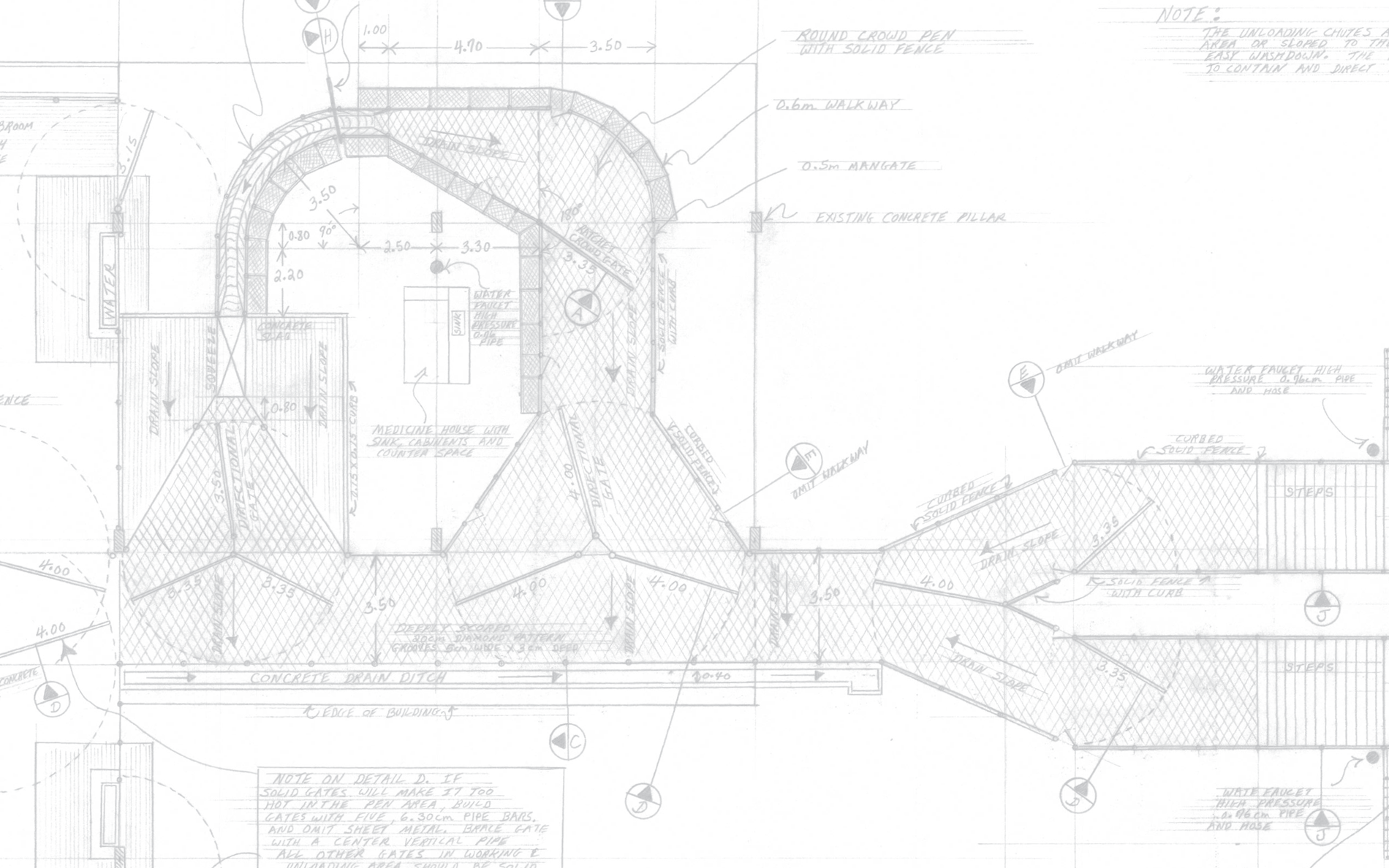
The cattle handlers at the time resorted to yelling, hitting, or pushing the animals through with electric prods to keep the line moving. To experience a cow’s-eye view, I jumped down into the chute. Once inside, I saw what kinds of things were halting the cattle in their tracks: shadows, a slant of sunlight, a distracting object such as a dangling chain, or even something as simple as a rope draped over the top of the chute caused them to stop. To me, getting inside the chute was the obvious thing to do, but none of the cattle handlers had thought to do it, and some of them thought I was nuts. Looking at the world from the cattle’s point of view was a radical idea when I first started out in the field, yet it became the hallmark of my approach to working with all animals.
I have worked with the cattle industry for many years to improve the way cattle are handled, and I’ve consulted with zoos and other animal-handling facilities to help unlock other questions of animal behavior. When I wrote about this in Thinking in Pictures, I believed that my connection with animals, especially prey species like cattle, was on account of my autism. I believed we shared a flight response when threatened. I understood their fear. In some ways, I related more to animals than to people.
I came to realize that my visual thinking has a component that contributes to my ability to see things that other people miss. I notice details that are amiss or faulty, sometimes dangerously so, an awareness I’ll elaborate on in the chapter on disaster. I didn’t just see that slant of sunlight or chain in the chute; these things jumped out at me. When I walk into a room, I immediately see anything that is off-kilter, the way a verbal thinker will pick out a misplaced comma or a typo in a sentence. The stuff that shouldn’t be there or is slightly off jumps out.
It turns out that this ability has roots in both autism and visual thinking. Laurent Mottron, a psychiatrist and researcher in cognitive neuroscience and autism at the University of Montreal, and his colleague Sylvie Belleville have worked with many people on the spectrum. Their research encompasses studying perceptual processing abilities. In one study, they administered a series of tests to a patient known as E.C., who was a savant (more on savants in a later chapter). E.C. could draw from memory in perfect proportion, with great spatial detail. Mottron observed, “Autistic subjects are known to detect minor modifications in their surroundings more rapidly than normals, and to fixate on small morphological details.” Mottron later conducted another study looking at visual and verbal thinkers using more complex visual tasks to locate perceptual functioning. Here, too, visual perception played “a superior role in autistic cognition.”
Uta Frith is the pioneering developmental psychologist who helped pave the way for autism to be viewed as a cognitive condition and not the result of frigid mothers (referred to at the time as “refrigerator mothers”). In an early study, she and Amitta Shah compared how autistic people, “normal” people, and those with intellectual disabilities would complete a task where colored blocks were assembled into different patterns. They found that autistic subjects, “regardless of age and ability, performed better than controls.”
I don’t think it would have occurred to me to jump in that chute if I weren’t a visual thinker. I had to see things from the cows’ point of view. To me, it was the most natural response in the world. Then again, I still believed everybody thought the same way I did, in a series of associated photorealistic pictures or in short, trailer-like films playing in my mind. Just as verbal thinkers had a hard time understanding visual thinkers like me, I had difficulty understanding that verbal thinkers existed. I didn’t know about the work of researchers like Mottron and Frith back then. It would never have occurred to me that you could study and quantify visual thinking or that there was a name for it. Since then, I’ve given a lot of thought as to why this is the case.
Visual Thinking in a Verbal World
The fact is, we live in a talky culture. Verbal thinkers dominate the national conversation in religion, media, publishing, and education. Words fill the airwaves and the internet, with preachers, pundits, and politicians taking up most of the real estate. We even call commentators “talking heads.” The dominant culture favors verbal people; theirs is a language-filled world.
Psychologist Charles Fernyhough is director of the Hearing the Voice project at Durham University. His book The Voices Within describes the pervasive and multiple ways and reasons that people talk to themselves: to motivate, self-focus, regulate mood, direct attention, change behavior. In essence, to become conscious. As we’ll see, even highly verbal thinkers do visualize, but information comes to them mostly in the form of language. Yet Fernyhough, like many, falls prey to a certain bias in reporting on his research. He contends that thinking is primarily linguistic, more closely “tied up with language than it initially appears to be.” He acknowledges that imaging is involved, along with sensory and emotional elements, but “they are only parts of the picture.” While it’s true that I talk to myself, sometimes even out loud when I’m concentrating really hard on a livestock-design project, my mind is not a raft on a sea of words. It’s an ocean of images.

Most children connect language to the things in their lives at a remarkable rate. Speech comes naturally to verbal people. A toddler picks up, in addition to words and syntax, the intonations and expressiveness in a parent’s language. Many visual thinkers on the spectrum, however, must learn to adapt to the dominant culture. They don’t understand that the rest of the world communicates thoughts and feelings through words. Language does not come naturally to us. We struggle to master it, as well as how to modulate our voices with the right intonation, pitch, and tone. I learned to modulate my voice through close observation of the way verbal thinkers speak. It did not come naturally. It is not innate. I still struggle with remembering long sequences of verbal information. Sometimes jokes go over my head, especially if they are delivered rapidly or involve wordplay. To understand the joke, I have to convert the words to images. If the joke includes a verbal leap or strange syntax, I probably won’t get it.
For a long time, I mistakenly believed that all people with autism were visual thinkers. As it turns out, some people on the spectrum are highly verbal. But according to psychologist Graham J. Hitch and his colleagues at the University of Manchester, all children exhibit an early propensity toward visual thinking. He studied how children process information to see if they rely on visual rather than phonological cues in their memory. The results showed that in older children, visual memory is “masked by the more pervasive phonological component of recall,” meaning that words soon paper over images, like one layer of wallpaper covering another. Gabriela Koppenol-Gonzalez, a psychologist and data analyst who has also tracked the ascendancy of language as children’s primary means of communication, found that until five years of age, children rely heavily on visual short-term memory (STM). From six to ten, they start using more verbal processing, and from age ten onward they resemble adults with respect to verbal STM. As their verbal and visual systems develop, children become more inclined to verbal thought. But the researchers also reported on previous studies of STM in adults and concluded that, contrary to what one might assume, not all adults process information verbally first and foremost.
Psychologist Linda Silverman of the Institute for the Study of Advanced Development and the Gifted Development Center in Denver has been working with gifted individuals, including many on the spectrum, for more than forty years. Their cluster of traits includes difficulty with reading, spelling, organization, and sequencing. Yet many of these kids could readily take things apart and put them together and solve complicated equations, though they would not be able to tell you how they did it. They tended to like calculus and physics and were good at map reading. Silverman’s work has been in service of teaching different kinds of learners, acknowledging their very different brains not as a disability but as an asset. In a presentation about the differences in learning styles, Silverman flashes a slide showing a person with a tidy file cabinet and a person surrounded by messy piles of paper. The “filer” and the “piler,” to use her terms. You probably know which one you are. What does it say about the way you think?
Silverman rightly points out that you can’t make any definitive inferences about the messy versus the neat person in terms of intelligence, abilities, and so on, yet it’s the messy people who tend to get stereotyped as lacking. When we compare a student with a perfectly organized binder and one with a backpack stuffed with papers, we generally assume that the organized kid is the better student and is smarter. It’s possible that they are just better at school. The geniuses, as we’ll see, are usually “pilers.” Silverman also correctly notes that if you made the person with the messy pile organize those papers, he or she would never find anything again. Such people know where everything is. For them, the “mess” is organized. They see it in their mind’s eye.
That is absolutely true for me. My office has messy piles of journal and magazine articles and stacks of drafts that look like a random mess. Yet the piles are not random. Each contains the source material for a different project. I could easily locate the right pile and find any paper I needed. Finding a specific paper in a messy pile might not be an indicator of genius, but it’s definitely a clue to how the mind works.
Yet the benefit of the doubt always seems to go to the verbal thinkers. Simon Baron-Cohen, professor of psychology and psychiatry and director of the Autism Research Centre at Cambridge, puts forth a fascinating theory in his book The Pattern Seekers: How Autism Drives Human Invention, in which he posits that people with autism are responsible for much of the world’s innovation. “These hyper-systemizers struggle with even the simplest of everyday social tasks, like making and keeping relationships, yet they can easily spot patterns in nature or via experimenting that others simply miss.” This is an accurate description of how I think. But Baron-Cohen goes on to acclaim the importance of verbal thinking, asserting that the cognitive revolution gave rise to “our remarkable human capacity for language.” This idea dominates the history of human understanding: through some alchemical process, language is presumed to transform thought into consciousness, while visual thinking gets erased somewhere along the way.
The Visual-Verbal Continuum
I am asked all the time how you can determine if a child is a visual thinker. The signs may show up in a child as young as three, but they more often become apparent when the child is six to eight years old. The propensity for visual and spatial thinking will turn up in the activities they gravitate toward. Often, they create beautiful drawings that are highly detailed and realistic. They also like building with toys like blocks, Legos, and Erector sets, or putting things together with materials they find around the house, such as cardboard or wood. They may light up at the sight of a thousand-piece jigsaw puzzle or spend hours in the basement or garage tinkering with tools or electronics, taking things apart and putting them back together. Theoretical physicist Stephen Hawking took apart model trains and airplanes before making a simple computer out of recycled clock and telephone parts. Pioneering computer scientist and mathematician Grace Murray Hopper took apart all seven of the clocks in her family home. You probably wouldn’t be happy if your teen took apart your laptop, though you might be happier if he or she turned out to be the next Steve Wozniak.
With adults, I suggest taking what I call the IKEA Test to help identify where you fall on the visual-verbal spectrum. It’s not strictly scientific, but it’s a fairly reliable shortcut to separating the more verbally inclined from the more visually inclined. Here’s the test: You buy a piece of furniture and are ready to put it together: Do you read the instructions or follow the pictures? If I attempt to read verbal instructions, I become totally lost, because I cannot follow the sequential steps. But if I look at the drawings, my mind will start associating all the things I have put together in the past, and I’ll know how this piece of furniture is supposed to look. You may have noticed that IKEA instructions come as a series of illustrations—no written instructions at all. I wasn’t surprised to learn that the man who created the company was dyslexic, privileging pictures over words. I’ve heard of some verbal thinkers who completely fall apart in the face of IKEA furniture instructions, becoming highly frustrated as they try to follow them. What is a perfect road map for me is a confusing mess for them. That must be why IKEA partnered with TaskRabbit, employing visual thinkers to help English majors assemble their bookshelves.
Bookcases aside, there is no definitive test or scan for visual thinking (yet), but Linda Silverman’s “Visual-Spatial Identifier,” which she and her team in Denver developed over many years, does a very good job of distinguishing between what Silverman calls “auditory sequential” thinkers (language based) and “visual spatial” (picture based). If you’re interested in where you fall on the spectrum, take a moment to answer the eighteen questions on the Visual-Spatial Identifier opposite.
If you answer yes to ten or more of the questions, you are very likely to be a visual-spatial learner.
Remember, it’s a verbal-visual continuum, not a binary. Very few people will reply yes to all the questions. I replied yes to sixteen out of eighteen, which puts me at the far end of the visual-thinking spectrum. Writers, editors, and lawyers will typically have far fewer yes answers. My cowriter, a highly verbal person, answered yes to only four of the questions. Most people will likely fall somewhere in the middle, showing a blend of both kinds of thinking. Highly creative or mathematical people will likely answer yes to many of the questions.
People often ask me what percentage of people are visual thinkers. There isn’t a whole lot of data on that yet. But Silverman’s team, conducting a study that included 750 fourth-, fifth-, and sixth-graders with a wide range of socioeconomic backgrounds and IQ scores, found that roughly one third were strongly visual-spatial, about one quarter were strongly auditory-sequential, and about 45 percent were a mix.
When I first realized that I was a visual thinker, I went into scientist mode and created my own survey. I believed that if I surveyed enough people, asking the same questions designed to reveal how they accessed visual memory, I could build a database of people out there who thought like me. Neurologist and author Oliver Sacks picked up on this propensity of mine to gather information and wrote about it in a New Yorker article that then became the title of his book An Anthropologist on Mars. It was an accurate description of how I make sense of the world. I’m like Margaret Mead among so-called normal, or “neurotypical,” people. In lieu of certain kinds of social connection, I’m more comfortable studying the ways and habits of people. “Fitting in” is a complicated business. I didn’t realize it then, but in searching for fellow visual thinkers through my survey, I was also searching for my tribe.
| VISUAL-SPATIAL IDENTIFIER | YES | NO | |
|---|---|---|---|
| 1. | Do you think mainly in pictures instead of in words? | ☐ | ☐ |
| 2. | Do you know things without being able to explain how or why? | ☐ | ☐ |
| 3. | Do you solve problems in unusual ways? | ☐ | ☐ |
| 4. | Do you have a vivid imagination? | ☐ | ☐ |
| 5. | Do you remember what you see and forget what you hear? | ☐ | ☐ |
| 6. | Are you terrible at spelling? | ☐ | ☐ |
| 7. | Can you visualize objects from different perspectives? | ☐ | ☐ |
| 8. | Are you organizationally impaired? | ☐ | ☐ |
| 9. | Do you often lose track of time? | ☐ | ☐ |
| 10. | Would you rather read a map than follow verbal directions? | ☐ | ☐ |
| 11. | Do you remember how to get to places you visited only once? | ☐ | ☐ |
| 12. | Is your handwriting slow and difficult for others to read? | ☐ | ☐ |
| 13. | Can you feel what others are feeling? | ☐ | ☐ |
| 14. | Are you musically, artistically, or mechanically inclined? | ☐ | ☐ |
| 15. | Do you know more than others think you know? | ☐ | ☐ |
| 16. | Do you hate speaking in front of a group? | ☐ | ☐ |
| 17. | Did you feel smarter as you got older? | ☐ | ☐ |
| 18. | Are you addicted to your computer? | ☐ | ☐ |
I started my survey by asking people to describe their home or their pet. Almost everyone, it turned out, described their homes or pets with specific visual detail. When I asked people to describe ordinary things such as toasters and ice cream cones, I got similar results. People had no trouble visualizing and describing them. Were they all visual thinkers? As a scientist, I did what I always do: I analyzed my results and hypothesized. I suspected that familiarity with these objects might be responsible for the detailed recall.
I decided to focus on something that people were aware of but didn’t encounter in their everyday lives. Driving by the church in my town, I lit on steeples. Everyone knows what a steeple is and probably sees one from time to time, but they’re not hugely present in our lives. Even if you attend church, the steeple may not be something you take notice of. I’ve spoken to ministers who barely noticed the steeples on their own churches. Asking people to access their memories about church steeples completely changed the results.
Without fail, I get one of three distinct responses. The visual thinkers like me describe specific steeples, often naming several actual churches. There is nothing vague or abstract about the picture in their mind. They might as well be staring at a photograph or photorealistic drawing; they see it that clearly. Then there are the people like my cowriter, on the far end of the verbal spectrum, who see two vague lines in an inverted V, as if roughly sketched in charcoal, not at all specific. Generally, these folks are verbal thinkers. But there are also many people who have a response somewhere in between the two extremes. They see a generic New England–style steeple, an image they piece together from churches they’ve seen and from steeples they may have read about or seen in movies. This person falls in the middle of the spectrum, a mix of verbal and visual. So almost from the beginning I recognized that there were not two distinct categories of thinker but rather a continuum.
Another informal experiment I’ve conducted over the years to screen for visual thinkers involves two disparate groups I regularly give talks to: elementary school kids and school administrators. I show each group a picture of a steer exiting a chute, staring at a bright spot of sunlight on the floor. The caption says: NON-SLIP FLOORING IS ESSENTIAL. I ask for a show of hands: How many see that the animal is looking at the sunbeam? The results remain consistent: With the kids, half the hands go up. When I present the same slide at a conference of school administrators, almost no hands go up. The administrators focus on the caption.
The Visual Brain and the Verbal Brain
In a brief history of the discovery of the visual cortex, Professor Mitchell Glickstein highlights a series of doctors who homed in on different aspects of how vision works in the brain. Francesco Gennari, a medical student in eighteenth-century Parma, Italy, who put brains on ice and dissected them, “initiated the field of cerebral architectonics: the study of regional differences in cortical structure.” Scottish neurologist David Ferrier, looking for the part of the brain that controls vision, accidentally discovered visually guided movement or motor functions. With the advent of Russian rifles with bullets that didn’t shatter the soldiers’ skulls, Japanese physician Tatsuji Inouye was able to record the entry and exit point of the bullets and calculate the location of vision damage in the brains of twenty-nine soldiers wounded in the Russo-Japanese War of 1904–1905. British neurologists came up with an even more accessible diagram from working with wounded English soldiers at around the same time.
The two parts of the brain most closely associated with speech are named for two nineteenth-century neurologists who figured out that different parts of the brain play unique roles. French surgeon Paul Broca identified the language center in the brain after working with a patient who had lost his speech (aphasia). An autopsy showed the presence of a lesion in the left frontal portion of the brain. This finding was corroborated in subsequent autopsies. A person with an injury to Broca’s area will often be fully able to understand language but cannot speak. Influenced by Broca’s work, Polish neurosurgeon Carl Wernicke discovered a similar pattern of lesions, only this time in the posterior portion of the temporal lobe. Broca’s area became associated with speech production, the ability to form words. It’s also responsible for our understanding of nonverbal cues such as gestures, facial expressions, and body language. This part of the brain is close to the motor cortex, which enables your brain to run your mouth. Wernicke’s area is the locus of language comprehension and is close to the auditory cortex. A person whose Wernicke’s area is damaged will often have scrambled thoughts, but will be able to speak, though without making much sense. These areas are connected by a big associative bundle that doesn’t contain information but merges both speech and comprehension into thought. Our bundle is larger than any other animal’s, which helps explain our complex speech and sophisticated communication.
At the same time, experiments using highly invasive procedures, including electrodes connected to different parts of a person’s or animal’s brain, aimed to show exactly what the brain did. In one experiment, stimulating one side of the brain caused the opposite side of the body to move. Two German physiologists, Gustav Fritsch and Eduard Hitzig, were treating soldiers with head injuries and figured out what part of the brain produces voluntary movement by prodding the back of their heads with electrical stimulation. They repeated the experiment with a dog. David Ferrier, the same neurologist who discovered motor function, removed the prefrontal lobes of monkeys and found their motor skills intact but their personalities profoundly changed. (He would also become the first scientist to be tried under the Cruelty to Animals Act of 1876.)
Oliver Sacks pointed out that most studies of the brain emanate from lack of capacity. A patient with a specific deficit gives us a chance to look for the cause, and by locating it, to learn about brain function. In perhaps the most famous early case, a railway worker named Phineas Gage was pierced by a metal rod that entered below his cheekbone and penetrated through the top of his skull. He miraculously survived and was able to see, walk, and talk, but he had significant personality changes, constantly spewing expletives and dispensing with social decorum. This was perhaps the first window into the function of the prefrontal cortex. In 2012, more than 170 years later, researchers at UCLA’s Laboratory of Neuro Imaging, using a combination of high-tech tools and 110 images of Gage’s virtual skull, were still trying to explain the loss of executive and emotional functions and how it might shed light on the effects of brain trauma and degenerative conditions such as dementia.
Over time, tools have been developed that allow researchers to peer inside the brain without such invasive procedures. PET scans gave way to EEGs, CAT scans, and MRIs, which produce highly accurate images of the brain that can be used to diagnose brain injuries, tumors, dementia, strokes, and more. The fMRI (functional magnetic resonance imaging) takes the technology one step further and shows brain activity.
Still, fMRI has its limitations. I think of the technology as an airplane cruising at night over a complex of houses that all get their electricity from a single generator. If the house that contains the generator is struck by lightning, all the houses will go dark. If a house that does not have the generator is hit, the others will continue to keep their lights on. With fMRI technology, we have no idea where the “generator” is unless we hit it, as with an electrode. It doesn’t allow us to determine which node in a neural network turns on the entire system.
It’s important to remember that we rely on sight more than any of our other senses. Research studies have shown that both seeing something and imagining it activates a wide area of the occipital (visual) cortex and the temporal lobe. These two areas make up approximately a third of the brain. That’s a lot of real estate. The primary visual cortex is located at the back of the head in all mammals, the farthest point from the eyes. We don’t know why it’s lodged back there, but the location may have assisted in the evolutionary development of depth perception.
Data is stored in basically three places in your brain. I think of them as your phone, your desktop, and your cloud for archiving detailed visual memories. Visual information enters the brain through your eyes and is stored at the back of the brain in your visual cortex along with some associated structures, including a hot zone for dreaming. Imagine you are taking pictures or video with your phone. Do you want to store your photos on your desktop (mid-brain), where you can file and categorize them (dogs, family, trees, videos, etc.), or do you need to put them away for safekeeping in the cloud? The frontal cortex sorts through all this data, just as you do when you decide how to organize your photos, dragging them for storage to your desktop or the cloud. Nothing is stored in the frontal cortex, but it’s where you arrange your life, a process known as executive functioning. How does all the information travel through the brain? To extend the analogy: through high-speed internet, Wi-Fi, or dial-up.
Over the years, I have participated in many brain-scan studies, each time using the newest technology. As a scientist, I had a tremendous urge to explore the unknown aspects of my own brain, to see if I could unlock some of the mysteries of autism or better understand how I think. My first brain scan was done on a then-state-of-the-art MRI scanner in 1987 by Eric Courchesne at the University of California San Diego School of Medicine. Cutting-edge at the time, the technology measured brain structure in beautiful, sharp detail. When I saw the images, I exclaimed, “Journey to the center of my brain!” From this scan, I learned why I had balance problems. My cerebellum was 20 percent smaller than in the average brain. Another MRI explained why I had high levels of anxiety before I started taking antidepressants. My amygdala (emotion center) was three times larger than average.
The scans that really blew my mind were done at the University of Pittsburgh by Walter Schneider, the inventor of a new technology called Diffusion Tensor Imaging (DTI). This technology images the nerve fiber bundles that carry information between different parts of the brain. His research was funded by the Defense Department to develop high-definition fiber tracking (HDFT) to diagnose head injuries in soldiers. This technology provided clearer images than other devices at the time and was able to distinguish where nerve fibers connected to each other and where they only crossed each other. My speech circuits were much smaller than those in the control, which may explain why my speech was delayed as a child. But my visual results were off the charts—400 percent larger than those in the controls. It was as if I had a huge internet trunk line from my rear visual cortex to my frontal cortex. Proof positive that I was a visual thinker.
It’s deep inside these circuits where things run smoothly or where developmental problems can occur. One example: Your eyes are always moving but the words on the page don’t jump around when you read. That’s thanks to the stabilization circuitry in your brain that keeps words from jiggling. Poor circuitry can be responsible for visual distortion or bandwidth problems, as well as stuttering, dyslexia, and learning disabilities.
Once again, it’s important to remember that visual thinking is not about seeing, per se. Everyone sees unless they are blind. Visual thinking refers to the way the mind works, to the way we perceive. For all our poking and prodding into the brain, we still don’t have a whole lot of information on how visual files are created, stored, or accessed. We know that while visual perception and mental imagery use many of the same brain structures, they are distinct neural phenomena. Put plainly, we understand how the physiological hardware works, but not the software.
Neuroscientist Sue-Hyun Lee and her colleagues at the National Institute of Mental Health in Bethesda, Maryland, moved the ball up the field when they were able to differentiate the way the brain processes objects as a person is looking at them versus when the same object is imagined in the mind’s eye. When a subject was asked to look at pictures of common objects, fMRI scans revealed that information from the eyes streamed into the input point in the primary visual cortex, then the information moved forward into mid-brain areas for processing and storage. When the same subjects were asked to imagine the same objects, the mid-brain areas were activated; the information moved through the circuits differently.
In an older study, a man in his early thirties had a head injury that destroyed his ability to recognize common objects, though he could visualize them in his imagination. When he was given a cup of coffee, he did not drink it because he could not recognize it among all the other objects on a desk. When he visited a buffet, he was not able to recognize the array of different foods. They appeared as colored blobs. When shown common objects, he thought a pair of pliers was a clothespin. His brain scans revealed possible damage in the occipital temporal area, the area of the brain that processes visual information. Studies like these began to articulate how our mind’s eye relies on a processor different from the visual cortex.
In even earlier neurological research about how we think, pathbreaking studies began to focus on visual thinkers. In an influential 1983 paper, neuropsychologist Mortimer Mishkin described two separate cortical processes in the brains of monkeys, one for identifying objects and a separate pathway for locating them. A 2015 study from Japan looked at brain activity associated with verbal and visual thinking. Kazuo Nishimura and his colleagues tasked their subjects to recall in turn a famous Japanese temple, the twelve signs of the zodiac, and a personal conversation, all while the researchers measured the attendant neurological activity. They found a “significant correlation between an individual’s subjective ‘vividness’ of visual imagery and activity in the visual area.” Magnetoencephalography (MEG) showed that visual thinkers created images during these tasks, while the verbal thinkers relied more on self-talk. This method makes it possible to measure rapid changes in the areas of the brain that are activated.
Additional research seemed to correlate the two different types of thinking, visual and verbal, with the right and left hemispheres of the brain. In 2019, Qunlin Chen of Southwest University in Chongqing, China, who studies the underlying cognitive mechanisms of creativity, together with a colleague administered four tasks to 502 subjects. They were asked to improve a toy elephant to make it more fun, to draw ten figures, to come up with alternative uses for a can, and to look at ambiguous figures and list ideas they got from them. Under an MRI scan, brain imaging showed that those who performed these tasks easily—the visual thinkers—had a higher concentration of activity on the right side of the brain, while verbal thinkers, who had a harder time with the assignments, had greater activity on the left side of the brain. These ideas have been popularized as right-brain/left-brain thinking. The right-brain hemisphere is associated with creativity, while language and organization are associated with activity in the left brain. Roger Sperry, the American neuropsychologist and neurobiologist whose split-brain experiments earned him a Nobel Prize in physiology, recognized the bias toward left-brain thinking, acknowledging that we tend to “neglect the non-verbal form of intellect. What it comes down to is that modern society discriminates against the right hemisphere.”
As research was beginning to validate the existence of visual thinking, I was coming to see that the verbal/visual construct was too simplistic. Visual and verbal thinking isn’t a binary, either/or prospect but rather describes the endpoints of a spectrum along which all of us fall, with some of us much closer to one end than the other. Chen’s study, in fact, highlighted that a “hemispheric balance” among the regions of the brain was essential to verbal thinking. The lines between kinds of thinking are not so easily drawn, in the brain itself or in the skills where different kinds of brains excel. You might be a verbal thinker who is also good at math. Or a rocket scientist who likes to write poetry.
The genetics of brain science are even more complex. Some researchers have hypothesized that the genes that make the brain large are related to the genes that contribute to autism, suggesting a genomic trade-off: higher intelligence at the cost of some social and emotional skills. Recent research on genetic sequencing shows that many genes are related to autism. Dr. Camillo Thomas Gualtieri, a child psychiatrist in North Carolina, calls them “multiple genes of small effect.” This would explain why autism occurs on a spectrum ranging from a few traits to disabling. The complexity of our genetic makeup provides the ability for humans to adapt to a wide range of environments. The price is that a few individuals will be severely disabled.
Other such trade-offs have been observed in people who are blind from birth; all that valuable brain real estate can get repurposed for other functions. In a study by Rashi Pant and her colleagues at Johns Hopkins University, the researchers were able to show that people who were born blind used portions of their visual cortex to respond to math equations, simple yes-or-no questions, and a semantic judgment task, while people who became blind later did not. This shows that there are channels of communication between visual and language systems.
One of the best analogies I’ve found to describe how visual thinking works is the way some blind people learn to navigate via echolocation, most commonly used by bats. The bat emits high-frequency clicking noises and uses the echoes to detect prey and any obstacles in its flight path. Echolocation allows bats to “see” with sound. About 25 percent of blind people learn to echolocate using mouth clicks, finger snaps, or cane tapping to “see” with both the auditory cortex and some repurposed visual cortex. A skilled echolocator can detect the shape, motion, and location of large objects. It appears that the brain can adapt to use sound—nonvisual information—to perform tasks of visual perception. In a very young person, the brain has more flexibility for repurposing. Another interesting study showed that when people blind from birth did algebra, their brains used early visual cortices that received no input from the eyes. This was not true for sighted people. The brain starts with a sizable portion dedicated to visual thinking. If it is not used, another function will take it over. The brain will not allow valuable real estate to sit vacant. This research also suggests that the brain is designed to create images. When the eyes stop providing information, the brain learns how to create images by using the other senses.
An extreme example is Matthew Whitaker, whom I first saw featured on 60 Minutes. Born prematurely, at twenty-four weeks, Matthew was not expected to survive. He defied the odds. But he became blind as a result of a condition known as attendant retinopathy. When he was three, his grandfather gave him a small electronic keyboard. Matthew immediately started playing it, easily sounding out songs he had heard, such as “Twinkle, Twinkle, Little Star.” At the age of five, Matthew became the youngest student to be admitted to the Filomen M. D’Agostino Greenberg Music School for the blind and visually impaired in New York City. His teacher reported that the morning after he attended a concert of her performing a Dvořák piano quintet, she heard him playing not only the piano part but all four parts for strings. Matthew now travels the world playing jazz professionally.
Dr. Charles Limb, who studies neural networks in artists and musicians, scanned Matthew’s brain while he was playing a keyboard, listening to some of his favorite music, then listening to a dull lecture. When he listened to the lecture, his visual cortex was unengaged. When he listened to some of his favorite music, the entire visual cortex activated. Limb observed, “It seems like his brain is taking that part of the tissue that’s not being stimulated by sight and using it or maybe helping him to perceive music with it.”
At least twelve new brain-scan studies conducted in the past few years have focused on visual thinking and how it is activated in different parts of the brain. The new generation of scanners can detect activated brain areas more quickly and accurately. That said, the next generation of MRI testing can still produce skewed results due to inaccurate or incomplete methods sections that make it difficult to replicate the studies accurately. In my own field, I’ve seen important details left out of the methods section, such as how subjects were chosen, the breed of pig, or the ingredients in the feed. Like the slant of sunlight in the chute, these are troubling details that jump out at me. The conflicting results in MRI studies may be due to such seemingly minor inconsistencies as the timing of prompts given to subjects, or their duration. But they may also be the product of the same confirmation bias we’ve already seen at work: most visual tests are designed and conducted by psychologists, who mostly happen to be verbal thinkers. Depending on who is analyzing the experiment, results may conflict or be skewed. Spatial and object visualizers see the world differently, as we’ll explore.
Object Visualizers and Spatial Visualizers
Discovering the difference between visual and verbal thinking was, as I’ve said, mind-blowing. The realization that visual and verbal thinking exist along a continuum was another breakthrough. Encountering the groundbreaking work of Maria Kozhevnikov further transformed how I thought about modes of visual thinking.
Kozhevnikov, a lecturer at Harvard Medical School and a researcher at the visual-spatial cognition lab at Massachusetts General Hospital, is one of the first scientists to differentiate between two kinds of visual thinkers: spatial visualizers and object visualizers. In her 2002 landmark research, she developed a battery of questionnaires and skill tests that have become the gold standard in studies about spatial and object visualization. Using her Visualizer-Verbalizer Cognitive Style Questionnaire (VVCSQ), she identified seventeen undergraduates at the University of California at Santa Barbara as high visualizers. The subjects were then given a series of visual tests, including a paper-folding test that was originally developed in 1976 as part of a cognitive test kit to determine aptitude in naval recruits. In the test, researchers show subjects a drawing of a folded piece of paper perforated by a hole. The subjects are then asked to use spatial reasoning to choose which of five drawings accurately depicts what the paper will look like—where the holes will appear—when the paper is unfolded. In another test, the participants were shown a schematic drawing that represented motion of an object. When I looked at the drawing, I saw photorealistic pictures of a real situation, such as riding my sled down a hill. The more mathematically visual-spatial thinkers interpreted the drawing as an abstract schematic representation of motion. They did not see pictures in their mind’s eye. Depending on a subject’s performance on this and other tests, Kozhevnikov would measure spatial visualization abilities in processing, apprehending, coding, and mentally manipulating spatial forms.
Overwhelmingly, the fine artists and interior designers tested as object visualizers and the scientists tested as spatial visualizers. More specifically, the low-spatial visualizers interpreted graphs as pictures, whereas the high-spatial visualizers correctly interpreted the graphs as abstract representations of spatial relations. The verbalizers didn’t show a clear preference for either visual or spatial imagery.
Kozhevnikov articulated what I had started to suspect: visual thinkers couldn’t all be lumped together. In the most basic terms, there are two kinds of visualizers. “Object visualizers” like me see the world in photorealistic images. We are graphic designers, artists, skilled tradespeople, architects, inventors, mechanical engineers, and designers. Many of us are terrible in areas such as algebra, which rely entirely on abstraction and provide nothing to visualize. “Spatial visualizers” see the world in patterns and abstractions. They are the music and math minds—the statisticians, scientists, electrical engineers, and physicists. You’ll find a lot of these thinkers excel at computer programming because they can see patterns in the computer code. Here’s a way to think of it: The object thinker builds the computer. The spatial thinker writes the code.
A team of scientists led by María José Pérez-Fabello from the University of Vigo in Spain tested 125 fine arts, engineering, and psychology students for verbal, spatial, and object thinking and independently corroborated Kozhevnikov’s results. Kozhevnikov then tested the same subjects again to assess their abilities in different types of visualization. Some had high object-visualization skills, while the others had high visual-spatial skills, but none excelled in both types of visual skills. A person who has both superior visual-spatial and object-visualization skills would be a supergenius. Imagine Mozart doing rocket science.
In a recent study, Tim Höffler and colleagues at the University of Duisburg in Germany studied eye-gaze patterns of object visualizers, spatial visualizers, and verbal thinkers, using a questionnaire to determine their cognitive processes, followed by the paper-folding test. Information was then presented in both detailed pictures and writing on topics ranging from tying a knot to how a toilet tank works. The object visualizers spent more time looking at the pictures, and the verbal thinkers spent more time reading the instructions.
As soon as I encountered Kozhevnikov’s new distinction between kinds of visual thinkers, I knew immediately that I was an object visualizer. For starters, I was terrible at the paper-folding test. My talents are mechanical, and I think in concrete, highly detailed images. The mechanical engineers I’ve worked with, the welders, machinists, and equipment designers, the people who just do stuff and build stuff, they also fit this description. The pattern thinkers known as “spatial visualizers” have the ability to extract principles and patterns from the relationships between sets of objects or numbers. Yet the difference between object-visual thinkers and visual-spatial thinkers, important as it is, is almost always overlooked in brain studies of verbal and visual thinking. Searching the scientific literature on object thinking and mechanical ability, with the exception of Kozhevnikov’s work, yields very little.
Then Kozhevnikov developed another test to measure detailed visual thinking and perception, or how a person acquires and processes information. It is called the Grain Resolution Test. The subject hears the names of two different substances—for example, a pile of salt versus a heap of poppy seeds, or a grape versus the strings on the head of a tennis racquet—and is asked to determine which has the finer grain, which is denser. In assessing how a person uses imagery to solve problems, Kozhevnikov showed that object thinkers were faster and more accurate, creating “high quality images of the shapes of individual objects.” The visual-spatial thinkers excel at a more abstract imagining of the relationships between objects. I aced the Grain Resolution Test. For the tennis racquet string example, I saw in my mind’s eye the grapes being squashed because they were too big to fit through the spaces between the racquet strings. My score on the Grain Resolution Test was much better than that of Richard Panek, my coauthor for The Autistic Brain, but his score on the paper-folding test was much better than mine. These results indicated that he is a visual-spatial thinker, while I am an object visualizer.
Just for fun, I took an online mechanical aptitude test that measures the ability to understand common mechanical things, using timed questions. As a visual thinker, I expected to ace it. The test initially asks you to choose between pairs of images, identifying the one with the superior construction—for example, a bolt cutter with long or short handles. I could immediately see the performance of the two bolt cutters as short video clips in my imagination. From experience, I also know that longer handles provide more leverage and will cut through a bolt more easily. Another test features two cars located on a bridge, one closer to the bridge support and the other in the middle of the bridge. Which car would do more damage to the structure if the bridge construction were defective? I could easily picture where the weight-bearing load would be distributed on the structure, which quickly revealed to me that the car in the middle would be more dangerous. Next were multiple-choice questions about the mechanics of different objects. Here, however, I got only seven out of ten questions right.
My score reflected one of the aspects of object-visual thinking: some object visualizers like me need more time to process information, because we first need to access the photorealistic picture bank to process information. In other words, I need to do the equivalent of a Google search in my mind to access the images to solve a given problem. Different types of thinking provide strengths in one area and deficits in another. My thinking is slower but it may be more accurate. Faster thinking would be helpful in social situations, but slower, careful thought would enhance production of art or building mechanical devices.
Rapidly delivered verbal information is even more challenging for object-visual thinkers like me. Standup comedians often move too quickly through their routines for me to process. By the time I have visualized the first joke, the comedian has already launched two more. I get lost when verbal information is presented too fast. Imagine how a student who is a visual thinker feels in a classroom where a teacher is talking fast to get through a lesson.
The New Normal
These days, “neurotypical” has replaced the term “normal.” Neurotypicals are generally described as people whose development happens in predictable ways at predictable times. It’s a term that I shy away from, because defining what is neurotypical is as unhelpful as asking the average size of a dog. What’s typical: a Chihuahua or a Great Dane? When does a little geeky or nerdy become autistic? When does distractable become ADHD, or when does a little moody become bipolar? These are all continuous traits.
The Strange Worlds of Aphantasia
The Visual Thinking Advantage