Ireland has suffered the devastating effects of famine many times during her history. The Great Famine, or An Gorta Mór, is the most important event in modern Irish history and the actions of the government of the day compounded its effects. The failure of the potato crop was unprecedented and led to the deaths of more than 1.5 million people and mass emigration on a scale never seen before or since. It was a time that most Irish people rarely talk about. Some remember it as a famine; however, others still refer to it as ‘The Great Starvation’ for when there is food enough to export there should be no famine.
God sent a curse upon the land because her sons were slaves.
The rich earth brought forth rottenness, and gardens became graves,
The green crops withered in the fields, all blackened by the curse,
And wedding gay and dance gave way to coffin and to hearse.
(Anon., 1849)
‘Féar gortach’ means ‘hungry grass’. This is a patch of dead grass that pops up where someone has died violently, according to some, while others say it happens where someone has died of hunger specifically. There are those who suggest that it’s a spot where a corpse has lain on the way to its final resting place, or even where they still lie, covered by grass, a reminder of the famine. There are even those who say that it may be a fairy curse. Whatever the reason, the grass becomes a predator.
Have you ever been walking down a green grassy bóithrín (the Irish term for a small road with room for one cow) on a bright sunny day when you were suddenly overtaken by a hunger so strong you almost passed out? Believe me, it’s happened and a good Irishman would immediately know why and what to do. Anyone who walks or passes over the féar gortach in Irish, will suddenly become hungry beyond reason, even if they have just been well fed. Those who live near patches of such grass have been known to keep extra food on hand in the case of afflicted travellers knocking on their door. No other side effects are known.
Sometimes you might even hear some of the older folk say, ‘The féar gortach is on me’, meaning they are feeling very hungry. When we were young children we were told to always have a biscuit or a piece of bread in our pockets when going out for a walk just in case the féar gortach came on us. However, if you didn’t have a biscuit you could always suck on a shoelace.
As an adult when I visit somewhere like the famine village over in Achill, I place a piece of bread and pour a little of what I have to drink onto the ground as an offering to the spirits of the place.
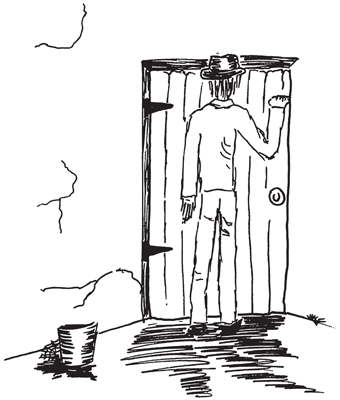
When we were children we were told the story of the Fear Gorta or the ‘Man of Hunger’. He was a tall thin man dressed in black, raggedy clothes. He travelled around County Mayo, going from place to place, village to village and town to town during times of famine. It was said that when he knocked on your door you had to welcome him as you would a stranger and offer him a little food and drink even though food was extremely hard to come by during the famine. For this reason many would hide behind closed doors, some would deny him any food or drink and some would even chase him from the door. For these people there would be no hope; they had sealed their fate – death by starvation.
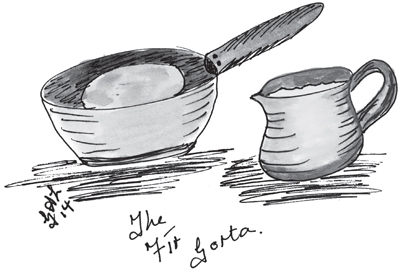
Those who spared a small piece of potato or a drop of milk, even if that was all the family had, or those who genuinely had nothing except the offer of a welcome hand would be thanked by the Fear Gorta for their generosity. He would then politely refuse their offer and take his leave of them. However, before he left he would say, ‘Because of your generosity and your honest welcome today you will be truly blessed. Neither you nor your family will ever die of the hunger. Tell no others of what has passed here but from this day forth your pot will never be empty, your jug will never run dry.’ In the morning the woman of the house would go to the pot, where she would find a great big potato, more than enough to feed the whole family, and a jug that was brimming over with fresh, creamy milk. It would be the same each morning and the family would survive the famine.
Ireland has traditionally been known as the ‘land of a thousand welcomes’; however, I wonder how many of us would welcome a stranger to our door today with an offer of a hot meal and a warm drink?