Introduction
This chapter provides a brief overview of what ethics is – just what do we mean when we talk about ethics and morality? What makes an ethical decision different from any other and why should veterinarians and associated professionals be concerned with ethics? We will explore why many of us find ethics challenging, and the place for teaching and developing ethical reasoning skills.
When it comes to animal health professions, ethics and animal welfare are inextricably linked, so we have provided a brief discussion of key concepts in animal welfare and how our values impact welfare assessment. We discuss the contentious issue of which animals are worthy of ethical consideration.
In this chapter we also look at common ethical dilemmas and sources of ethical conflict in veterinary practice, as well as the impact of those on veterinarians and associated professionals. Finally, we briefly explore policy, based on ethical reasoning, as an aid to decision-making in veterinary practice.

1.1
Cartoon
REPRODUCED WITH PERMISSION OF MATTHEW BOYD AND IAN MCCONVILLE
Ethics is a branch of philosophy. Philosophy, which loosely translated means love of wisdom, is the study of general concepts such as principles of reasoning, the nature of knowledge and truth, reality, perception, and so forth. It asks the big questions, such as “Do I really exist?”
Unlike other areas of philosophy (for example, metaphysics), ethics generally presupposes reality – and in fact in the broadest sense considers the question “What should I do?” It assumes that there are, if not right and wrong answers to that question, better and worse answers. The word “ethics” is an umbrella term for beliefs, principles and rules determining what is right and wrong.
Let’s say that you are granted the power of invisibility. The ethics of invisibility concerns itself with how you use that power – whether to use that power for your personal gain by walking into a bank and stealing money in broad daylight, or for achieving a greater good, such as helping to expose the actions of those who perpetrate injustice.
Similarly, after years of study, veterinary, nursing and animal science students develop special skills and knowledge, as well as entitlement to registration (“powers”) that come with these roles – for example, the ability to diagnose and treat health problems in animals, to perform acts of veterinary science. It is possible to use these powers to help or harm others. Veterinary ethics concerns itself with how you use these powers.
Of course, poor ethical decisions may not simply result from deliberate abuse of power, but may also arise out of ignorance and laziness. One of the aims of ethics teaching is to generate awareness about decision-making so we don’t fall into these traps.
1.1.1 What do we mean when we use the word “ethics”?
Bernard Rollin, who taught the first veterinary ethics course at Colorado State University in the 1970s, makes a helpful distinction between Ethics1 and Ethics2 (Rollin 2006). Ethics1 is our set of beliefs – what is right, what is wrong, what is just, what is unjust, good and bad and so on. Rollin argues that these beliefs are acquired from multiple sources: parents, school friends, teachers, authority figures and the mass media. Ethics1 comprises our personal, social and even professional ethics.
Ethics2 is the systematic study of Ethics1. It examines Ethics1 propositions (for example, “it is wrong to kill animals for sport”) and looks for consistency, contradictions and wider implications, as well as examining the way Ethics1 propositions are justified.
According to Rollin, examples of non-debatable, consensus, socio-ethical principles include prohibitions against murder and other forms of violence (Rollin 2000). He argues that “personal ethics begin where social ethics are silent”, for example on matters such as whether we give to charity, how many offspring we have, what we eat or whether we adhere to religious tradition (Rollin 2000). Social media is full of examples where there is apparent crossover.
Anthrozoologist and author Hal Herzog writes that ethics is similar to journalism. Just as journalists investigate who, what and why (as well as when and where) something happened, ethicists look at who, what and why questions: “who is entitled to moral concern, what obligations we have to them, and why one course of action is better than another” (Herzog 2010).
There are other terms that are used frequently in the ethics literature.
Table 1.1 Ethics1 and Ethics2
|
ETHICS1
|
ETHICS2
|
|
| Right vs wrong |
The study of Ethics1 |
| Good vs bad |
Analysis of ethical propositions |
| Fair vs unfair |
How are Ethics1 propositions justified? |
| Propositions from variable sources |
Are Ethics1 propositions held by this person/group/ |
| Contradictory or conflicting beliefs |
organisation consistently? |
| Personal ethics |
How can we address conflict between Ethics1 |
| Professional ethics |
propositions? |
| Social ethics |
|
Normative ethics addresses the question “what should I do and why?” Ethical theories or frameworks attempt to generate and justify these norms or ethical propositions. These propositions are used to judge whether an action is right or wrong. An example of such a principle may be the widely accepted belief that it is wrong to harm another human being.
Descriptive ethics refers to the factual investigation of moral beliefs and conduct – the psychology, neurobiology, sociology and anthropology of beliefs. It describes moral and ethical reasoning and behaviour without judging or prescribing beliefs and conduct.
Metaethics is the study of ethical reasoning, moral knowledge and ethical “truth”. It is concerned with questions such as “what is good?”, “what are right and wrong?” and “how can we tell the difference between good and bad or right and wrong?”
For philosopher William Shaw, ethical or moral decisions differ from non-ethical decisions in three ways. Firstly, they are concerned with actions that can seriously impact the welfare and in some cases survival of others. Whether or not to wear a particular coloured dress is not an ethical decision in most cases. Deciding whether to euthanase or treat an animal is an ethical decision.
Secondly, because of their importance, moral standards take priority over other standards. For example, if a veterinary nurse believes strongly that it is wrong to kill a healthy companion animal,
most would argue that he or she should not participate in this just because it is a service a client has demanded.

1.2 It helps to become familiar with ethical terminology.
Thirdly, the soundness of moral standards depends on the reasons used to justify them. Thus it is unsound to justify an ethical action (for example, treating a wildlife casualty) on the grounds that it was done “because I could” (Shaw 2010). We would expect a justification referring to broader ethical principles – for example, “I treated this animal because the suffering involved will be short-lived and is outweighed by the likely successful rehabilitation” (a utilitarian justification) or “I treated this animal because I was acting in accordance with my duty to respect the value of the life of all animals” (a deontological justification).
In the clinical setting, ethical reasoning has been proposed to consist of four key components:
- knowledge and understanding of ethical theory or frameworks;
- awareness of different stakeholders and their interests in a given scenario;
- awareness of one’s own morals as a practitioner;
- the ability to incorporate all of the above in the clinical reasoning process (Edwards & Delaney 2008).
Veterinary medical ethics, along with medical ethics, has been criticised previously for focusing too much on intraprofessional etiquette (Magalhães-Sant’Ana 2015, Rollin 2000). To date, many codes of conduct focus on issues such as advertising, referral, client relations and not denigrating colleagues or bringing the profession into disrepute. It is clear that veterinary ethics is much broader than that; however, there is a large amount of overlap between ethics and etiquette.
While we might all want to live a “good” life, doing the right thing, some scholars argue that the nature of the work of veterinary and associated professionals gives rise to a greater responsibility to develop ethical sensitivity and reasoning skills:
“Veterinary professionals have the same general responsibilities to animals as other people but are more accountable because we have more opportunities to cause greater harms and fewer excuses because of our greater knowledge.”
(Yeates 2013; emphasis added)
According to veterinarian and educator Liz Mossop, “decision-making is the cornerstone of the veterinarian’s role, and an expectation of all healthcare professionals” (Mossop 2015).
Vets are in a powerful position. They are widely trusted, as evidenced by opinion polls (e.g. Royal College of Veterinary Surgeons 2015), and can influence both life-and-death decisions for individuals and the welfare of many. Part of that trust may stem from the meaning of the word “profession”, encompassing both an occupation and a promise or a vow. The promise concerns clients as well as wider society. Thus Allister asks, “What is the promise that the veterinary profession makes to wider society? Do we achieve what we set out to? And how does that translate on a personal level, to vets making sense of and enacting in our working environments?” (Allister 2016).
As well as the capacity to cause harm veterinary professionals can, and should, use their influence to improve animal welfare and encourage more ethically acceptable practices for animals (British Veterinary Association 2016). Poor decision-making, on the other hand, can lead to a negative impact on the welfare of animals, unhappy clients, and undesirable effects on the wellbeing of the veterinarian (for example, reflected by lack of job satisfaction or stress) (Mossop 2015). For example, research has shown that veterinary practitioners are inconsistent in making decisions regarding patient care, and give preferential care to clients they assess positively. This has a direct impact on animal care and will lead to some animals receiving better care than others [Morgan 2009 unpublished cited in (Batchelor, et al. 2015)].
Veterinarians and associated professionals are expected to understand ethical concepts – at least enough to be able to make and justify their decisions. Indeed, awareness and understanding of ethical responsibilities is, in many countries, an expected Day One Competency for veterinary graduates. For example, in its “RCVS Day One Competencies”, the UK’s Royal College of Veterinary Surgeons makes explicit reference to ethics, stating that the new veterinary graduate should be able to “Understand the ethical and legal responsibilities of the veterinary surgeon in relation to patients, clients, society and the environment”; and have “a breath of underpinning knowledge and understanding” about “the ethical framework within which veterinary surgeons should work, including important ethical theories that inform decision-making in professional and animal welfare-related ethics” (Royal College of Veterinary Surgeons 2014; emphasis added).
Other listed competencies assume the ability to make sound ethical decisions, for example, the new veterinary graduate should be able to undertake the following:
“34: Recognise when euthanasia is appropriate and perform it humanely, using an appropriate method, whilst showing sensitivity to the feelings of owners and others, with due regard to the safety of those present; advise on disposal of the carcase.”
(Royal College of Veterinary Surgeons 2014; emphasis added)
It is likely that Day One Competencies pertaining to ethics and animal welfare will be expanded. In a joint report the Federation of Veterinarians of Europe (FVE) and the European Association of Establishments for Veterinary Education (EAEVE) found that animal welfare and ethics are inextricably linked, and called for more uniform, comprehensive teaching of animal welfare, ethics and the law across veterinary schools. The report states that “One cannot be a good clinician without being aware of the ethical issues in decision-making in practice” (Morton, et al. 2013).
The FVE/EAEVE working group developed an animal welfare curriculum, and recommended a number of ethics-related day-one learning outcomes for veterinary graduates, some directly pertaining to ethics while others require a solid foundation of ethical knowledge:
“Graduates should have the ability to
- Appraise different concepts as well as analytical frameworks of animal welfare and how they relate to practice and the context in which they are set.
- Apply sound principles to objectively evaluate the welfare status of animals and to recognise good and poor welfare.
- Participate in animal welfare assessment, monitoring and auditing with the aims of improving the physical and mental health of animals.
- Formulate an informed, science-based, view on animal welfare matters and communicate effectively with those involved in keeping animals.
- Appraise the social context and participate in societal debates about animal welfare and ethics.
- Retrieve up-to-date and reliable information regarding local, national and international animal welfare regulations/standards in order to describe humane methods for animal keeping, transport and killing (including slaughter).”
(Morton, et al. 2013)
Aside from regulatory and professional requirements there is a societal expectation that veterinarians and related professionals have an understanding of ethical issues and the ability to navigate ethical conflict.
One study found that veterinarians and nurses have a very strong sense of career identity, of which one’s ethical and moral approach was a big part (Page-Jones & Abbey 2015). Ethical and moral mismatch between the individual and employer was a source of tension which the authors predicted would rise with increasing corporatisation of the industry.
The teaching of veterinary ethics is in its infancy when compared to subjects such as surgery and anatomy. Future questions for universities include whether prerequisites related to student ethical standards should be considered at admission; how ethical education and training are coordinated with the wider university, veterinary professional organisations and registration bodies; and how ethical reasoning can be integrated in other subjects.
Ethical practice can be challenging for veterinarians for a number of reasons. Cultural, legal and economic factors may lead to animals being kept or treated in a manner that is not conducive to their welfare (for example, hens in battery cages) (Verrinder & Phillips 2014). In addition, animal care is frequently inconsistent, within and across species, for example, different husbandry standards for rabbits and rodents depending on their use by humans (Verrinder & Phillips 2014).
In a study of Australian veterinary students, the third most important motivator (after a desire to work with animals and the wish to help sick or injured animals) was the desire to improve the way animals are treated (Verrinder & Phillips 2014). The majority of students were concerned about animal ethics issues (Verrinder & Phillips 2014).
Translating ethical principles into action can be challenging. In a study of 258 clinical psychology students, only 37 per cent of those who identified
what they felt to be an appropriate response to an ethical dilemma said they would act on it (cited in Verrinder & Phillips 2014). In another study, 54 per cent of veterinary students who said they were concerned about ethical issues admitted to doing little or nothing to resolve these (Verrinder & Phillips 2014). While over 90 per cent of students believed that the veterinary profession should be involved in addressing animal ethics issues in the wider community, only one third agreed that it was “sufficiently involved” (Verrinder & Phillips 2014).

1.3 A desire to work with animals, the desire to help sick or injured animals and the desire to improve the way animals are treated were the most important motivators for veterinary students.
PHOTO ANNE FAWCETT
Why might this be so? Well, there is a vast difference between believing something and acting on it. Action requires conviction, effort, time, and often the belief that the benefits of acting will outweigh the costs.
In veterinary practice, there may be conflicts between the interests of animals and those of clients, industry or society as a whole. For example, in most contexts veterinarians charge owners for their services, a well-recognised potential source of conflict as seen in the following quotes:
“The problem faced by advocates of the model of veterinary medicine as a business is fitting their sincere care and concern into a model that also wants to view professional life in terms of selling and buying. This task is like mixing oil and water.”
(Tannenbaum 1995)
“Every time we recommend a course of treatment we face a potential conflict of interest between benefit to the patient, the cost to the owner and the benefit of the practice from the financial profit generated.”
(Viner 2010)
Indeed, this dual involvement in providing care and making a profit may be viewed with cynical distrust by clients and even some veterinarians. This situation may be further clouded by the veterinarian’s relationship to their employer. For example, a veterinarian may be employed by a practice which has policies such as recommending particular products over others due to a commercial deal with a wholesaler. The employee may feel conflicted in situations where use of that product is not in the animal’s or client’s best interests.
What if we don’t actively consider ethical issues? The risk is that we may make poor decisions – or even wrong decisions. Our default moral cognition is at the mercy of complex psychological mechanisms that we may not be aware of. Thus, we may be subconsciously geared toward avoiding punishment rather than actually doing good – an approach that doesn’t always withstand analysis. As such, many people will avoid committing an act of commission (actively bringing something about), but may willingly perform an act of omission (neglecting to do something) even if this leads to the same or a worse outcome than the act of commission (DeScioli, et al. 2011).
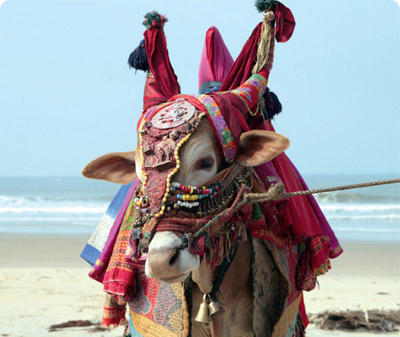

1.4a–b
Cows are revered in India but may also be allowed to die from starvation rather than be euthanased.
PHOTO ISTOCK
For example, in India many people are unwilling to kill cows (an act of commission), but will allow cows to die by starvation (an act of omission).
Similarly, euthanasia of human patients is illegal in many countries, while withdrawal of treatment is not. In a study involving a simulated economic game in which one person could take money from another person by omission or commission, participants were more likely to choose omission even when this destroyed welfare, and resulted in poorer outcomes for themselves and others (DeScioli, et al. 2011). Omission was a strategy, the authors concluded, designed to avoid the condemnation of others and subsequent punishment.
Guilt is an emotional state that occurs when one believes, rightly or wrongly, that one has violated a moral code (Fordyce 2011). In a meta-analysis, guilt – and the desire to avoid it – was one of the most influential emotions in decision-making, over and above the motivation to “do the right thing” (Angie, et al. 2011).
Ethical reasoning is important because our intuitions and feelings about what is the right or wrong thing to do can be unreliable. For example, most people would argue there is a moral distinction between a person committing a murder, and one failing to prevent a murder, even if both result in the same amount of suffering. Many laws reflect such a distinction, which raises the question: if we cannot appeal to our intuition as the basis of sound ethical judgement, what about appealing to the law?
Unfortunately the law reflects the predominant social values of the time, many of which are subsequently recognised as outdated and in some cases unethical. For example, in the not-so-distant past the law has prohibited women from voting, limited the rights (including voting rights) of indigenous peoples and even permitted slavery. The application of legal principles is not straightforward either, hence the need for legal experts and specialists and lengthy court proceedings. Similarly, appealing to religion is challenging when many religious teachings are ambiguous and open to different readings.
“The difference of opinions on a range of issues within the veterinary profession demonstrates a need for ethical analysis.”
The difference of opinions on a range of issues within the veterinary profession demonstrates a need for ethical analysis. Being able to articulate our concerns with reference to ethical frameworks at least gives us a common base to facilitate communication around ethical issues.
Whether our motivations matter depends on the approach you take to ethics. As we will discuss, motivation or intent may not matter if you judge an action as ethical based on the consequences, but it certainly matters according to non-consequentialist ethical models (discussed in chapter 2).
There are a variety of reasons we should learn about ethics but fundamentally we are aiming to make more “right” decisions in the variety of settings that vets find themselves in.
“Vets are not just at the front line, they are also on an ethical highwire, constantly balancing their concern with animal welfare against the demands of the industries, clients and practices they work for, without necessarily having been given any training in how to do this.”
(Rawles 2000)
Box 1.1 Motivations for Behaving Ethically

1.5 Our motivations for behaving ethically are diverse.
ILLUSTRATION ENGESRAA
Our motivations for behaving ethically are diverse. When asked to give a reason for behaving ethically, or engaging in ethical decision-making, a group of 120 Australian second-year veterinary students gave a range of responses:
- Because my religion dictates it
- Because my parents told me
- Because I am a role model
- Because it will increase the likeliness of me being rewarded
- Because it will decrease the likelihood of me being punished
- To fit in with my peers
- To get warm, fuzzy or positive feelings
- To maintain a good reputation
- Because it is the law
- Because it leads to better outcomes for others
- Because ethical behaviour is dictated by my professional code of conduct
- To avoid stress/follow the path of least resistance
- To increase the likelihood of the best outcome
- To avoid feeling guilty
- Because a good person would behave according to ethical principles and I am a good person (class survey, Fawcett 2012, unpublished).

1.6 Vets are on an ethical highwire.
CARTOON RAFAEL GALLARDO ARJONILLA
Many qualified veterinarians have had no formal ethics training and have found their own path through the ethical minefield in which they operate. Unfortunately, increased experience in practice does not reduce the stress of ethical dilemmas (Batchelor & McKeegan 2012). Furthermore, moral reasoning is not simply learned from repeated exposure to ethical dilemmas (Batchelor, et al. 2015). A preliminary investigation into the moral reasoning of UK veterinarians found that, despite having a professional degree, the moral reasoning skills of practising veterinarians were highly variable, and were often no better than those of members of the public (Batchelor, et al. 2015). The authors concluded that the moral reasoning skills of veterinarians may be insufficient to meet the demands of such an ethically challenging job. In this study veterinarians working in an academic setting fared better – perhaps because they are in a working environment that promotes critical thinking and discussion (Batch-elor, et al. 2015).
Concerningly, a study found that the moral reasoning of veterinary students was not improved during veterinary school (Self, et al. 1996). In one study, 78 per cent of veterinarians reported that their veterinary degree did not provide them with adequate training to deal with ethical dilemmas (Batchelor & McKeegan 2012). In a survey of veterinary educators who taught ethics, one motivation was to equip students to deal with ethical tension to prevent them “dropping out after a few years in practice” (Magalhães-Sant’Ana, et al. 2014). This involves recognising ethical issues and developing ethical reasoning and decision-making skills (Figure 1.7). What we don’t yet know is to what extent ethics teaching alters such outcomes.
Increasingly, veterinary students are being taught ethical theories and reasoning, not least to comply with the expected competencies of veterinary regulators. To determine the underlying reasons behind ethics teaching Manuel Magalhães-Sant’Ana and colleagues surveyed veterinary educators and found four major themes: raising ethical awareness, providing an ethical knowledge base, developing ethical skills and developing individual and professional qualities (Magalhães-Sant’Ana, et al. 2014).
These themes are associated with learning objectives as outlined in Figure 1.7.
Classroom discussions provide a relatively safe environment to discuss personal views and values (Magalhães-Sant’Ana, et al. 2014). There is, however, no accepted gold standard for veterinary ethics education and ethics curricula vary in terms of how the themes are prioritised. In addition, ethics can be taught within different subjects. A qualitative study showed that veterinary ethics teaching is grounded or framed within animal welfare science, laws and regulations, theories and concepts and professionalism.
Batchelor, et al. (2015) suggested that veterinary medicine adopt the successful teaching methods for ethics employed in medicine and nursing. In most cases student-centred, group discussions of ethical dilemmas or scenarios are
used, with the focus on developing critical reasoning rather than simply transferring facts and values.

1.7 Learning objectives corresponding to themes in ethics teaching.
ADAPTED FROM MAGALHÃES-SANT’ANA, ET AL. (2014)
Sant’Ana proposed a common framework for the teaching of human and veterinary medical ethics based on three concepts: professional rules, moral virtues and ethical skills (Magalhães-Sant’Ana 2015). The professional rules approach is based on transmitting norms or deontological principles (see chapter 2) in legislation, professional codes, oaths and principles. The virtues-based approach is focused on development of moral attitudes and behaviours, and promoting the values and beliefs underpinning the rules. Teachers and senior colleagues act as role models, through example and socialisation (see chapter 2 for a discussion of virtue ethics). The skills-based approach aims to equip students with the tools for moral reasoning, allowing them to assess ethical dilemmas and conflict from different perspectives and take moral responsibility by using these tools or frameworks to come to their own decisions. We will discuss key ethical frameworks in chapter 2.
Each concept, when employed alone, has weaknesses which may impede ethical decision-making. For example, the rules-based approach fails to recognise differences between the law and morality, and the fact that there cannot be a rule, law or guidelines for conduct in every ethically challenging situation in veterinary practice or medicine. In addition, ethical reflection becomes redundant if one can simply follow the rules (Magalhães-Sant’Ana 2015). The cultivation of virtues cannot be cultivated within the timeframe it takes to teach a single subject, and vices can be role-modelled just as easily as virtues (Magalhães-Sant’Ana 2015).
A common criticism of the skills-based approach is that in providing numerous frameworks there is a risk that students may not have time to become properly acquainted with the merits and limitations of different ethical frameworks, hampering ethical decision-making (Magalhães-Sant’Ana 2015). Ethics courses that pit one theory against another, and require students to critique each theory, may give the impression that all ethical frameworks have flaws and thus all ethical opinions are simply that: opinion (Verrinder, et al. 2016).
Accepting that ethical frameworks are essentially complementary may be a means of avoiding such confusion and “disenchantment of relativism and pluralism often associated with ethics” (Verrinder, et al. 2016).
“In contrast to other professions, veterinarians must deal with a centrally contested moral claim – the moral status of animals – in their day to day interactions with clients and patients”
(Morgan & McDonald 2007)
Ethical status, also referred to as moral standing, moral status, or ethical standing, refers to the property of an individual of being worthy of at least some degree of ethical consideration. We refer to intrinsic value when a being is worthy of ethical consideration in their own right, independently of or additional to being useful as a means to an end. For example, we feel that people have their own worth that is important to themselves and requires protecting.
But do we see animals in the same light? In Western philosophy, until recently, animals were overwhelmingly considered to be “lesser beings”. The philosopher René Descartes, who famously performed live dissections (vivisection) of animals, compared them to machines, like clocks, and argued that they had no reason, no intelligence and no rational soul. Thus, the argument goes, we can treat them as we would machines – we may do with them and dispense with them as we wish.
This is an extreme view. One of the challenges of veterinary ethics is that the ethical status of animals is contested. Some believe that animals have instrumental value – that is, they are valuable because of their use to us. This could apply to farm animals, who provide a source of food, working dogs who assist humans in their tasks, or pets who provide companionship and in some cases protection. Others believe that animals have intrinsic value – that is, these animals have value in and of themselves, as living beings, irrespective of and independent to their value for us.
For example, in companion animal practice some owners of dogs or cats may view these animals as effectively property, considered only in terms of how they are useful to that person (instrumental value). Others view dogs and cats as true companions or family members (intrinsic value).
Of course an animal or human being may have both intrinsic and instrumental value. For example, most of us believe that humans have intrinsic value. A veterinarian or veterinary nurse, as a human being, has intrinsic value, but also instrumental value because of the useful tasks they perform.
If we attribute moral standing to animals, we imply that in addition to their instrumental value (for example, a dairy goat providing milk or a guard dog protecting a family), we have a duty to respect them as ethical subjects.
As stated by Ben Mepham, “The idea that animals have merely instrumental value, as we commonly assumed until very recently, now seems totally discredited. Putting it starkly to emphasize a point, if someone destroyed one of their valuable books we might, at worst, think him a fool – but if he destroyed his healthy cat (even painlessly, by poisoning when it was asleep) we should think him depraved” (Mepham 2008; emphasis in original).
Increasingly, legislation recognises the intrinsic value of animals. For example, a court ruling in Argentina found that a captive orangutan was a “non-human person” unlawfully deprived of her freedom. The Association of Officials and Lawyers for Animal Rights filed a habeas corpus petition – typically used to challenge imprisonment of a person – on behalf of the animal. The court found that the animal has sufficient cognitive functions and should not be treated as an object. The finding paved the way for the orangutan to be transferred from the zoo at which she was kept to a sanctuary (Lough 2014). However, in contrast, a New York court did not agree that chimpanzees were “non-human persons” and therefore keeping them captive was not an infringement of their right to liberty (Stern 2015).
It is not surprising that the successful petition was filed on behalf of a primate and not, for example, an otter. This is because society as a whole operates on the assumption that there is a scale of moral standing. When considering differences in moral worth, we need to consider which differences are morally relevant. For example, we no longer consider skin colour a morally relevant difference between people and therefore discrimination on this basis, racism, is widely condemned.
In addition to intrinsic value and instrumental value, animals can also have no value at all, such as pests. One good example is rabbits. Rabbits can be at the same time pets (intrinsic value), experimental animals (instrumental value) or pests (no value). It could be said that in the case of farm animals, we can reach the same outcomes in terms of welfare by considering their instrumental value (because we want to improve human needs, e.g. the meat quality) or by taking into account their intrinsic moral value (because we want to provide them with a good life).

1.8 An orangutan in Argentina was declared by the courts to be a “non-human person” who therefore could not be deprived of her liberty.
PHOTO ISTOCK
If we distinguish between humans and other animals in terms of their moral standing, we need to establish a morally relevant difference between us. Increasingly the morally relevant difference between humans and various animal species considered in such situations is sentience, which encompasses the ability to think, suffer and experience emotions. Sentio-centrism prioritises sentience, and holds that sentient individuals (human or animal) have their own intrinsic moral worth – their welfare matters to them, and as such should be considered at the heart of ethical questions.
Despite scientific definitions delineating sentience and affective state, here they are considered functionally equivalent, where to be sentient is to experience positive and negative feelings. However, determining just which individuals or species are likely to have such conscious experiences is difficult as, by their very nature, they are privately experienced. This is where we commonly “argue by analogy”, comparing neurophysiology and behaviour of animals to the “gold standard” for sentience: (currently) humans (Low 2012). This approach recognises that animals do not need to possess the same neuro-anatomy or act the same as humans to be sentient, but they must have relevantly similar systems for processing the world around them and responses to that world. Precisely where the line is drawn to define which animals are sentient depends on interpretation of the ever-increasing scientific literature, and the judgements of people who make up society. It’s fair to say that more and more animal species appear to be at least knocking on the door of, if not yet fully joining, the reasonably well-established vertebrate “sentience club” as welfare science advances further. Cephalopods (Mather 2008), decapod crustaceans (Elwood 2012), insects (Bateson, et al. 2011) and other invertebrates (Sherwin 2001) have all been shown to exhibit some neuro-anatomy and/or behaviours that are similar to those of sentient humans.

1.9 More and more species are being included in the so-called “Sentience Club”.
CARTOON DR ROBERT JOHNSON
Being outside the sentience club does not mean that an animal should not be considered in any ethical decision, only that, for those people primarily concerned about the feelings of animals, the consideration need not include an evaluation of their welfare, as by definition non-sentient animals cannot experience welfare. However, we
could have an ethical concern for welfare that encompasses naturalness or physical functioning which could also apply to non-sentient animals where the impact of any decision on an animal’s natural behaviour, ability to reproduce or on the survival of the species would be examples of relevant concerns. Likewise, we could have a greater concern for conservation of species, preservation of ecosystems and maintenance of biodiversity than for the welfare of individuals. We must also remember that the absence of evidence does not imply the evidence of absence – it may be that a sentient species is not considered such because science has not proven it so or has not advanced sufficiently to provide any useful evidence.
What do you think?

1.10 When your container ship sinks, which people or animals would you prioritise to take in a lifeboat to a nearby island?
PHOTO ISTOCK
“Lifeboat dilemmas” are thought experiments that allow us to affirm and articulate our values, particularly in discussion with other people. Here is one that allows us to explore the relative moral worth of some people and animals.
A container ship is rapidly sinking with only one remaining lifeboat. Nearby, certainly in range of the lifeboat, is a large forested island with a small human settlement.
There are 10 “units” of people and animals on your container ship (listed below) that you might be able to rescue by bringing into the lifeboat. But, in which order would you start to fill up the lifeboat? Any predators will not prey on any other beings in the lifeboat. Each of the “units” takes up the same space on the lifeboat (from Kawall 1999):
- One An intelligent, healthy, morally virtuous human
- Two An intelligent, healthy, morally evil human
- Three A healthy moose (there is an indigenous moose population on the island)
- Four A collie with a permanently lame leg
- Five A severely mentally disabled human
- Six Ten chickens
- Seven A breeding pair of an endangered species of bird, once native to the island
- Eight A human in a coma (who will almost certainly never recover)
- Nine A breeding pair of common, but beautiful, indigenous songbirds
- Ten Two breeding pairs of a non-indigenous variety of rapidly breeding wild rabbits (with no known predators on the island, and an extensive food supply).
In the veterinary context, there is major scope for conflict between the interests of humans (for example, clients, industry, professional organisations and associations, and veterinarians) and the interests of animals.
The so-called fundamental problem of veterinary ethics is often expressed thus:
“…should the veterinary surgeon give primary consideration to the animal or the client?”
(Batchelor & McKeegan 2012)
or
“…to whom does the veterinary owe primary obligation: owner or animal?”
(Rollin 2006)
The answer rests on how we value animals. If we see animals as having intrinsic value, then we have obligations to that animal. The idea of killing that animal because a person no longer wants it is ethically objectionable. But if we view an animal as property of the client, the decision to destroy the animal due to the client’s wishes is not problematic. Rollin draws the analogy of the paediatrician, who prioritises the needs of the child, even though the parent is paying the bills, versus a garage mechanic who repairs or destroys the client’s car based entirely on the wishes of the client (Rollin 2006).

1.11
Veterinary ethicist Bernard Rollin drew the analogy of the paediatrician versus the garage mechanic. Is the veterinarian fundamentally more like the paediatrician or the garage mechanic?
CARTOON MALBON DESIGNS
If we acknowledge that animals have intrinsic as well as instrumental value, we have to
determine – at some point – how we navigate conflict between the interests of humans and non-human animals.
It is argued repeatedly that, at least in Western countries, we are generally very inconsistent in ascribing moral standing to animals, as illustrated in this example from Coeckelbergh and Gunkel:
“…it is generally believed that animals that are more human-like (i.e. can feel pain as we feel pain, exhibit sentience or even conscious behaviour etc.), have a higher moral status than those who do not exhibit these properties, and ought to be treated accordingly (i.e. better than “lower” animals). On the other hand, our actual practices and treatment of animals do not really fit this framework. We kill and eat animals that are very similar to us and that can feel pain, such as pigs, whereas we treat other animals such as dogs and cats like companions, friends or children for reasons that have little to do with their biological properties.”
(Coeckelbergh & Gunkel 2014)
They add that even where philosophers argue that animals are worthy of moral standing, their assessment is derived from our “unexamined anthropocentric privilege” – notably we accept as having moral standing only animals that have individual properties just like us. Our assessment of who is morally significant and what is not may have more to do with our upbringing and cultural contexts (for example, in cultures where pet ownership or meat eating is common) than it does with a truly well-thought-out ethical justification.
For these philosophers the question of how we ascribe moral standing to human and non-human others requires rigorous examination.
What do you think?
- One Do animals have value?
- Two If so, how would you describe or char-acterise this value?
- Three How much of their value comes from belonging to or benefitting a human being?
- Four How acceptable is it that animals are instruments or tools employed by human users for various purposes (for example, knowledge production, scientific research, companionship, practical employments and so on)?
What do you think?
- One In working with or providing treatment to an animal, to whom are veterinarian practitioners responsible or accountable?
- Two Who is it you are benefiting, when things go right?
- Three Who is harmed, if something goes wrong?
- Four Who, in other words, is the “Other” to whom you owe moral respect and consideration? Do you owe it to the animal? Do you owe it to the owner of the animal? Do you owe it to society at large? And why?
1.7.1 How our values affect welfare assessment
The welfare of an individual or group of animals is usually central to any ethical decision about them. For example, the answer to the question “How much is my dog suffering?” might influence a decision about euthanasia; “What effect will box rest have on the welfare of my horse?” might affect which treatment option is preferable; “How much can mice suffer?” or indeed “How much can primates suffer?” may influence our decision (or the decision of an ethics committee) to approve the use of these animals in experiments. The very concept of “welfare” has been open to ethical examination with relative consensus that welfare science is not “value-free” (Rollin 1996).
There has been an increasing recognition that welfare science and philosophy must come together for an inter-disciplinary discussion on the nature of welfare and how best to assess it (Fraser 1999, Lund, et al. 2006, Sandøe & Simonsen 1992, Thompson 1999). In the main, welfare is considered as a continuum from extremely poor to excellent although not all components that contribute to this overall welfare have a similar continuum. For example, whereas happiness ranges through neutral to unhappiness and hunger passes through neutral to being positively satiated, thirst and pain do not have a positive equivalent, a lack of them being only neutral.
Fraser, et al. (1997) proposed a model of animal welfare that reflects three ethical concerns people might hold:
- “(1) that animals should lead natural lives through the development and use of their natural adaptations and capabilities,

1.12 The question “How much can mice suffer?” may influence the decision to use these animals in experiments.
PHOTO ANNE FAWCETT
- (2) that animals should feel well by being free from prolonged and intense fear, pain, and other negative states, and by experiencing normal pleasures, and
- (3) that animals should function well, in the sense of satisfactory health, growth and normal functioning of physiological and behavioural systems.”
(Fraser, et al. 1997)
Proponents who value natural living are concerned that animals should live in a natural environment, fulfil a range of natural behaviours or live according to their naturally evolved characteristics, even in human-controlled environments. Many domestic animals have largely retained the core behavioural traits of their wild counterparts despite domestication as farm animals, for example, pigs (Stolba & Woodgush 1989) or pet animals such as rabbits (Stodart & Myers 1964). The concept of respect for “telos” – the essence of an animal, which can be thought of as “the dogness of a dog” or “the cowness of a cow” – is based upon a concern about naturalness of animals (Rollin 1993). However, telos, and indeed naturalness, are not always easily defined, particularly in a world of increasing man-made alterations to natural habitats. Natural living can result in negative feelings, such as fear of a predator or discomfort from cold, or in reduced physical fitness, such as poor breeding success when food is scarce.
The second ethical concern, for the feelings that animals have, both positive and negative, corresponds to ethical frameworks for human quality of life that focus on hedonism (pleasures) or the fulfilment of desires (which may or may not be pleasurable in themselves) (Jensen & Sandøe 1997). If affective state is considered important then welfare is promoted through increasing positive feelings such as contentment or excitement and minimising negative emotions such as fear, and avoiding suffering. Suffering has been variously defined but could be considered as:
“substantial physical discomfort and/or mental distress which affects our whole being and sidelines most (if not all) other considerations normally important to us.”
(Aaltola 2012)

1.13
Many domestic animals have largely retained the core behavioural traits of their wild counterparts despite domestication as farm animals.
PHOTO ANNE FAWCETT

1.14
Natural living can result in negative feelings, such as fear of a predator or discomfort from cold, or in reduced physical fitness, such as poor breeding success when food is scarce.
PHOTO ANNE FAWCETT
Suffering is relevant even if it occurs naturally, for example through heat stress in a wild animal, or without a reduction in capacity to function, for example if the animal were able to reproduce. Animals may be able to fulfil longer-term desires or “life goals”, such as nurturing their young or
planning for the future through caching food, rather than having a purely hedonistic focus. Here it could be possible to define welfare in terms of feelings, as long as they are not harmful to these overriding “life goals”.

1.15 Red squirrels may demonstrate longer-term “life goals” through caching hazelnuts for use when food is scarce later in the winter.
PHOTO ISTOCK

1.16 Racehorses epitomise physical fitness, but this is lessened when injured, with the presence of gastric ulcers or if infertile.
PHOTO ISTOCK
The final ethical concern values physical fitness, which can be considered in the widest sense to include not just physical health and function but also behavioural systems. These behavioural systems would not have to be operating at all times, but would have to have the capacity should the need arise. For example, a physically fit prey animal may employ escape mechanisms only in the face of a predator. With focus on physical fitness, welfare can be considered to be reduced even in the absence of any conscious negative feelings. Examples include some types of infertility or early neoplasias, regardless of whether it satisfied naturalness criteria or not.
As Fraser, et al. (1997) point out, these concerns are often overlapping and considered to a lesser or greater degree by individuals and society who, despite favouring one concern, rarely exclude the others. For example, when considering animals that we have responsibility for, most people would be appalled at the idea of keeping animals on euphoria-inducing drugs (promoting positive feelings but against naturalness); they would be shocked if live gazelle were supplied for lions to hunt and kill in zoos (promoting naturalness and maybe fitness); and they would be concerned if the genetic determinants for faster racehorses were coupled with increased anxiety (promoting physical fitness but negative emotional states).
Each of us must consider where our values place these concerns in order to assess welfare holistically and be able to defend it to clients, colleagues and the public. Researchers have investigated the primary ethical concern of certain groups of people when making an overall judgement of animal welfare. For example, conventional farmers tended to favour a view of welfare that

1.17 More natural systems for keeping pigs allow extensive foraging behaviour.
PHOTO ISTOCK
focuses on the physical fitness of the animal and can be assessed by health and productivity indicators (Kling-Eveillard, et al. 2007) whereas organic farmers also valued naturalness (Bock & van Huik 2007). A survey of American citizens found that 40 per cent of respondents were primarily concerned that basic elements of physical welfare

1.18
Intensive pig farms only provide some basic elements of physical welfare such as food and water.
PHOTO ISTOCK
(food, water) should be provided to farm animals, whereas 46 per cent placed a strong emphasis on naturalness, for example the ability to exercise outdoors. In this study only 14 per cent of citizens were unconcerned about animal welfare, valuing a low product price above all other concerns, including welfare concerns (Prickett, et al. 2010). Vanhonacker, et al. found citizens in Belgium, compared to farmers, were more in favour of natural living for animals (Vanhonacker, et al. 2008). However, the researchers suggest that farmers were not disinterested in naturalness, but have a discord between their values and their interests in farming profitably through more intensive systems.
Historically, welfare scientists have investigated physical welfare and associated risk factors, but they have increasingly focused on the emotional capacities of animals and the effect of husbandry practices on their feelings. These are expressed through behaviour, occurring both unprompted and in response to tests such as for cognitive bias, where pessimistic and optimistic biases may be able to indicate the underlying affective state (Mendl, et al. 2009).
In order to ensure that welfare assessments – especially those aimed to deliver benefits to society such as in farm assurance schemes – reflect the ethical concerns of citizens, welfare scientists have worked in partnership with societal representatives. In the development of the Welfare Quality® farm animal assessment protocols, citizen focus groups and juries highlighted that, in comparison with the scientists, they more highly valued low-input natural farming systems, positive welfare and a holistic appraisal of welfare. This holistic concept of welfare was inextricably linked to other attributes such as environmental impact or product quality. The protocols were subsequently developed by scientists to take these concerns into account (Miele, et al. 2011).
1.7.2 The science of welfare assessment
Our ethical decisions can only ever be as good as the evidence they are based on. When welfare assessment of an animal is key to a decision it’s important to have the most accurate assessment available. But, how exactly can we do that? Ideally we would ask the animal themselves. We are gradually learning to understand what they are telling us. Animal welfare science has developed over recent decades to determine valid indicators of welfare or the preferences of animals.

1.19
In this T maze, a form of preference test, the hen was released into the centre and, having been previously trained to understand what is on offer in each of the two options, has chosen the one to the left.
PHOTO CHRISTINE NICOL
So, we now have a much better understanding of how restrictive types of housing for farm
animals affect their welfare. Using the pig as an example, compared to those kept in group housing, sows in individual confinement stalls have been shown to have higher levels of stereotypies (Chapinal, et al. 2010, Zhou, et al. 2014); inability to express normal behaviours (Weaver & Morris 2004); higher levels of some health problems, such as bursitis, but lower lameness (Diaz, et al. 2014); and fewer aggressive interactions (Jansen, et al. 2007). In preference tests, stalled sows were shown to prefer shorter (30-minute) compared to longer (240-minute) periods of restriction (Spinka, et al. 1998).
However, there are problems inherent in the scientific assessment of animal welfare. Firstly, in terms of the welfare indicators, we must still interpret what such indicators mean. For example, stereotypies – repetitive, non-functional movements – are usually associated with other measures of decreased welfare. However, these may be a coping strategy and it may be that within stereotypy-inducing environments those individual animals not stereotyping actually have the worst welfare (Mason & Latham 2004). Even indicators that we assume to be associated with poor welfare, such as lameness, may be hard to quantify. It may help to assess the impact of lameness on other indicators. For example, lame broilers demonstrated changes in behaviour (Weeks, et al. 2000). Studies demonstrating self-selection of analgesic food give more insight into the mental state of lame broilers (Danbury, et al. 2000).
The second problem is how to extrapolate results from individuals to populations, and from populations to individuals. Individual animals may have different preferences, and thus be differentially affected by the same housing, human interactions and so on. Indeed, in a choice test, individual chickens have been shown to consistently choose their preferred housing environment which varied between birds (Browne, et al. 2010). Inferences about the welfare of individuals, as deduced from data about the group, are subject to the “ecological fallacy”. Thus in measuring a flock of chickens, it is impossible to determine if each individual within that flock experiences the same risk factors. If they aren’t the same, then inferences about the association between risk factors and outcomes are biased by the group effect (Siegford, et al. 2016). Trying to determine the best environment for a flock of hens may therefore be problematic. A sensible solution may be to offer choice to animals to allow them to maximise their welfare through exercising autonomy (Edgar, et al. 2013). As technology is refined, monitoring individual animals within large groups may become a viable option, but at present the cost is generally prohibitive (Siegford, et al. 2016).
Thirdly, preference testing – a direct way to “ask the animal” – has some limitations as animals can only choose between what is on offer (which could be the equivalent of a rock and a hard place) and we may not understand what motivates their choice and how well this relates to their feelings. Operant tests, where animals are actively engaged in a process to achieve something, for example pressing a lever to gain access to a resource, may be useful in determining the strength of motivation. However, they cannot indicate the effect on welfare if the animal has never had access to the resource, or the resource is withdrawn (Kirkden & Pajor 2006).
Fourthly, trying to combine the evidence from a range of welfare indicators into a holistic assessment is difficult in both principle and practice. Consider if one’s main ethical concern is even for just one element of welfare, such as affective state. For a pony outdoors on a mountain in winter, how do we weigh the relative importance of thermal discomfort, hunger, social interactions and freedom of movement in relation to how it feels? A single welfare index has been developed for cattle, pig and poultry farms by weighting in the Welfare Quality® scheme. In Welfare Quality®, indicators assess the welfare of individuals or groups of animals on the farm (Veissier, et al. 2011). However, further examination has suggested that the weighting may not be adequate to give a reliable assessment of whole farm welfare (Heath, et al. 2014).
Finally, welfare assessments are often performed at a point in time, and even if repeated over time may be inadequate to give a good indication of the welfare of an animal over its whole life. Here again we have the difficulty of weighing up a variety of welfare indicators and an additional problem that we just may not assess an animal enough – for example, we may not observe a single but very stressful experience during an animal’s life. This is problematic, since we often want to evaluate the whole life of an individual and rate husbandry systems based on their total living experience. In practice, part of a whole life assessment often relies on an evaluation of the risk of poor welfare or likelihood of good welfare.
1.7.3 How to conduct a welfare assessment
Despite the limitations already discussed, we should make use of appropriate evidence wherever possible. In assessing the effect of an action, disease or husbandry practice we should make full use of the literature and relevant experience of experts, be they scientists, animal keepers or others. When we are assessing the welfare of an individual animal, or group of animals, it is helpful to have a checklist to ensure that what we are assessing accords with our ethical concerns and that we cover all elements of welfare at that time, or over time as necessary. Our checklist should be based on evidence of valid indicators and how to combine them. Where the evidence is lacking we must make our best estimate.
Box 1.2
Steps for Devising a Welfare Assessment
Answer the following questions:
- What are the best indicators for assessing the positive and negative elements of welfare of this animal/this group of animals?
- Who can best perform the welfare assessment?
- How can these indicators best be interpreted as a holistic welfare assessment?
- How can this welfare assessment reflect the welfare of all animals in the group?
- How can this welfare assessment reflect the lifetime welfare of this/these animal(s)?
It’s clear that most welfare science has focussed on indicators of poor welfare but there are good reasons for wanting to also assess positive welfare experiences (Yeates & Main 2008). For example, when discussing a euthanasia decision with a client, it can be very helpful to identify what their dog still enjoys in life. Unfortunately we have fewer validated measures of positive welfare but many owners will feel confident in telling you what their animal enjoys. Here owners have the great advantage when making, or contributing to, the welfare assessment that they know the individual animal(s) very well and will probably be best able to detect even small changes in behaviour. However, they may be limited by their ability to interpret some welfare indicators which their animal is displaying. For example, only 7 per cent of owners of geriatric dogs reported increased thirst when it was subsequently found to present in 56 per cent, and problems that were not recognised by owners were found after veterinary examination in
80 per cent of the dogs (Davies 2012). Owners may also have difficulty interpreting animal behaviour, particularly if limited by a lack of exposure to the species of animal experiencing a range in welfare states. To illustrate, one author met a UK pig farmer who had kept pigs in barren pens for 40 years but who had never been onto another pig farm, and he had never observed pigs exploring, manipulating, chewing and rooting in a substrate such as straw.

1.20 Owners know their animals best but may not always recognise signs of poor welfare.
PHOTO ISTOCK
There is also a possibility of conscious or unconscious denial. In the case of companion animals, owners may fail to recognise welfare problems due to the implications of doing so. For example, someone who is very attached to a horse may not wish to recognise the extent to which that animal’s quality of life is compromised, if they know that this means the best thing for that animal is euthanasia. Similarly, someone who is concerned about costs of veterinary fees may not wish to acknowledge the seriousness of an animal’s clinical signs.
We have discussed “argument by analogy” with regards to sentience, and, in the absence of other information, it is also a reasonable approach for a welfare assessment, where it can form the basis of our best estimate. Caulfield and Cambridge (2008) suggest the following as a starting point when considering the case of sow stalls:
“‘On the basis of human knowledge of the preferences of sentient animals, putting a sow in a sow stall is very likely to be distressing for that animal’. The next question is ‘What scientific evidence is there to disprove this?’”
(Caulfield & Cambridge 2008)
They argue that too often a lack of scientific evidence to prove non-harm to animals has impeded good judgement and enabled a system that would seem intuitively to be harmful to continue. Sometimes the original benefits that led to the introduction of such systems become redundant, for example through improved management practices. By appealing to the precautionary principle, and erring on the side of sentience or that some systems and interventions might cause an animal suffering, we are more likely to avoid poor welfare. However, this may come with a monetary cost to some groups, for example the expense associated with providing better conditions for more animals. Ghandi stated that the greatness of a nation can be judged by how it treats animals. Is modern society willing to pay the increased cost to improve the welfare of sentient animals? And what role do veterinarians have in helping to bring about greatness in our respective nations?
1.8.1 What is an ethical dilemma?
Technically an ethical or moral dilemma occurs when there is a conflict between responsibilities or obligations of equal moral weight (Morgan & McDonald 2007). Ethical dilemmas arise when we have competing responsibilities with no obvious way to prioritise one responsibility over others (Morgan & McDonald 2007). Put in a different way, moral dilemmas occur where moral obligations “appear to demand that a person adopt each of two (or more) alternative but incompatible actions, such that the person cannot perform all the required actions” (Beauchamp & Childress 2013). In such a case, one may feel torn between two equally appealing (or unappealing) actions.
Here is an example of an ethical dilemma: You have two children, both of whom are suffering from life-threatening medical conditions. With a particular treatment, there is a 98 per cent chance that one child can be saved – but this treatment will require all of your resources, leaving none for the other child. With another treatment, there is a 10 per cent chance that both children will be saved. Which treatment do you choose?
Part of your answer will involve weighing up the interests of each child. But “moral weight” is diffi-cult to define, and matters are complicated further for veterinarians as the moral status of animals is hotly contested.
Thus for example, if the scenario is altered such that it now involves not two children, but a child and a dog – both with medical conditions, only one of which you can treat – the dilemma evaporates for many people. They believe that the interests of the child have greater moral weight and therefore the child should receive the treatment. Or one might argue that the nature of the relationships – the fact that one relationship is that of a parent to a child – is important here, because certain duties flow from being a parent.
In practice, the strict definition of an ethical dilemma is expanded to include any difficult ethical situations, which may give rise to ethical conflict.
1.8.2 Sources of ethical dilemmas in veterinary practice
Dilemmas can occur due to differences in beliefs about the value or status of animals, differences in beliefs regarding obligations and responsibilities to animals, differences in the assessment and weighting of interests of stakeholders, differences in assessment of outcomes or consequences of actions, or a combination of these.
Examples of potential ethical dilemmas in veterinary practice are outlined in the box overleaf.
While most of the discussion in veterinary ethics examines dilemmas in a companion animal private practice setting, many dilemmas arise outside of this context. For example, veterinarians and associated professionals may be involved in the use of animals in sport. Here, as in human sports medicine, there can be an overriding, economically driven demand to return the athlete to competition (Campbell 2013). There can be a conflict between the desire to give the best treatment to maxim-ise long-term welfare, and treatment that will yield improvement in performance in the short term. Additionally, clinicians may be pressured to treat beyond their expertise, use treatments for which there is little to no evidence base in the hope of a “quick fix”, undertake harmful treatment at the client’s request or disclose clinical information selectively (Campbell 2013).
Similarly, those working with wildlife face unique challenges. A survey of 60 primatologists
found that ethical dilemmas were common (Fedigan 2010). Even the most seemingly non-invasive approach, such as observing a population of wild animals in the field, can have negative effects which researchers need to weigh up. For example, habituation of primates to the presence of humans may render them vulnerable to harm by reducing their fear of humans and potentially facilitating undesirable behaviours such as crop-raiding (Fedigan 2010). Is research worthwhile if the primate population being studied is then decimated by hunters?
Box 1.3 Examples of Ethical Dilemmas in Veterinary Practice.
- Requests to perform cosmetic procedures (tail docking, beak trimming, declawing) on animals
- Requests to destroy a healthy animal
- Inability or unwillingness of the client to fund treatment that is in the animal’s interests
- Client wishing to continue treatment despite poor quality of life/welfare
- Breaching client confidentiality to protect an animal or herd, or a client
- To what extent is it appropriate to influence a client?
- Performing a procedure on a patient for the first time
- Whether or not to refer a patient

1.21
Requests to perform cosmetic procedures are a source of ethical conflict in veterinary practice.
CARTOON RAFAEL GALLARDO ARJONILLA
SOURCES BATCHELOR &MCKEEGAN (2012), MORGAN &MCDONALD (2007),YEATES &MAIN (2011).
Farm animal practitioners also have to deal with difficult problems, often treating animals to compensate for poor systems or management practices. The individual animals may benefit but future animals may be harmed through propping up unsustainable practices and allowing their continuation.
1.8.3 How common are ethical dilemmas and ethical conflict in practice?
Few studies have examined the incidence of ethical dilemmas and ethical conflict in veterinary settings. One factor that would affect the incidence of ethical dilemmas and ethical conflict would be ethical sensitivity or awareness of ethical dilemmas.
In one study, 58 veterinarians completed a survey reporting how frequently they faced ethical dilemmas (Batchelor & McKeegan 2012). Of these, 91 per cent faced at least one ethical dilemma per week (57 per cent faced 1–2 dilemmas per week and 34 per cent faced 3–5 dilemmas per week). Two respondents reported facing more than 10 ethical dilemmas per week, and three respondents stated they faced none (Batch-elor & McKeegan 2012).
Another study examined the number of times veterinarians refused euthanasia or wanted to refuse euthanasia requested by pet-owning clients. Although this was an uncommon issue, the majority of the 58 respondents had experienced this situation at least once a year. Two respondents reported refusing euthanasia “most months” (Yeates & Main 2011). Refusing euthanasia may not be a dilemma, as it may be clear to those veterinarians refusing euthanasia that the animal’s continued interest in welfare trumps euthanasia. Furthermore, the veterinarian may be legally entitled to refuse to perform euthanasia. But the request gives rise to ethical conflict.
Veterinarians find ethical dilemmas and ethical conflict stressful. For example, in one study veterinarians rated three ethical scenarios (convenience euthanasia of a healthy animal, financial limitations of clients restricting treatment options and a client wishing to continue treatment despite compromised animal welfare/quality of life) as “highly stressful” (Batchelor & McKeegan 2012). Interestingly, stress ratings were not influenced by the number of years spent in practice, suggesting that coping with ethical dilemmas is not effectively self-taught or improved by repeated exposure (Batchelor & McKeegan 2012).
In a study of Australian veterinary students, 69 per cent reported experiencing moral distress in relation to the treatment of animals (Verrinder & Phillips 2014).
Some scholars argue that “moral stress”, or stress associated with ethical dilemmas, may severely impact the wellbeing of veterinarians, even contributing to the high rate of suicide in the profession (Bartram & Baldwin 2008).
Rollin identifies moral stress as stress arising from the situation where people such as veterinarians and nurses whose life work is aimed at promoting the wellbeing of animals are called upon to facilitate the killing of animals when they don’t agree that euthanasia is warranted, or “being complicit in creating pain, distress, disease, and other noxious states” required in research (Rollin 2011).
Box 1.4 What to do if you are Distressed about Ethical Issues?

1.21 Distress and stress over ethical issues is not uncommon.
CARTOON SUHADIYONO94
It is important to recognise that distress and stress are not uncommon. Distress can impact our ability to make sound decisions, therefore it is best to avoid making major decisions while in a distressed state.
Reflecting on and understanding the values, beliefs and motivations that feed into the veterinary professional identity can help us better cope with, and assist colleagues in coping with, stresses and threats to our identities (Allister 2016). These may include but are not limited to ethical dilemmas and ethical conflict.
There are a range of resources for veterinarians, veterinary students, nurses, technicians and associated health professionals suffering from moral distress or indeed other work-related stressors.
Look for guidelines: In some cases, specific legislation, guidelines or codes may apply to some situations which may dictate or suggest the most appropriate response. Unfortunately this is not always the case and legislation can require interpretation. The dilemma of determining the appropriate response may be due to uncertainty arising from unclear, ambiguous or confusing guidelines and rules (Devitt, et al. 2014).
Write it down: Making a list of sources of concern or anxiety (what you are worried about) can provide clarification.
Seek evidence: Is there existing literature on this particular situation or dilemma? A number of textbooks provide scenarios that may be helpful. The British Veterinary Association’s In Practice journal includes an Everyday Ethics column every month.
Seek professional advice: If you are concerned about making a decision, including regarding the impact of that decision on others, talking confidentially with a senior colleague, veterinary board or academic (such as a student advisor) may help.
Phone a friend: Sometimes it can help to clarify the issue by discussing it with a trusted friend.
Counselling: Many professional organisations such as VetLife (supported by the British Veterinary Association), Australian Veterinary Association or American Veterinary Medical Association offer counselling or referral to counselling for members. Alternatively, your family doctor can refer you to an appropriate counsellor. There are also 24-hour confidential telephone and online counselling services, and veterinary-specific resources available.
“This kind of stress grows out of the radical conflict between one’s reasons for entering the field of animal work, and what one in fact ends up doing… Imagine the psychological impact of constant demands to kill healthy animals for appalling reasons: ‘the dog is too old to run with me anymore; we have redecorated, and the dog no longer matches the colour scheme; it is cheaper to get another dog when I return from vacation than to pay the fees for a boarding kennel”, and, most perniciously, “I do not wish to spend the money on the procedure you recommend to treat the animal” or “it is cheaper to get another dog.”
(Rollin 2011)
Similarly, Bartram and Baldwin suggest that veterinarians may experience “uncomfortable tension” between the desire to treat the animal and the desire to fulfil the owner’s wishes (Bartram & Baldwin 2008). Stark and Dougall argue that the dissonance between personal values or ideals and the reality of “convenience euthanasia” may be a stressor which can lead to veterinary suicide (Stark & Dougall 2012). The association is unproven, but we know that stress increases the risk of suicide and that ethical decisions can be stressful. It makes sense that veterinarians and associated professionals should develop skills in ethical reasoning to equip them to cope with ethical dilemmas and ethical conflict.
When we think about applying ethics we usually think about how ethical reasoning can improve decision-making in individual cases. But studying ethics can increase our ethical sensitivity and may inform policy.
Ethical policies are a useful way of ensuring that day-to-day practice reflects the ethical principles that are central to a group or organisation. The benefit of an ethical policy is that it pertains to ethical situations or dilemmas which have been considered in detail, away from time and emotional pressures that might otherwise impact decision-making. For example, a practice may develop a policy on the treatment and euthanasia of wildlife or managing clients who cannot afford the necessary treatment for their animals/stock.
Of course, any ethical policy is by necessity a “one-size-fits-all” (or at least “one-size-fits-many”) approach, and even if one broadly agrees with the principles one may be left feeling uneasy when applying it to exceptional cases.
Codes of conduct and professional ethics may have the advantage of establishing acceptable responses to common ethical dilemmas and protecting veterinarians from the pressure of those who may not be acting in an animal’s best interests (Campbell 2013). For example, where an equine veterinarian may be pressured by a trainer to undertake a harmful procedure on a horse to gain a competitive advantage, a code banning this technique or approach can give a veterinarian additional authority to refuse.
However, codes of conduct must be broad and it is difficult to develop a detailed code specific enough to instruct a busy practitioner on complex ethical dilemmas. An analysis of European veterinary codes identified eight overarching themes, including definitions and framing concepts, duties to animals, duties to clients, duties to other professionals, duties to competent authorities, duties to society, professionalism and practice-related issues (Magalhães-Sant’Ana, et al. 2015). The emphasis on different themes varied significantly between codes. For example, according to some codes the veterinarian’s primary responsibility is animal welfare, while others placed a greater emphasis on professional relationships. Strict adherence to these codes may result in different decision-making for the same scenario.
Conclusion
Ethical decisions are at the heart of veterinary practice, occurring commonly and in all types of work. Our views on the moral status of animals are key to ethical decision-making. Understanding how any decision may affect the welfare of animals is also important and utilising welfare science and being able to make accurate welfare assessments ourselves are useful skills helping to promote better ethical decisions. Ethical decisions are a cause of stress for many in the veterinary team. Support from colleagues and family can be helpful and there are other sources of support that can be employed. Ethical policies, including codes of professional conduct, provide the accepted standards of practice and support veterinarians in their decision-making.
References
Aaltola E 2012 Animal Suffering: Philosophy and Culture. Palgrave Macmillan: New York, USA.
Allister R 2016 What does it mean to be a vet? Veterinary Record 178: 316–317.
Angie AD, Connelly S, Waples EP, and Kligyte V 2011 The influence of discrete emotions on judgement and decision-making: a meta-analytic review. Cogn Emot 25: 1393–1422.
Bartram DJ, and Baldwin DS 2008 Veterinary surgeons and suicide: influences, opportunities and research directions. Veterinary Record 162: 36–40.
Batchelor CEM, Creed A, and McKeegan DEF 2015 A preliminary investigation into the moral reasoning abilities of UK veterinarians. The Veterinary Record 177: 124.
Batchelor CEM, and McKeegan DEF 2012 Survey of the frequency and perceived stressfulness of ethical dilemmas encountered in UK veterinary practice. Veterinary Record 170: 19.
Bateson M, Desire S, Gartside SE, and Wright GA 2011 Agitated honeybees exhibit pessimistic cognitive biases. Current Biology 21: 1070–1073.
Beauchamp TL, and Childress JF 2013 Principles of Biomedical Ethics. Oxford University Press: New York, Oxford.
Bock BB, and van Huik MM 2007 Pig farmers and animal welfare: a study of beliefs, attitudes and behaviour of pig producers across Europe. In: Kjaernes U, Miele M, and Roex J (eds) Attitudes of Consumers, Retailers and Producers to Farm Animal Welfare, Welfare Quality Report no. 2, 73–124. Lelystad, NL.
British Veterinary Association 2016 Vets speaking up for animal welfare: BVA animal welfare strategy. BVA.
Browne WJ, Caplen G, Edgar J, Wilson LR, and Nicol CJ 2010 Consistency, transitivity and inter-relationships between measures of choice in environmental preference tests with chickens. Behavioural Processes 83: 72–78.
Campbell MLH 2013 The role of veterinarians in equestrian sport: a comparative review of ethical issues surrounding human and equine sports medicine. Veterinary Journal 197: 535–540.
Caulfield MP, and Cambridge H 2008 The questionable value of some science-based ‘welfare’ assessments in intensive animal farming: sow stalls as an illustrative example. Australian Veterinary Journal 86: 446–448.
Chapinal N, de la Torre JLR, Cerisuelo A, Gasa J, Baucells MD, Coma J, Vidal A, and Manteca X 2010 Evaluation of welfare and productivity in pregnant sows kept in stalls or in 2 different group housing systems. Journal of Veterinary Behavior-Clinical Applications and Research 5: 82–93.
Coeckelbergh M, and Gunkel DJ 2014 Facing animals: a relational, other-oriented approach to moral standing. Journal of Agricultural & Environmental Ethics 27: 715–733.
Danbury TC, Weeks CA, Chambers JP, Waterman-Pearson AE, and Kestin SC 2000 Self-selection of the analgesic drug carprofen by lame broiler chickens. Veterinary Record 146: 307–311.
Davies M 2012 Geriatric screening in first opinion practice - results from 45 dogs. Journal of Small Animal Practice 53: 507–513.
DeScioli P, Christner J, and Kurzban R 2011 The omission strategy. Psychol Sci 22: 442–446.
Devitt C, Kelly P, Blake M, Hanlon A, and More SJ 2014 Dilemmas experienced by government veterinarians when responding professionally to farm animal welfare incidents in Ireland. Veterinary Record Open 1:e000003.
Diaz JAC, Fahey AG, and Boyle LA 2014 Effects of gestation housing system and floor type during lactation on locomotory ability; body, limb, and claw lesions; and lying-down behavior of lactating sows. Journal of Animal Science 92: 1673–1683.
Edgar J, Mullan S, Pritchard J, MacFarlane U, and Main DCJ 2013 Towards a ‘good life’ for farm animals: development of a resource tier framework to achieve positive welfare for laying hens. Animals 3: 584–605.
Edwards L, and Delaney C 2008 Ethical reasoning. In: Higgs J, Jones M, Loftus S, and Christensen N (eds) Clinical Reasoning in the Health Professions 3rd Edition, 279–290. Elsevier: St Louis.
Elwood RW 2012 Evidence for pain in decapod crustaceans. Animal Welfare 21: 23–27.
Fedigan LM 2010 Ethical issues faced by field primatologists: asking the relevant questions. American Journal of Primatology 72: 754–771.
Fordyce P 2011 Everyday ethics. In Practice 33: 94–95.
Fraser D 1999 Animal ethics and animal welfare science: bridging the two cultures. Applied Animal Behaviour Science 65: 171–189.
Fraser D, Weary DM, Pajor EA, and Milligan BN 1997 A scientific conception of animal welfare that reflects ethical concerns. Animal Welfare 6: 187–205.
Heath CAE, Browne WJ, Mullan S, and Main DCJ 2014. Navigating the iceberg: reducing the number of parameters within the Welfare Quality® assessment protocol for dairy cows. Animal 8: 1978–1986.
Herzog H 2010 Some We Love, Some We Hate, Some We Eat: Why It’s So Hard to Think Straight About Animals. Harper: New York.
Jansen J, Kirkwood RN, Zanella AJ, and Tempelman RJ 2007 Influence of gestation housing on sow behavior and fertility. Journal of Swine Health and Production 15: 132–136.
Jensen KK, and Sandøe P 1997 Animal welfare: relative or absolute? Applied Animal Behaviour Science 54: 33–37.
Kawall J 1999 An introductory exercise in articulating values. American Philosophical Newsletter 99: 4–7.
Kirkden RD, and Pajor EA 2006 Using preference, motivation and aversion tests to ask scientific questions about animals’ feelings. Applied Animal Behaviour Science 100: 29–47.
Kling-Eveillard F, Dockes AC, and Souquet C 2007 Attitudes of French pig farmers towards animal welfare. British Food Journal 109: 859–869.
Lough R 2014 Captive orangutan has human right to freedom, Argentine court rules. Reuters News Agency.
Low P 2012 The Cambridge Declaration on Consciousness. http://fcmconference.org/img/CambridgeDeclarationOnConsciousness.pdf
Lund V, Coleman G, Gunnarsson S, Appleby MC, and Karkinen K 2006 Animal welfare science - working at the interface between the natural and social sciences. Applied Animal Behaviour Science 97: 37–49.
Magalhães-Sant’Ana M 2015 A theoretical framework for human and veterinary medical ethics education. Advances in Health Sciences Education.
Magalhães-Sant’Ana M, Lassen J, Millar KM, Sandøe P, and Olsson IAS 2014 Examining why ethics is taught to veterinary students: a qualitative study of veterinary educators’ perspectives. Journal of Veterinary Medical Education 41: 350–357.
Magalhães-Sant’Ana M, More SJ, Morton DB, Osborne M, and Hanlon A 2015 What do European veterinary codes of conduct actually say and mean? A case study approach. Veterinary Record 176: 654.
Mason GJ, and Latham NR 2004 Can’t stop, won’t stop: is stereotypy a reliable animal welfare indicator? Animal Welfare 13: S57–S69.
Mather JA 2008 Cephalopod consciousness: behavioural evidence. Consciousness and Cognition 17: 37–48.
Mendl M, Burman OHP, Parker RMA, and Paul ES 2009 Cognitive bias as an indicator of animal emotion and welfare: emerging evidence and underlying mechanisms. Applied Animal Behaviour Science 118: 161–181.
Mepham B 2008 Bioethics: An Introduction for the Biosciences. Oxford University Press: Oxford.
Miele M, Veissier I, Evans A, and Botreau R 2011 Animal welfare: establishing a dialogue between science and society. Animal Welfare 20: 103–117.
Morgan CA, and McDonald M 2007 Ethical dilemmas in veterinary medicine. Veterinary Clinics of North America-Small Animal Practice 37: 165–179.
Morton DB, Sant’Ana MM, Ohl F, Ilieski V, Simonin D, Keeling L, Wohr AC, Zemljic B, Neuhaus D, Pesie S, and de Briyne N 2013 FVE & EAEVE Report on European Veterinary Education in Animal Welfare Science, Ethics and Law. L’ordre nationale des vétérinaires.
Mossop L 2015 Novice to expert? Teaching and development of moral reasoning skills. The Veterinary Record 177: 122–123.
Page-Jones S, and Abbey G 2015 Career identity in the veterinary profession. Veterinary Record 176: 433.
Prickett RW, Norwood FB, and Lusk JL 2010 Consumer preferences for farm animal welfare: results from a telephone survey of US households. Animal Welfare 19: 335–347.
Rawles K 2000 Why do vets need to know about ethics? In: LeGood G (ed) Veterinary Ethics: An Introduction, 3–16. Continuum Publishing: London.
Rollin BE 1993 Animal welfare, science and value. Journal of Agricultural and Environmental Ethics 6: 44–50.
Rollin BE 1996 Ideology, ‘’value-free science’’, and animal welfare. Acta Agriculturae Scandinavica Section A-Animal Science S27: 5–10.
Rollin BE 2000 Veterinary ethics and animal welfare. Journal of the American Animal Hospital Association 36: 477–479.
Rollin BE 2006 An Introduction to Veterinary Medical Ethics: Theory and Cases, 2nd Edition. Blackwell Publishing: Oxford.
Rollin BE 2011 Euthanasia, moral stress, and chronic illness in veterinary medicine. Veterinary Clinics of North America-Small Animal Practice 41: 651–659.
Royal College of Veterinary Surgeons 2014 RCVS Day One Competencies, updated March 2014. http://www.rcvs.org.uk/document-library/day-one-competences/
Royal College of Veterinary Surgeons 2015 Vet Futures: 94% of British public says “We trust you, you’re a vet”. Royal College of Veterinary Surgeons.
Sandøe P, and Simonsen HB 1992 Assessing animal welfare: where does science end and philosophy begin? Animal Welfare 1: 257–267.
Self DJ, Olivarez M, Baldwin DC, and Shadduck JA 1996 Clarifying the relationship of veterinary medical education and moral development. Journal of the American Veterinary Medical Association 209: 2002–2004.
Shaw WH 2010 An introduction to ethics. In: Shaw WH (ed) Social and Personal Ethics 7th Edition, 2–13. Cengage Learning, Boston.
Sherwin CM 2001 Can invertebrates suffer? Or, how robust is argument-by-analogy? Animal Welfare 10: S103–S118.
Siegford JM, Berezowski J, Biswas SK, Daigle CL, Gebhardt-Henrich SG, Hernandez CE, Thurner S, and Toscano MJ 2016 Assessing activity and location of individual laying hens in large groups using modern technology. Animals (Basel) 6.
Spinka M, Duncan IJH, and Widowski TM 1998 Do domestic pigs prefer short-term to medium-term confinement? Applied Animal Behaviour Science 58: 221–232.
Stark C, and Dougall N 2012 Effect of attitudes to euthanasia on vets’ suicide risk. Veterinary Record 171: 172–173.
Stern M 2015 Judge denies legal personhood to chimps—for now. Slate.
Stodart E, and Myers K 1964 A comparison of behaviour, reproduction, and mortality of wild and domestic rabbits in confined populations. C S I R O Wildlife Research 9: 144–159.
Stolba A, and Woodgush DGM 1989 The behaviour of pigs in a semi-natural environment. Animal Production 48: 419–425.
Tannenbaum J 1995 Veterinary Ethics: Animal Welfare, Client Relations, Collegiality. St Mosby-Year Book.
Thompson PB 1999 From a philosopher’s perspective, how should animal scientists meet the challenge of contentious issues? Journal of Animal Science 77: 372–377.
Vanhonacker F, Verbeke W, Van Poucke E, and Tuyttens FAM 2008 Do citizens and farmers interpret the concept of farm animal welfare differently? Livestock Science 116: 126–136.
Veissier I, Jensen KK, Botreau R, and Sandøe P 2011 Highlighting ethical decisions underlying the scoring of animal welfare in the Welfare Quality® scheme. Animal Welfare 20: 89–101.
Verrinder JM, McGrath N, and Phillips CJC 2016 Science, animal ethics and the law. In: Cao D and White S (eds) Animal Law and Welfare – International Perspectives, 63–85. Springer Publishing: Cham, Switzerland.
Verrinder JM, and Phillips CJC 2014 Identifying veterinary students’ capacity for moral behavior concerning animal ethics issues. Journal of Veterinary Medical Education 41: 358–370.
Viner B 2010 Success in Veterinary Practice: Maximising Clinical Outcomes and Personal Wellbeing. Wiley-Blackwell: Oxford.
Weaver SA, and Morris MC 2004 Science, pigs, and politics: A New Zealand perspective on the phase-out of sow stalls. Journal of Agricultural & Environmental Ethics 17: 51–66.
Weeks CA, Danbury TD, Davies HC, Hunt P, and Kestin SC 2000 The behaviour of broiler chickens and its modification by lameness. Applied Animal Behaviour Science 67: 111–125.
Yeates J 2013 Animal Welfare in Veterinary Practice. Wiley-Blackwell: Oxford.
Yeates JW, and Main DCJ 2008 Assessment of positive welfare: a review. Veterinary Journal 175: 293–300.
Yeates JW, and Main DCJ 2011 Veterinary opinions on refusing euthanasia: justifications and philosophical frameworks. Veterinary Record 168: 263.
Zhou Q, Sun Q, Wang G, Zhou B, Lu M, Marchant-Forde JN, Yang X, and Zhao R 2014 Group housing during gestation affects the behaviour of sows and the physiological indices of offspring at weaning. Animal 8: 1162–1169.